
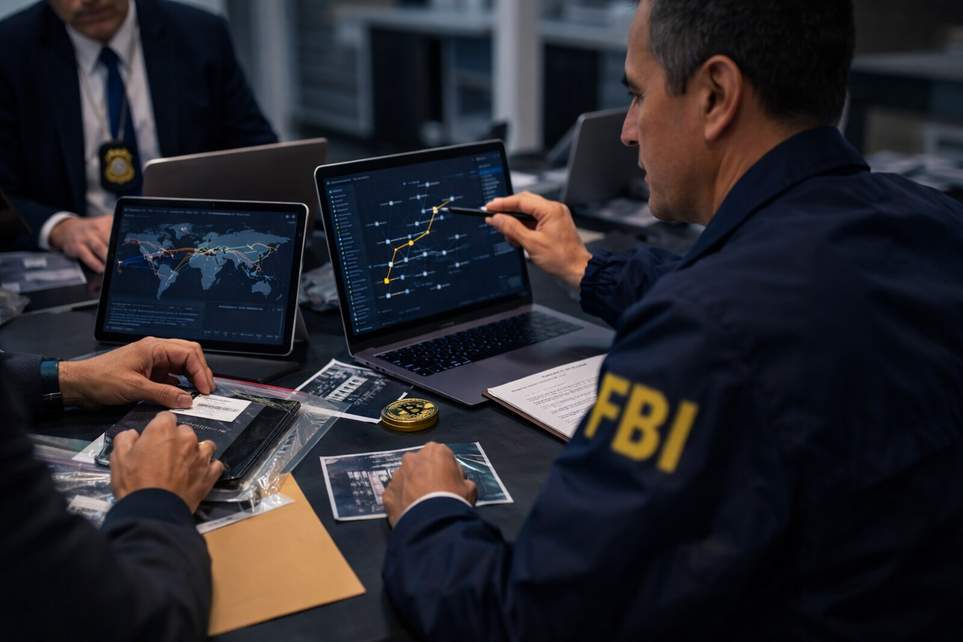
Congress Proposes Federal Crypto Theft Task Force After DOJ Shakeup
Congress is quietly trying to rebuild a dedicated federal response for crypto theft after the Justice Department pulled the plug on its specialized crypto unit earlier this year. The new idea: a task force inside the DOJ that’s all about helping catch hackers, recover stolen coins, and make the handoffs between local cops and federal agents less chaotic.
What the bill would do
The proposal would create a Federal Cryptocurrency Theft Task Force housed at the Justice Department and answerable to the attorney general (or someone the attorney general picks). It names core agencies like the DOJ, FBI, Homeland Security (including investigative components), and Treasury (including financial-crimes units), while leaving room for other agencies to join if needed.
Practically speaking, the task force wouldn’t be a market regulator. Instead, it’s aimed at the messy, nitty-gritty work: setting best practices for collecting and preserving digital evidence, improving blockchain tracing and asset recovery methods, training local police and prosecutors, and coordinating with foreign law enforcement when things cross borders. Think playbook, training center, and emergency switchboard — not rulemaking.
Why they say it’s needed (and the gravity of the problem)
Supporters argue this is less about re-regulating crypto and more about giving victims and small agencies a real place to go when coins vanish. Federal officials recently shifted away from treating the industry itself as the main target and toward focusing on individual criminal misuse — but that left a gap in coordinated, technical responses to theft and hacks.
To put it bluntly: the complaints are huge. Law enforcement reported hundreds of thousands of crypto-related fraud complaints in the last big reporting year and billions of dollars in losses. Wallet drainings, phishing schemes, exchange exploits, and coercive attacks are all part of the mix. Local police often lack blockchain skills, prosecutors may need help preserving evidence, and private firms are sometimes the only parties that can act fast enough to freeze or trace funds. That’s the coordination problem the bill tries to solve.
The catch: coordination doesn’t equal capacity
The bill includes some procedural tools — like required annual reports to Congress, outreach to state and local agencies, and an explicit carve-out so the task force doesn’t become a market regulator. But it leaves several big questions open. It doesn’t specify funding, staffing levels, victim intake rules, or how cases get prioritized when agencies disagree.
That matters because a shiny task force name won’t do anything unless people, money, and authority follow. Standardizing evidence handling and offering training are useful, but only if agencies actually dedicate trained agents, forensic analysts, prosecutors, and victim-support staff to the effort. Without that, this could end up as a helpful-looking directory rather than an operational rescue squad.
Bottom line: Congress is trying to square two ideas — give markets more regulatory breathing room while also building a focused federal response for theft. Whether that response becomes a functioning, resourced capability or just another label for an already-fragmented system is the real question. Stay tuned — your lost crypto might depend on the answer.
