
Sweden’s krona stablecoin lands — but dollar liquidity still holds the crown
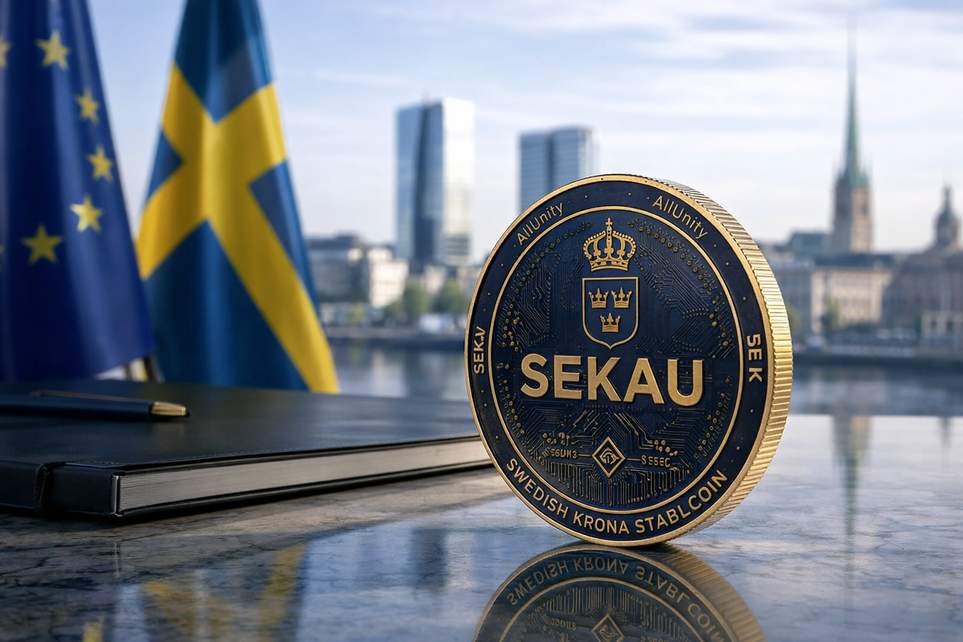
AllUnity launched a Swedish-krona stablecoin called SEKAU on June 19. It’s marketed as a fully reserved, MiCA-compliant e-money token redeemable 1:1 for SEK and available across multiple chains: Ethereum, Solana, Base, Tempo, and Polygon. Sounds shiny. The important bit is this: the rails exist. Whether anyone actually uses them in volume is an entirely different story.
What SEKAU is (and what it isn’t)
SEKAU is aimed at businesses and institutions, not casual traders or meme-token speculators. It’s presented as a treasury and settlement tool — a way for companies to hold, move, and redeem krona on blockchains rather than only inside bank accounts. The product design emphasizes regulated reserves, corporate onboarding, and linking corporate bank accounts with wallets. At launch the access path clearly leans toward verified institutional clients instead of open public minting on every corner.
Technically, SEKAU is multi-chain, which helps availability: if you want to experiment on Ethereum or try something fast on Solana, it’s there. But being “available” and being “held widely and used” are two very different things. The token also represents a step in a broader strategy to issue local-currency rails beyond previously offered euro and Swiss-franc tokens — so think of it as one brick in a multi-currency wall rather than a full-blown fortress by itself.
The launch is supported by banking partners that handle reserves and transactions, and the setup emphasizes compliance under Europe’s regulatory framework. That gives the product legitimacy and a legal wrapper — useful for conservative treasuries — but legal clarity does not automatically translate into liquidity or everyday usage.
Why liquidity, not buzz, will make or break SEKAU
Here’s the blunt truth: crypto payments and settlements are still dominated by dollar-denominated stablecoins. Tokens pegged to the U.S. dollar enjoy massive on-chain depth, plentiful market makers, and wide venue support. A new krona token starts life with very little of that and needs convincing reasons for institutions to prefer carrying SEK instead of a well‑trodden dollar peg.
Where SEKAU could shine is in niche but real business cases: Nordic corporate treasuries that need native SEK exposure, tokenized securities settled in krona, market‑making between on‑ and off‑chain venues that require krona rails, payment processors handling region-specific flows, or cross‑border treasury desks that want SEK balances on-chain. In short, it’s not about speed for consumers — it’s about operational fit for institutions that care about currency identity, compliance, and settlement locale.
To prove it’s more than a press release, SEKAU needs visible activity: meaningful minting and redeeming, reserve transparency and reports, clear custody and banking partners, exchange or venue listings that show secondary-market depth, and real transaction volumes and balances across chains. A multi‑chain rollout helps accessibility, but without institutions holding and moving krona tokens, the rails are just pretty infrastructure.
Sweden already has 24/7 instant settlement systems for bank money, so the krona stablecoin must offer something different — namely the ability to function inside tokenized-asset ecosystems and crypto-native settlement workflows. That’s a taller order than “faster payments” and it will take partnerships with market makers, custodians, treasury systems, and venues to prove out.
Bottom line: SEKAU has the regulatory paperwork and a multi-chain footprint. Now watch for the hard signals — circulating supply, audited reserve reports, listed custodians, venue access, and real institutional use cases. If those show up, krona rails could quietly become useful. If not, dollar liquidity will keep doing what it does best: being boringly dominant.
Keep an eye on the metrics, not the headlines. The launch is stage one; adoption — or the lack of it — will write the rest of the story.
