
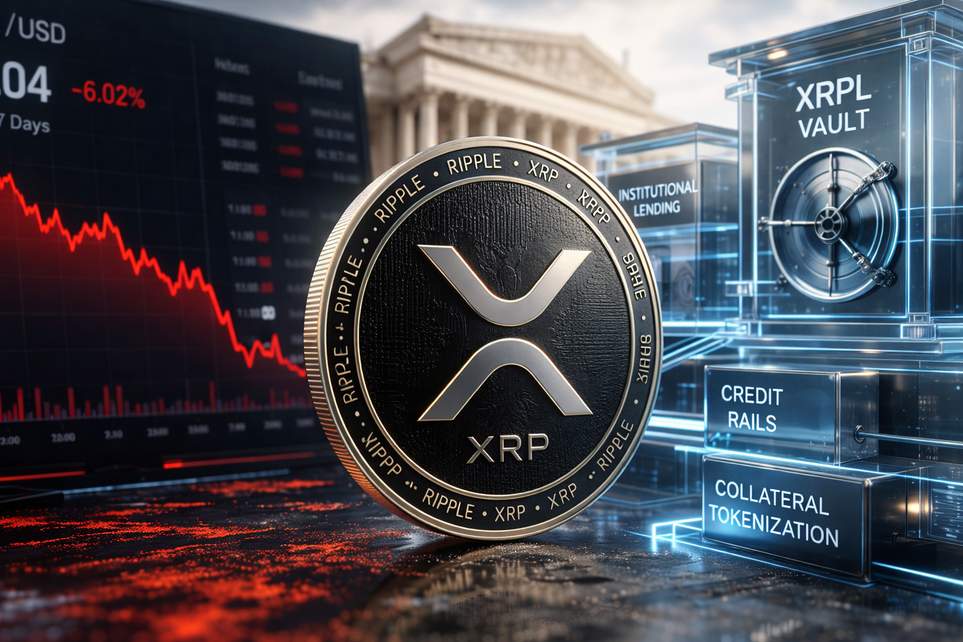
Ripple’s XRPL Lending Bet: Can Credit Give XRP a Second Act?
Ripple is pitching a new angle for the XRP Ledger: not just fast payments, but a spot where real institutions can borrow and lend without turning the chain into a credit committee. It’s a move that sounds boring on paper (credit rules!), but could quietly change what the ledger is used for.
What the XRPL lending plan actually does
Think of the proposal as a tidy, on-chain toolbox for short-term loans. The core idea is simple: create vaults that hold a single token, then let approved borrowers take fixed-term loans from those pools. The ledger would be the referee that enforces interest, repayment timing, and what happens if someone stops paying.
The specs under discussion introduce two building blocks. One sets up single-asset vaults so money isn’t mixed into a chaotic pile. The other formalizes how loans are issued, tracked, and closed. Rather than asking each app developer to reinvent loan rules, the ledger would offer a standard framework everyone can rely on.
Crucially, Ripple’s approach separates the messy human stuff from on-chain enforcement. Underwriting, legal contracts, and compliance checks live off-chain — experts and institutions still do the heavy lifting. Once folks agree on terms, the ledger enforces the result. So the blockchain is the hammer, not the brains.
Why firms might care — and where the traps are
For big players (payment processors, market makers, treasuries), a predictable, auditable place to borrow against tokenized assets is appealing. Imagine a payments business expecting incoming funds in two days but needing to pay out now; it could tap an approved vault for quick liquidity and pay it back when settlement hits. That’s the kind of practical plumbing institutions actually use.
Compared with open, highly composable lending platforms, this design is more conservative. It keeps the ledger public but lets credentialed access restrict who can participate when regulators or counterparties demand it. That middle-ground might win over institutions that want a clear rulebook and legal cover rather than Wild West DeFi improvisation.
But don’t confuse ledger enforcement with risk elimination. The system can make loans follow the script, but it can’t magically make bad underwriting good. If a vault’s steward misprices risk, or if too much capital is locked into loans, participants can still lose money. Liquidity crunches, concentration risk, and poor legal recovery mechanics are as real here as they are in traditional finance.
There’s also a trade-off: purpose-built functions are safer and simpler, but less flexible than general smart-contract platforms where innovators crank out new financial products overnight. XRPL’s path leans toward predictable utility rather than open-ended experimentation.
On the tech side, the protocol has already gone through security reviews and iterations to patch edge cases — things like vault exposure limits, cascading defaults, and timing quirks. Those fixes don’t make lending risk-free, but they do show the designers are tuning the safety rails.
For Ripple, the broader goal is to make XRPL more than a payments playground. If institutions start using the ledger to manage liquidity, finance tokenized assets, or run treasury operations, the network’s role widens — and XRP, as the native token that pays fees and keeps spam off the chain, could benefit indirectly even if loans use other stablecoins or tokenized instruments.
Bottom line: this is a sensible, middle-of-the-road attempt to graft credit functionality onto a payments-focused ledger. It won’t cure all of crypto’s lending headaches, and it won’t instantly turn XRP into a lending asset, but it could help move XRPL from a one-trick pony to a more versatile piece of institutional plumbing — assuming institutions actually decide to use it.
