
BNB Chain’s Million‑TPS Moonshot: AI Agents, Privacy, and Speed
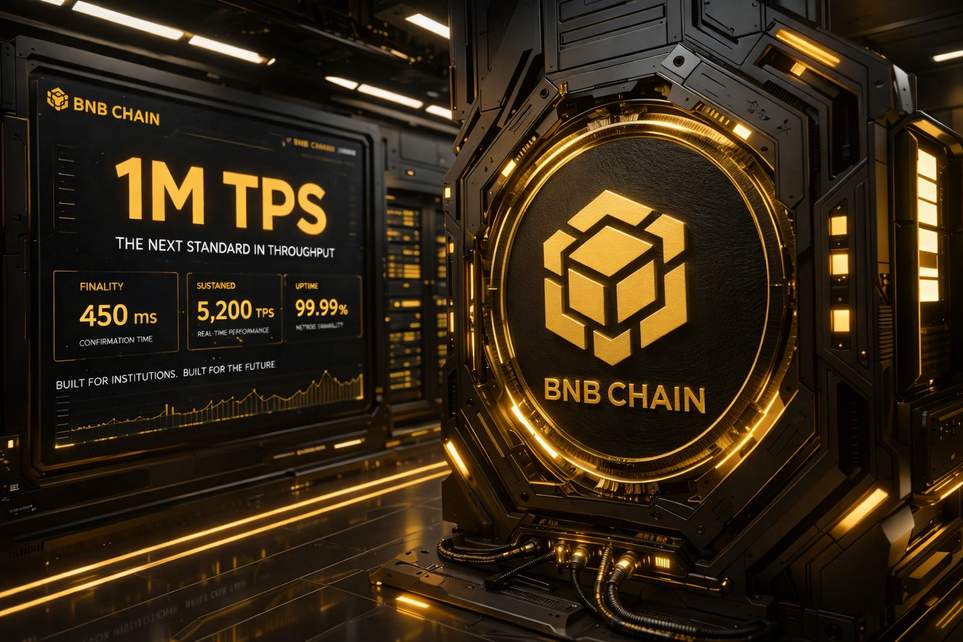
BNB Chain is getting a serious glow-up: the team is reworking the network to aim for jaw-dropping throughput (think up to 1,000,000 transactions per second) while also baking in privacy features. The pitch is simple-ish: win business from banks, trading firms and a future where tiny autonomous AI agents buy, sell and settle things nonstop — all without spilling the financial tea to snoops.
The million‑TPS dream and the AI agent hustle
Okay, yes — one million transactions per second sounds like sci‑fi. The plan starts more modestly (above 100,000 TPS as a near‑term target) and then stretches toward the mega goal. Why? Because automated systems and high‑frequency flows are thirsty beasts. Imagine software agents making thousands of micro‑purchases every minute: current payment rails and many blockchains choke on that level of tiny, rapid commerce.
To chase that future, BNB Chain has rolled out developer tools like an Agent Studio and an SDK that plug into large language models and cloud stacks so devs can quickly deploy on‑chain autonomous agents with built‑in payment plumbing. The market for agentic payments is still growing (it’s modest today), but forecasts suggest this kind of automated retail and machine‑to‑machine commerce could explode in value over the coming years. If that happens, networks that handle huge volumes and tiny payments with low cost will be sitting pretty.
Under the hood: privacy, latency and the nerdy bits
The rebuild isn’t just about raw speed. BNB Chain aims to fold in protocol‑level privacy — confidential transactions and selective disclosure — so institutions can settle tokenized assets or move inventory without broadcasting their every move to the blockchain paparazzi. The plan leans on cryptographic tools (zero‑knowledge-style techniques) to prove compliance without spilling underlying data, which is exactly what banks and big traders want.
On the performance front the new architecture pairs co‑optimized consensus, parallel execution and a storage approach the team calls LtHash to push throughput up. Targets include sub‑50 millisecond preconfirmations and block finality under one second — the kind of latency traders and agents salivate over. One neat tweak: a TxStream design that routes transactions straight to the block leader instead of leaving them in a public mempool. That reduces some front‑running and mempool‑snooping opportunities, though it doesn’t make ordering risks disappear entirely.
There’s also PriorityLane to reserve block space for mission‑critical things like oracle updates, bridge moves and liquidations when markets get chaotic, plus an account‑abstraction toolkit so apps can sponsor gas, batch ops, schedule transactions and support easier signing flows. Testnet is expected in the late‑2026 timeframe with mainnet after that — so this isn’t vaporware, but it’s a next‑gen rollout that still needs to ship.
Finally, the roadmap even looks beyond today’s cryptography: hybrid post‑quantum defenses are being explored so users won’t be forced into a panic upgrade if quantum advances one day threaten the basic public‑key math. In short, they want an infrastructure that can scale now and stay secure later.
Will it all work? The plan checks a lot of boxes institutions and AI‑centric developers care about: speed, lower latency, privacy and smoother UX. But big technical bets bring big execution risk, and the market will be watching to see whether the chain can actually deliver the throughput, the privacy guarantees, and the smooth developer experience it’s promising. Either way, it’s an ambitious, slightly flashy sprint toward a future where bots do the shopping and the blockchain keeps most of the receipts hidden.
