
20-Year-Old’s Crypto Wallet Moved $122M — A Cross-Chain Whodunnit
The short version: arrests, a fat money trail, and a sneaky wallet
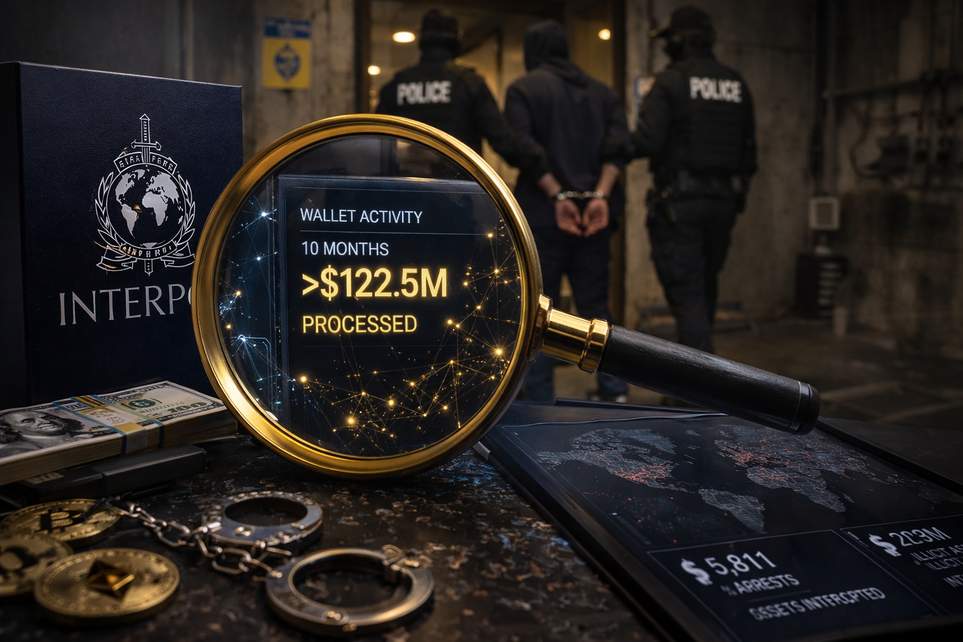
Interpol and Thai authorities traced a crypto wallet tied to a 20-year-old fraud suspect that routed roughly $122.5 million through its accounts over about ten months — that’s money that flowed through the wallet, not money sitting there at one time. Two people were arrested in Thailand as part of a money-laundering probe tied to romance-scam proceeds. Investigators say the crooks used crypto and cross-chain token swaps to make the trail look like a maze built by a caffeine-fueled raccoon.
The Thailand arrests were one piece of a global crackdown called Operation First Light. The campaign involved law-enforcement work across many countries and used freezes, raids, intelligence-sharing and other tools to try and stop illicit money moving between crypto and regular banking rails.
How the cross-chain trickery works — and why it gives investigators headaches
Token swaps move value from one asset or blockchain to another. Sounds slick — until you realize each swap is basically handing a mystery box to someone else and hoping they don’t look inside. When funds jump across several chains, investigators have to stitch together records from different ledgers and services before the money hits an off-ramp tied to a real-world identity.
Each hop across a chain or through a peer-to-peer wallet adds another technical and legal handoff, which means more systems, different recordkeeping rules, and often fewer receipts for investigators. That’s why watchdog groups and law-enforcement bodies have been pushing for more expertise in cross-chain mechanics, smart contracts and blockchain analytics — and why firms along the route (wallets, swaps, exchanges) may soon be expected to keep better records and flag sketchy flows.
Operation First Light combined intelligence exchange with raids, account and wallet freezes, international notices and a mechanism designed to block illicit fiat and virtual-asset flows. The operation ran from January 15 through April 30 after an initial intelligence-gathering phase, and it shows both that big fraud networks can be disrupted and that tracing value fast enough — before it hops chains yet again — is the next big enforcement squeeze.
Bottom line: criminals love cross-chain swaps because they’re efficient at fogging the trail. Law enforcement loves fast tracing, record-keeping and cooperation. Until those two things keep pace, expect more digital hide-and-seek games — and more headline-worthy busts when someone finally tags the raccoon.
