
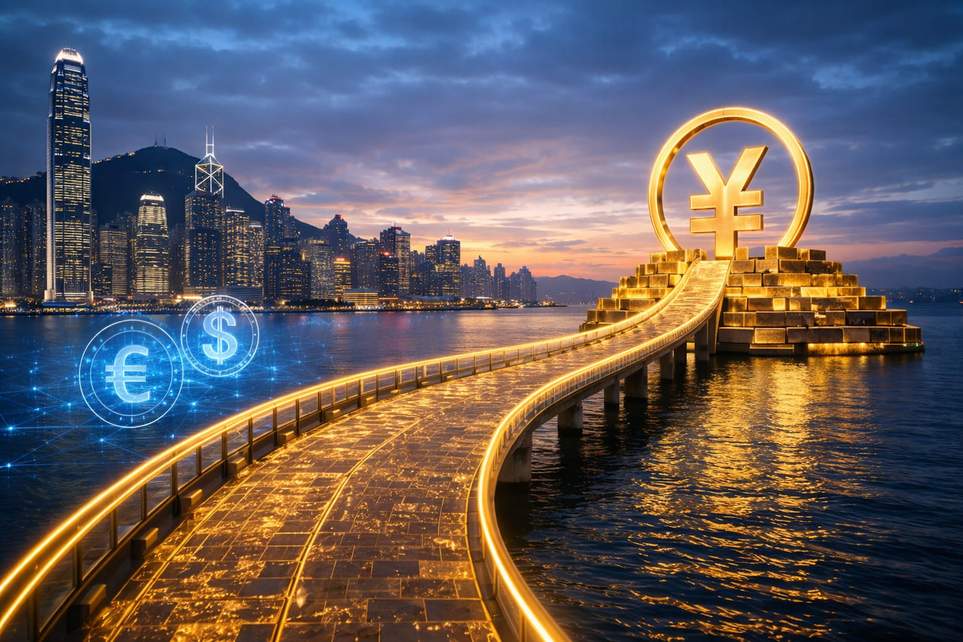
Hong Kong Builds a Gold-and-Yuan Network to Bypass Dollar Stablecoins
Hong Kong just quietly tossed a new financial toolkit into the global ring — one that leans on gold, yuan liquidity and market plumbing instead of the digital dollar rails crypto folks love. It’s not a dramatic overthrow of the greenback, but it’s clever: make non-dollar funding and settlement easier for big institutions, and they’ll use it whenever it’s the path of least resistance.
What Hong Kong actually did (and why it’s neat)
Officials rolled out several moves at once: a trial central gold clearing and settlement system, plans to revive dollar-denominated gold futures while probing yuan-denominated ones, a push to grow gold storage capacity to above 2,000 metric tons, a big increase in offshore yuan funding for banks, and a higher quota for mainland investors buying offshore bonds through the city.
In plain English: Hong Kong is building easier ways to trade, settle and store gold, fund yuan transactions, and link mainland money to offshore bond markets. Those are practical pieces of market plumbing — the kind of everyday infrastructure that quietly decides what institutions do when they need to move serious money.
Why this matters (and where it probably won’t win overnight)
Stablecoins became popular because they made dollar liquidity simple and fast. This Hong Kong package takes a different tack: it tries to make yuan liquidity, bond access and gold settlement equally convenient for institutional players who want alternatives to dollar-denominated channels.
That could attract banks, asset managers and other big users who care about familiar reserve assets and predictable funding. Gold brings credibility and a familiar reserve backstop; deeper offshore yuan lines and a larger bond access quota make big yuan deals more doable without the awkward funding crunches that previously discouraged scale.
But let’s be realistic: the yuan is still a managed currency with capital controls, and those frictions aren’t solved with a few new systems. Dollar liquidity has enormous scale, deep markets and confidence — things you can’t instantly replace. Think of Hong Kong’s plan as a tempting alternative lane on a busy highway, not a new highway that replaces the interstate overnight.
In short, Hong Kong is serving as a sort of financial test kitchen: enough openness to lure global players to the edges, while keeping mainland controls intact. Over time, if these tools prove convenient and liquid, they could become the institutional shortcuts that shift where and how big pools of capital move — especially for players who want yuan exposure plus the comfort of gold as a reserve asset.
So, not a coup against dollar stuff, but a serious institutional play. It’s less about dramatic headlines and more about making non-dollar rails boringly reliable — which, in finance, is how you win.
