
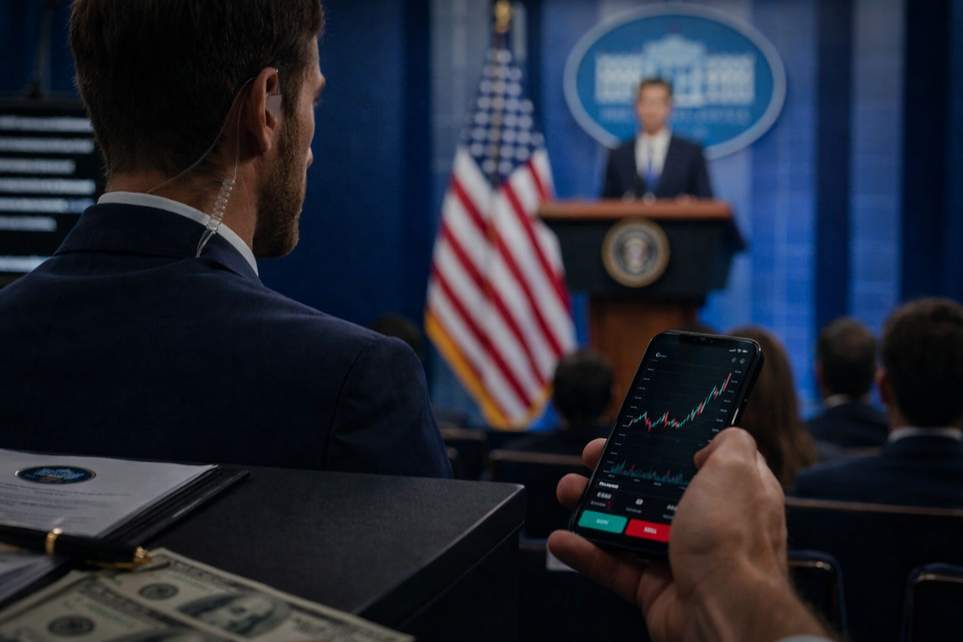
White House teleprompter operator accused of turning advance transcripts into six-figure bets
What allegedly went down
Here’s the short version: a longtime White House teleprompter operator has been put on unpaid leave after reports that he used early access to presidential remarks to wager on whether the president would be mentioned — and allegedly made more than $100,000 doing it. The trades reportedly covered a string of speeches over a few months and were placed via a regulated prediction-exchange platform.
The exchange says its surveillance team noticed odd activity, investigated, and passed the matter to the federal regulator. Reportedly, the account has been frozen for roughly $90,000 and the user banned from the platform. But the timeline is fuzzy: it’s not clear when the exchange first flagged the account, when it limited trading, or when it referred the case to authorities relative to when the trades happened.
Why the timing and rules matter
That missing chronology is the key. If someone trades on material nonpublic information — like reading a speech before it’s made public — that can run afoul of rules that prohibit misusing confidential information. Exchanges also have their own duties to keep audit trails, watch for unusual activity, and enforce their rules when things look suspicious.
The platform involved has rule language that prohibits people with inside information or influence over an outcome from trading related contracts, and it says unusual activity must be reviewed and, if needed, investigated. The reported freeze, ban, and referral suggest the platform’s surveillance did its job—but without timestamps for each step, it’s impossible to know whether the system stopped the behavior early or after repeated alleged trades.
There’s another wrinkle: the broader market for boosted-speed access to public posts. A social-media company recently announced a paid feed designed to deliver posts from influential accounts to paying customers in microseconds, explicitly aimed at high-frequency and algorithmic trading firms. That service would speed up access to information after it has been published, while the teleprompter issue involves access to remarks before they’re public. Either way, both developments highlight a growing market built around getting someone’s words faster than everybody else.
The exchange has rolled out extra integrity measures — like risk scoring and employment screening for certain markets — but those steps reportedly came after the period when the alleged trades took place. So while surveillance flagged something and regulators are involved, the case still leaves open questions about how fast safeguards work and how strong a deterrent they are.
Bottom line: if the allegations are true, this is a pointed reminder that information advantages can show up in weird places, and that prediction markets and exchanges need both sharp tools and clear timelines to prove they caught wrongdoing before it snowballed.
