
Why T. Rowe Price’s $1.9T Bet Could Settle the Crypto Basket Debate
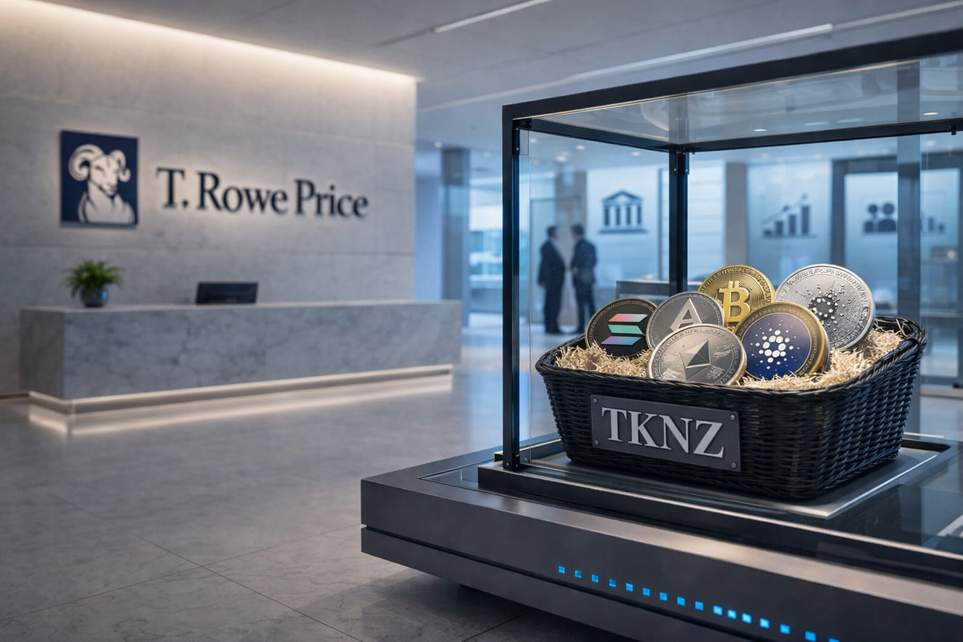
T. Rowe Price — the giant with roughly $1.89 trillion under management and about two-thirds of that tied up in retirement plans, advisers and institutions — just tossed a fresh experiment into the crypto ring. Its first crypto product, TKNZ, began trading on July 16 and is a multi-token spot ETP. That might sound boringly technical, but it’s actually a big deal: multi-asset crypto baskets have been the least popular corner of the ETF world so far.
Why multi-token crypto baskets have struggled
Put simply, investors haven’t been rushing into baskets. Single-asset spot funds tracking the likes of Ethereum, XRP and Solana have pulled in roughly $13.6 billion combined (this excludes Bitcoin), while several purpose-built multi-asset products together have only gathered about $161 million over a similar period. That’s a canyon of difference.
There are a few reasons for the cold shoulder. One: some buyers want to make a specific bet — say on Ethereum’s tech recovery or XRP’s payments angle — and don’t want that conviction diluted across eight tokens chosen by someone else. Two: crypto doesn’t have a universally accepted, S&P-500-style list of what “counts,” so every basket has to make controversial choices about decentralization, liquidity and legal eligibility. That puts the token-selection pain squarely on the index-builder.
Three: many baskets end up being overwhelmingly Bitcoin and Ethereum anyway. If a fund holds 80–90% in those two, an investor could often replicate that exposure with two single-asset ETFs and control the weights themselves. And when altcoins are lagging, owning a basket stuffed with underperforming tokens is more of a painful conversation for advisers than a comforting diversification story.
There’s also conversion baggage. Some older structures that converted into ETF form allowed legacy holders to exit at net asset value, which pushed a lot of outflows around the conversion period. That makes flows look worse than they might otherwise be, but it doesn’t erase the bigger trend: baskets have generally seen limited genuine new demand so far.
Why TKNZ matters — the experiment and what to watch
TKNZ bundles three things that previous basket launches often lacked. First, it comes from a huge, mainstream manager with deep adviser and retirement-platform relationships — the exact distribution channels the basket idea always dreamed would show up. Second, it’s actively managed, which means the manager can shift weights, respond to momentum and fundamentals, or even hold cash or stablecoins when the market turns ugly. Third, the fund is explicit about picking tokens based on its own judgment rather than just tracking a rigid index.
That combo makes TKNZ a real experiment to test three competing explanations for why baskets haven’t taken off: 1) a distribution gap between mainstream advisers and crypto-native issuers, 2) a rejection of the passive, Bitcoin-heavy basket structure, or 3) a genuine investor preference to pick individual tokens instead.
So what counts as success? If TKNZ manages to attract something like $300 million to $750 million in net new creations in its first quarter (after excluding initial seed capital), that would suggest the distribution muscle and active management are enough to finally put baskets on the map. If net creations stay tiny — under roughly $25 million to $50 million — even with T. Rowe’s brand and reach behind it, that would be a strong signal that diversified crypto exposure still doesn’t move the needle at scale for institutions and advisers.
Keep an eye on where the money comes from (are adviser platforms and retirement channels actually moving it?) and whether holdings stick around through the next altcoin rough patch. The answers over TKNZ’s first few months will say a lot about whether professional investors want crypto as an allocatable asset class, or whether they still prefer to pick their own tokens.
Author note: Gino Matos is a law-school grad and journalist with six years covering crypto, especially Brazil’s blockchain scene and DeFi developments.
