
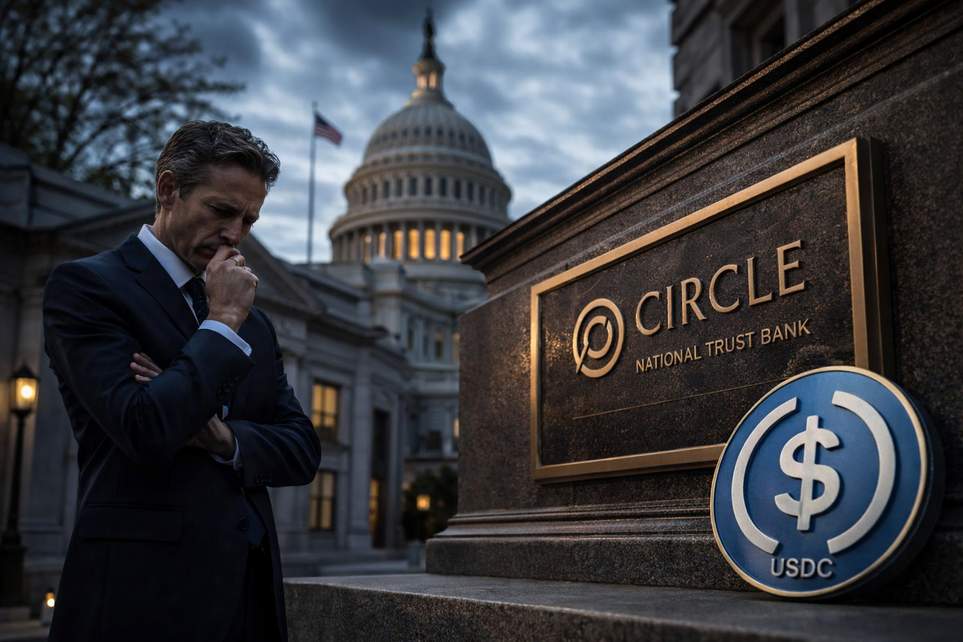
Circle’s OCC Win: Why Banks Say Stablecoins Could Swipe $500B of Deposits
What actually happened (short version)
In July, Washington handed Circle a federal thumbs-up: the Office of the Comptroller of the Currency approved a national trust bank for Circle. Translation — Circle National Trust is a federally supervised trust bank focused on custody and fiduciary services for digital assets, not a branch-heavy retail bank taking everyday deposits.
The approval doesn’t turn Circle into your neighborhood bank. It’s more like giving USDC a cleaner seat at the grown-ups’ table: better supervision, clearer rules for institutional users, and more confidence for treasury desks and payment firms to plug USDC into real-world processes.
Why bankers are hedging (and sometimes panicking)
Here’s the drama: banks worry that as stablecoins look and feel more official, money may shift out of traditional deposits and into on-chain dollars. One big bank forecasted a possible transfer of roughly $500 billion from U.S. deposits by the end of 2028 if stablecoins take off. The Federal Reserve’s research paints an even broader picture — stablecoin adoption could reduce bank lending anywhere from a few dozen billion to over a trillion dollars, depending on how widely they’re used and where reserves sit.
What does that mean in plain human terms? Imagine a customer moves $1,000 from a community bank into USDC. Circle backs that USDC with reserves parked in cash, overnight repo, or short-term Treasuries. The money doesn’t vanish from the financial system, but its role changes: it stops being a steady, cheap funding source for local banks and becomes part of a reserve stack that’s less useful for making mortgages, loans to small businesses, or funding local credit.
That change in funding mix is the real risk. If transactional balances migrate to big institutions or into Treasury-heavy reserve pools, regional lenders lose their low-cost deposit base. Options for those banks are ugly: pay more to keep deposits (hello margin squeeze), borrow in pricier wholesale markets, slow balance-sheet growth, or lend less.
Circle’s reserve snapshot made this fear concrete: most of the backing assets were short-duration Treasuries and repo, while a much smaller slice sat in bank deposits. For stablecoin issuers, this mix screams “liquidity and safety.” For a local banker, it looks like someone quietly redirecting your cheapest funding to a money market highway.
Okay, so what’s next?
There are a few paths forward and yes, all of them are kind of a choose-your-own-adventure. One: stablecoins keep scaling with stronger federal oversight and become widely used plumbing for settlement, custody, and treasury operations — great for fintechs and big corporates, not so great for deposit-taking banks unless they adapt. Two: regulators step in with rules that treat certain stablecoins more like deposits, which would change how they’re issued and resourced. Three: banks fight back by offering their own tokenized deposits and bank-backed stablecoins, which would turn this into a funding-product arms race.
Practically speaking, Circle’s charter lowers the bar for institutions to use USDC, and that makes wider adoption easier to picture. But easier to picture isn’t the same as inevitable. Legal questions, competition, and how regulators decide to draw the line between private digital dollars and bank deposits will matter a lot.
So, is this the apocalypse for local banks? Not instantly. But it’s a wake-up call: better rails and federally supervised digital dollars can deepen liquidity and make on-chain cash more useful — and that reshapes who gets to lend, where, and how cheaply. The comfy old funding model for regional banks is getting an upgrade in the rest of the financial world, and they’ll either upgrade too or feel the pinch.
