
China’s $125 Billion Escape Valve: Exports Keep the Engines Running, But Homes Are Quiet
The paradox: busy factories, quiet living rooms
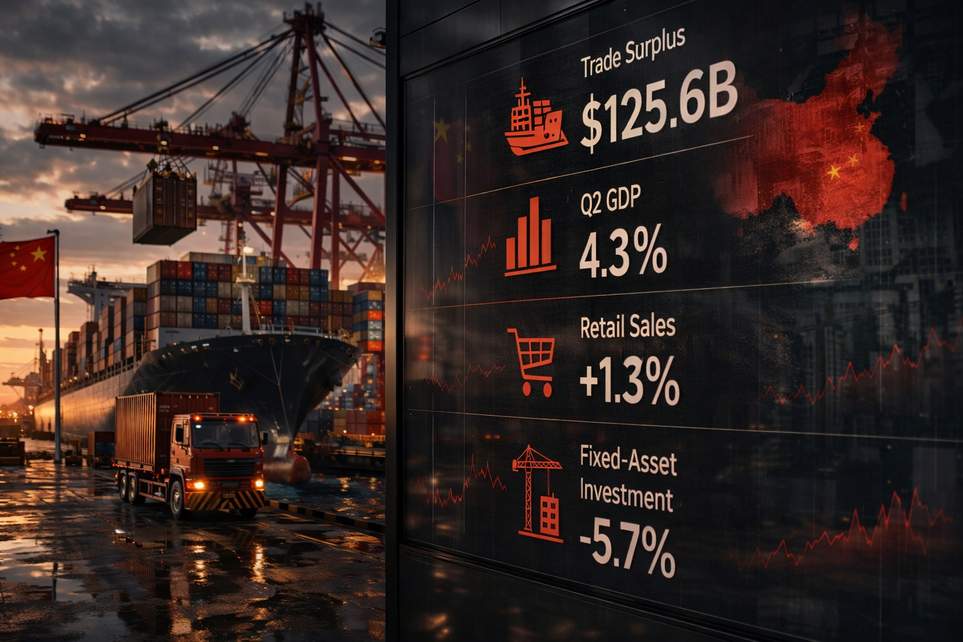
China just posted a monster monthly trade surplus — roughly $125.6 billion — while the domestic engine sputters. On the surface it looks like a win: ports are humming, shipments are up, and higher-value industrial goods are flying out the door. Dig a little deeper, though, and you find a different picture: GDP cooled to about 4.3% year‑on‑year in the second quarter and barely grew quarter‑to‑quarter (around 0.9%). Translation: production is happening, but the people who should be buying stuff at home are hesitating.
Trade volumes surged recently — exports and imports both climbed sharply compared with a year earlier, and mechanical and electrical goods make up a huge slice of that activity. Private firms are doing a heavyweight share of the trade, and trade with Belt-and-Road partners has grown noticeably. In short: factories are finding customers overseas, and much of what’s selling is higher‑end industrial kit rather than toys or trendy gadgets for local shoppers.
Meanwhile, the domestic side looks flat. Fixed‑asset investment is down, infrastructure spending has dipped, manufacturing investment is slightly lower, and real‑estate development has taken a big hit. Retail sales have barely budged, private investment is weaker, and property sales and newly developed commercial space are tumbling. It’s hard for an economy to feel healthy when buyers at home are acting like they’ve misplaced their shopping lists.
Why this matters (and what Beijing can do about it)
Think of exports as an escape valve on an overfull machine: they relieve pressure by moving excess output abroad, keeping factories busy and payrolls intact, but they don’t magically restore domestic confidence. A bustling port doesn’t automatically fix falling home prices, shaky local government finances, or households worried about jobs. The property sector is especially important here — when development slows and prices slide, the effects cascade into consumer sentiment, local government revenue, and demand for steel, cement, machines, and transport.
So Beijing faces an awkward menu. Option one: pour on investment and infrastructure stimulus — that revs activity quickly but risks creating more supply in sectors that already have too much. Option two: pivot toward household support with income transfers, consumer subsidies, and measures to rebuild confidence — that would address demand more directly but represents a real break from the decades‑long investment‑first script. Option three: accept slower growth and let the economy rebalance gradually, which is painful politically and economically.
Each choice has trade‑offs. Leaning on exports makes China more exposed to foreign tariffs, anti‑subsidy actions, and political blowback in key markets; leaning on investment risks bigger debt piles; leaning on households requires tools Beijing hasn’t used at scale in recent cycles. Officials have signaled they know there’s a problem, and policy meetings coming up will be watched closely for which direction they pick.
Bottom line: the trade boom is real and helpful — it’s keeping the industrial wheels turning — but it’s a Band‑Aid, not a full cure. For a durable recovery you need households who want to spend, companies willing to invest at home, and local governments able to support activity without sinking deeper into debt. Until those pieces move together, every impressive trade headline will carry a footnote: China is producing more confidently than it is consuming.
