
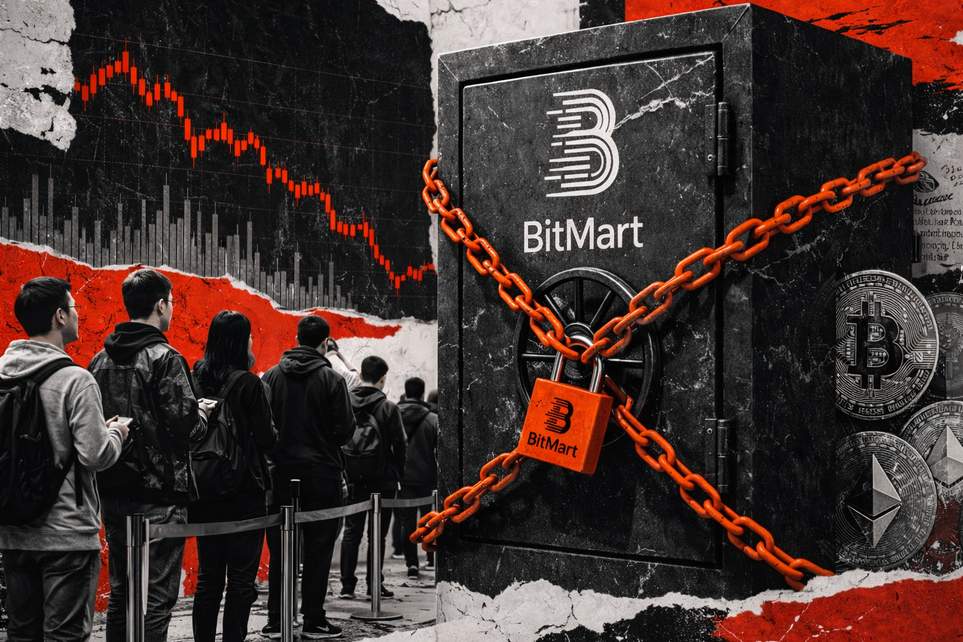
BitMart’s sudden shutdown triggers withdrawal delays and on-chain panic, echoing the ghosts of 2022
What happened
BitMart announced it is winding down after roughly nine years in business. The exchange abruptly stopped new account registrations, deposits and order entries late on July 26 (UTC) and set a schedule to wind down trading services by August 26, with a formal cessation date in early 2027. The company framed the move as a strategic reassessment of its operations and market outlook rather than naming a single triggering disaster.
Leading up to the shutdown, BitMart had quietly trimmed some product lines — including its spot margin offering and an automated market-making bot — saying those changes were meant to tighten security and reliability. Oddly, those pullbacks came at the same time the firm was still touting growth: it announced a new Australian financial services license in June and reported a large jump in assets under management for the first half of the year.
Now, as the platform winds down, users have been told to complete identity checks, close positions and request withdrawals by specified deadlines. The company also warned that withdrawals could be subject to extra reviews — think KYC, device and IP checks, source-of-funds inquiries, Travel Rule compliance and proof-of-address requests — and that large volumes or blockchain congestion could slow processing.
Why people are panicking (and what to watch)
The panic isn’t just PR theater: some users and projects are already reporting difficulty getting money out. Analysts watching blockchain flows noticed that a chunk of the exchange’s easily-spendable ETH and stablecoin balances moved out in the days before the public shutdown, leaving wallets more full of less-liquid tokens. That shift raised eyebrows, though it doesn’t by itself prove insolvency.
On the withdrawal front, chain-watchers reported only modest outflows in the immediate aftermath — small numbers of wallets moving less than a million dollars in a day and stretches where no sizable withdrawals were processed. At the same time, a few listed projects publicly demanded that BitMart release funds that they say belong to users and market makers, saying delays were already causing harm. BitMart has not publicly detailed any specific shortfall.
This all echoes painful memories from 2022, when withdrawal freezes were the first visible sign of deeper trouble at multiple centralized platforms. Back then, freezes and runs preceded bankruptcies and a broader confidence crisis that left customers and institutions more wary of leaving assets on exchanges without transparent reserves.
BitMart had previously faced questions about account restrictions and promised a proof-of-reserves disclosure months ago. With the current wind-down, the exchange’s combination of extra review steps and undefined timing for processing approved withdrawals leaves customers waiting and guessing — and in crypto, guessing usually turns into worry pretty fast.
So what should you watch next? Keep an eye on any clear, transparent statements about asset coverage or a proof-of-reserves report, actual on-chain withdrawals into cold wallets (which can show assets are controlled rather than lost), and whether large projects or market makers publicly confirm receipt of their funds. If withdrawals start flowing smoothly, this may be a contained shutdown. If they stay stalled, the situation could fester and spook the market.
Bottom line: there’s a difference between a messy shutdown and a solvency crisis. Right now, the evidence is mixed — some unsettling on-chain moves and slow withdrawals, but no definitive proof of a shortfall. Still, the optics matter: with extra checks, unclear timelines and memories of 2022 fresh in many minds, confidence can evaporate fast.
