
Is crypto dead yet? 2026 shutdowns and the quiet rise of bank blockchains
Shutdowns: a messy pruning, not a single apocalypse
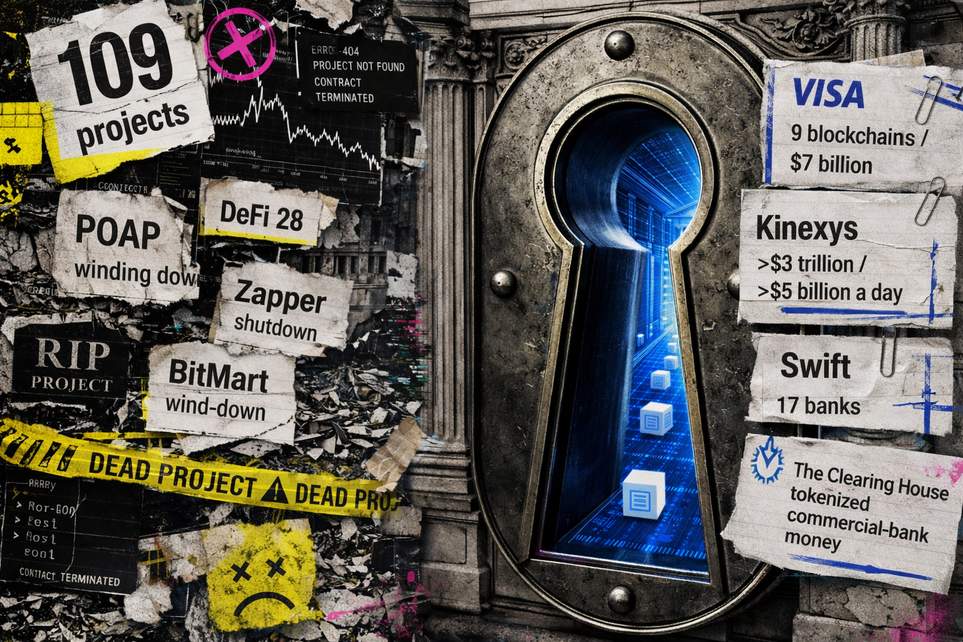
Short version: a lot of projects have either folded, faded into inactivity, or are slowly winding down. As of early August 2026 our tracking found at least 109 crypto projects recorded as shut, winding down, or inactive — and additional scanning pushed that broader tally to about 161 smaller cases for the year so far. DeFi leads the list with roughly 28 entries, followed by gaming, infrastructure, layer-1/2 work, NFTs and a smattering of wallets, exchanges and analytics tools.
Numbers tell a story but not the whole novel: the timeline peaked in April (roughly two dozen–plus recorded exits that month) and then trailed off through May, June and July. That looks like a brutal spring clean more than an ongoing collapse, but without a comparable baseline for 2025 or a count of new launches this year those totals are a snapshot, not an industry-wide death certificate.
High-profile examples help explain the why. Some beloved community projects announced wind-downs after struggling to turn cultural clout into steady revenue without betraying their open-hearted origins. Popular dashboards and tooling quietly announced sunsets. Even centralized players have been bowing out: a few exchanges announced orderly wind-downs and full closures, widening the retrenchment beyond the usual “only DeFi is hurting” headline. And some retirements are planned: networks once deprecated after earlier decisions finally went offline this year.
Meanwhile, banks and payment networks are building different rails
At the same time, a separate story is unfolding: big, regulated players are rolling out tokenized-money and blockchain-linked settlement systems — but built the way banks like it. Think controlled access, compliance, governance and trusted operators rather than trustless chaos.
Different projects are at different stages. A major payments company reports a multi-blockchain stablecoin settlement pilot with a growing run-rate into the billions annualized. A big bank’s institutional ledger claims trillions of cumulative processing and several billion a day on average. Industry clearing groups are proposing bank-led tokenized money that would tie into real-time and large-value clearing systems. And some global interbank networks are starting small pilot deployments with a couple dozen banks testing tokenized cross-border payments.
These builds are not the same animal as the permissionless apps that are closing down. They’re measured by different metrics — pilots, run-rates, cumulative processing — and they keep custodial controls and regulated money front and center. There’s no neat evidence that money flowed out of a given open protocol and directly into a bank ledger; what we’re really seeing is a divergence in which use cases scale under institutional constraints.
So is crypto dead?
Short answer: no. Long answer: crypto is undergoing selective pressure. Permissionless projects keep running, creative builders are still experimenting, and communities still exist — but many projects that relied on speculative demand, fragile funding cycles, or shaky revenue models are being culled.
The scarier plot twist depends on your preferences: is the worrying part that projects are failing, or that traditional finance is happily absorbing the most practical bits of blockchain technology and wrapping them in rules, custody and gatekeepers? Either way, 2026 so far looks less like an apocalypse and more like a reshuffle: different winners, different models, and a much clearer line between open experimentation and regulated scale.
