
Kraken-linked lender can liquidate 479 BTC if price dips to about $45k — the quick, quirky explainer
Quick summary (so you don’t have to squint)
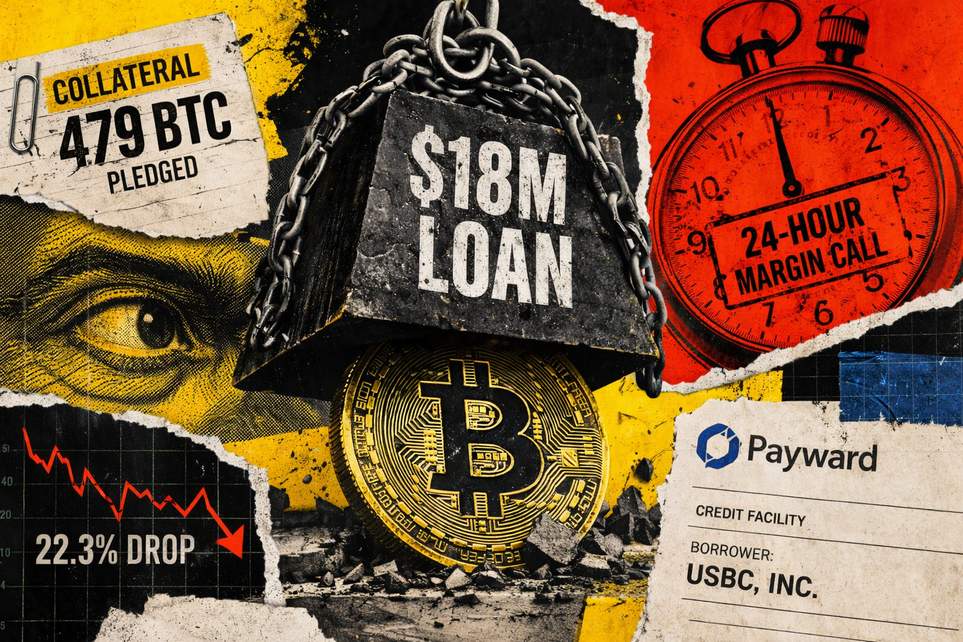
Here’s the elevator pitch: a company known as USBC borrowed $18 million using 479 Bitcoin as collateral. The lender is Payward Interactive, an entity affiliated with Kraken, and the Bitcoin is custodied by the Kraken-branded custody arm. As of the end of July the pledged 479 BTC was worth roughly $30.1 million, which means the loan-to-value was about 59.8% at that snapshot.
No panic bells had sounded as of July 31 — the lender had not issued a collateral call, demanded repayment, or liquidated any of the Bitcoin. But the loan agreement includes price-sensitive safety levels that could force rapid action if Bitcoin drops.
How the “add collateral or we sell it” math works (with tiny brain-friendly numbers)
The credit line requires an initial margin of 150%. If the collateral coverage falls to 130%, the lender can send a notice asking for more collateral or partial repayment — and the borrower has 24 hours to fix it. If coverage slides further to 120%, the lender has the right to liquidate the collateral immediately, no waiting, no niceties.
Here’s the simple arithmetic used in the filings: take the loan principal ($18 million) and multiply by the coverage ratio to get the minimum collateral value required. So 130% of $18 million is $23.4 million, and 120% is $21.6 million. Divide those totals by 479 BTC and you get the illustrative trigger prices: roughly $48,852 per BTC at the 130% call level, and about $45,094 per BTC at the 120% immediate-liquidation level.
That means if Bitcoin’s market value fell enough that the 479 BTC were worth near those thresholds, the borrower would face either a 24-hour scramble to add assets or an immediate sale of the coins. If the lender sells, it charges a 1% fee on the proceeds; any shortfall remains the borrower’s responsibility, while any surplus would be returned.
Why it matters — and a few extra financial bits
This isn’t just abstract math: the company said loan proceeds were being used mainly to build a tokenized-deposit product, with some payments to an affiliate called Vast Holdings. The borrowing cost is not tiny either — the loan carries about 8.5% annual interest and, on current paperwork, matures on July 28, 2027 unless paid off sooner.
On the company side, at quarter-end it reported just under $3 million in cash and equivalents and posted a first-half net loss of about $46.3 million. That loss included roughly $29.7 million of unrealized digital-asset markdowns, $11.2 million in stock-based comp, and a $2.5 million credit-loss reserve, partially offset by a $12 million deferred tax benefit — so net loss does not equal pure cash burn.
The takeaway: the structure gives the lender clear, price-linked levers. As long as Bitcoin stays comfortably above those illustrative $48–45k levels for the collateral on file, USBC can relax. If crypto tumbles into that window, it could be a 24-hour drama or an immediate cleanup sale — depending on where the percentage meter lands.
