
Grayscale Turns Staked Crypto into Regular Cash Payouts
Quick snapshot: what changed
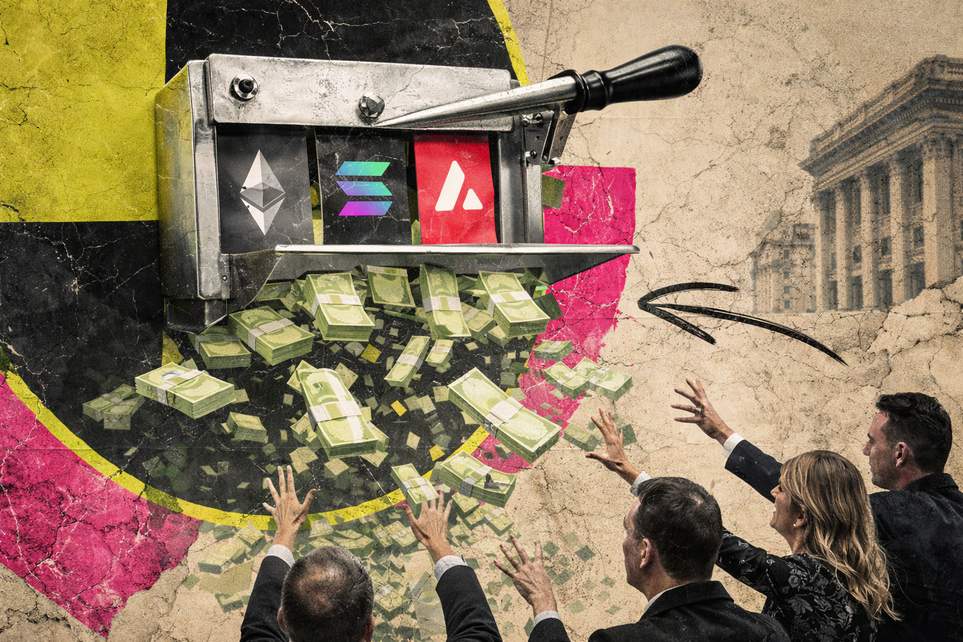
Grayscale updated the rulebook for three of its staking ETFs so that any crypto earned from staking must be converted into cash at least once every quarter and the net proceeds passed along to shareholders. The three funds affected are the Ethereum Staking ETF (ETHE), the Solana Staking ETF (GSOL), and the Avalanche Staking ETF (GAVA). While the trusts say they plan to make distributions every month, the formal floor is quarterly — so expect a steady-ish stream of reward sales turning into cold, boring cash.
Important: this change covers staking rewards only. It doesn’t mean Grayscale is going to start liquidating the trusts’ main holdings of ETH, SOL, or AVAX on a schedule. Principal token sales can still happen for other ordinary reasons (redemptions, fees, etc.), but the new rule specifically creates a recurring process: earn reward tokens, sell them, and distribute the proceeds.
Numbers, fees, and a real example
Here are the key size-and-fee figures so you can picture the scale and the drag from fees:
• ETHE reported about $1.22 billion in total assets, with roughly $999.96 million staked — roughly 81.7% of its holdings staked for rewards.
• GSOL showed about $101.16 million in assets, with about $101.05 million staked (that’s basically 99.9% participation).
• GAVA had about $4.27 million in assets and $3.45 million staked — around 80.9% staked.
Fees and deductions matter because they reduce the amount that actually gets turned into cash for shareholders. ETHE charges a roughly 2.5% annual sponsor fee, and between sponsor staking fees and validator fees they reported taking about 23% of gross staking rewards. GAVA’s sponsor fee is around 0.35% annually with a similar 23% cut of rewards, while GSOL’s sponsor fee is about 0.19% annually with roughly a 7% total deduction for staking-related fees. Note: those percentages are based on different bases and aren’t simple to stack together — don’t treat them as purely additive.
To give a real-world data point, ETHE sold staking rewards for the Oct.–Dec. period and paid out roughly $9.4 million total (about $0.083178 per share) on a distribution in early January. That’s a useful reference but not a forecast — differences in assets under management, participation, fees, reward rates, and token prices mean you shouldn’t assume that amount will repeat or scale across all three funds.
Why this actually matters (taxes, market flow, and other quirks)
Operationally it’s simple and inevitable: the funds will earn reward tokens, periodically sell those tokens, and distribute the net cash. That creates a recurring market sell flow for reward tokens — how big it is depends on the rewards that actually get minted, fees taken out, and the token prices at sale time. So don’t freak out over headline asset totals alone; the cash hitting investors comes from a handful of moving parts.
Tax-wise, the filings lean on grantor-trust-style treatment. In plain English: a U.S. holder is generally treated as having received a pro rata share of staking income when the trust earns it. If the trust later sells the reward tokens to fund a distribution, that sale could produce a pro rata capital gain or loss allocated to holders. According to the documents, simply getting the cash distribution itself shouldn’t be an extra taxable event, but the caveats are real: the grantor-trust position isn’t ironclad, some tax-exempt entities might face unrelated business taxable income, and non-U.S. investors could face unresolved sourcing or withholding complications.
Bottom line: the amendment makes the payout process cleaner and more predictable in timing — earn, convert, pay — but the size of those conversions and their tax fallout depend on reward rates, fees, token prices, and legal/tax treatments. If you hold shares, think of this as turning little staked crypto paychecks into a recurring cash allowance for shareholders, with a few bureaucratic and tax-shaped speed bumps along the way.
