
TON Strategy: $15M in staking rewards, $10.6M of cash burned — a quirky accounting tale
The headline numbers (in plain English)
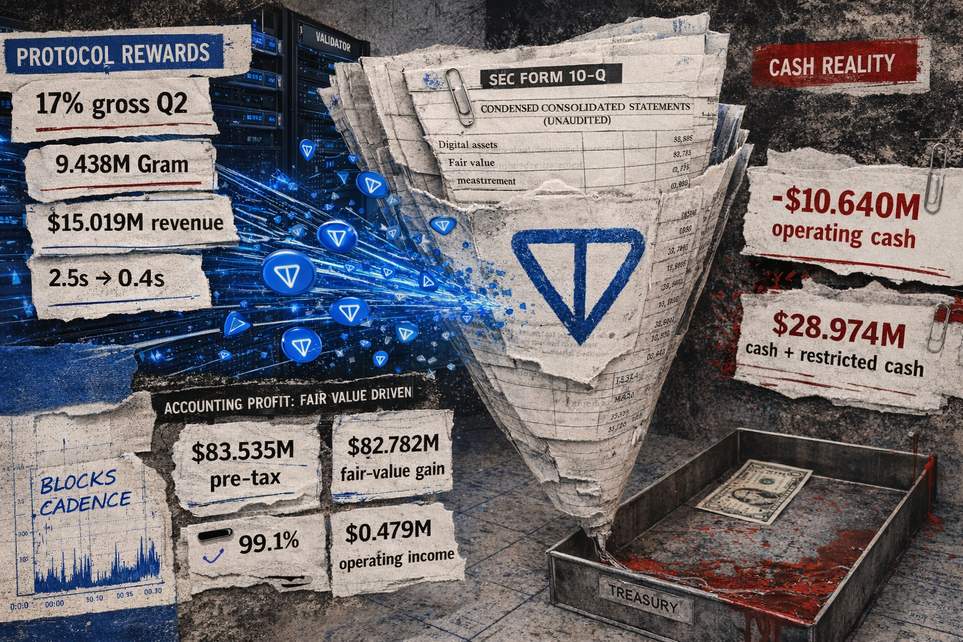
TON Strategy booked about $15 million of staking revenue after it received 9,438,177 Gram (Gram is the TON blockchain token, formerly known as Toncoin). The company also reported a roughly 17% annualized gross staking yield for Q2 — a back-of-the-envelope extrapolation from one quarter, not a promised return to shareholders.
On paper the firm showed $83.5 million in pre-tax income from continuing operations, but that was almost entirely driven by an $82.8 million net fair-value gain on its digital assets. In contrast, operating income from continuing operations was only about $479,000.
Despite the token windfall, TON Strategy’s operating cash flows used $10.6 million during the first half of 2026. They finished June with nearly $29 million in cash and restricted cash and reported no debt, which helps keep creditors from ringing the panic bell — at least for now.
By the end of June the company held roughly 230.5 million Gram and had about 229.9 million staked. Management said that stake represented roughly 4.4% of total supply and about 35% of all staked Gram on the network. Custodians such as BitGo and Blockchain.com were named as managers of those positions and may rely on third parties to run validator infrastructure.
Why this is weird (and what to watch)
The fun (and confusing) part: a lot of the “income” is token-based and non-cash. The filing records Gram received as non-cash consideration, so the company can show revenue before, if ever, those tokens turn into actual dollars. In fact, the first-half cash-flow reconciliation subtracted almost $19 million of non-cash Gram consideration from net income — a reminder that accounting income and cash are different animals.
A big reason for the spike in token rewards was a network upgrade dubbed Catchain 2.0. The upgrade cut the mainnet block interval from about 2.5 seconds to roughly 0.4 seconds, which means the chain produces many more blocks per second (roughly 6.25× more). Since there are creation rewards per block, validators and stakers can earn noticeably more tokens when blocks arrive that fast.
So here’s the catch: you can earn piles of tokens, but that doesn’t automatically pay your bills. For sustained cash generation, those Gram rewards need to keep enough market value when (and if) they are sold to cover operating expenses — or the company needs to cut cash spending. Until that happens, token-based accounting gains can look flashy while the cash register still shows red.
Bottom line: TON Strategy is sitting on a meaningful chunk of the network’s staked tokens and enjoyed a juicy quarter of token gains, but the business still used real-world cash in H1. Watch the value and liquidity of those Gram rewards, how custodians manage staking and whether operating cash burn comes down. If the tokens hold value or get converted to cash at decent prices, the math looks good; if not, it’s an accounting party that might not pay the utility bill.
That’s the plot twist of modern crypto accounting: fast blockchains can mint lots of tokens, spreadsheets can show huge gains, but only actual cash keeps the lights on. Stay skeptical and keep an eye on the cash-flow line.
