
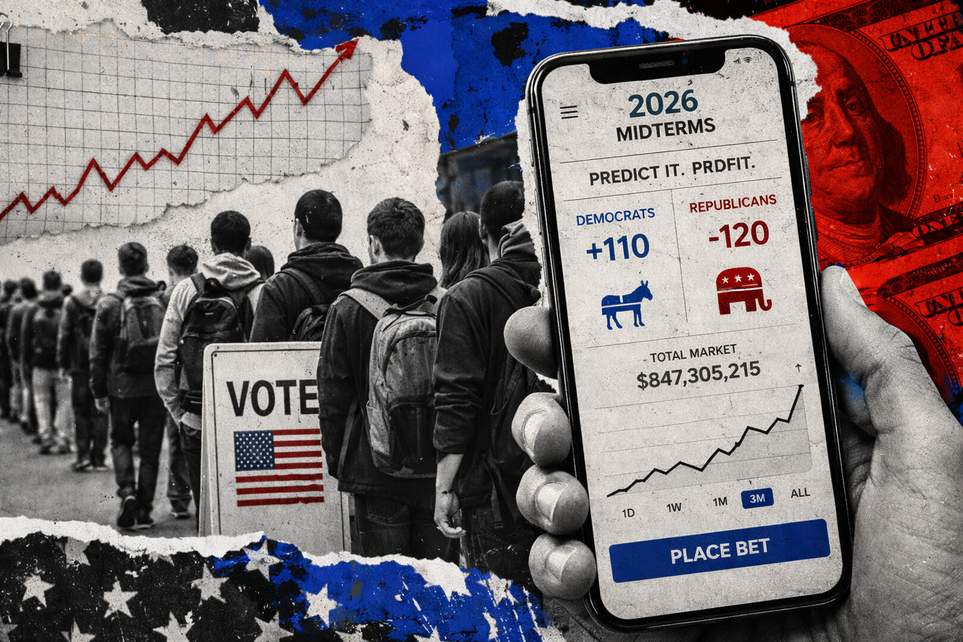
Why 1% of Wallets Are Making Midterm Betting Look Like a Landslide
What the markets actually look like
If you eyeballed the headline numbers, you might think election betting is a national pastime: by Aug. 10 traders had piled roughly $133 million into midterm-related contracts — more than the entire 2024 congressional betting cycle. The market menu exploded from a few hundred comparable contests to thousands, covering everything from who wins a primary to whether a candidate says a certain phrase in a speech.
But here’s the twist: the money is not coming from millions of casual punters. A tiny sliver of wallets is doing the heavy lifting. The top 1% of wallets account for about 68% of the congressional volume, and ten wallets alone are responsible for something like 17% of that action — they’ve traded on hundreds of the roughly 470 seats on the ballot. Many individual contracts barely have any participants: roughly 80% of congressional markets have under 100 wallets, and only about ten contracts have attracted the kind of participation you’d expect from a typical political poll.
Volume is lumpy too. A handful of races soak up most state-level betting — a few Senate and congressional contests make up the lion’s share of dollars — and across tens of thousands of wallets, most markets are either tiny (under $10,000) or dominated by a few big players. In short: a huge-looking headline can hide a very narrow base of actual traders.
Why that concentration matters (and how it can fool you)
Prediction markets aren’t polls. Polls sample people and publish margins of error; markets spit out a price where someone is willing to buy or sell a bet that pays $1 if an event happens. That price is informative, but the information it carries is weighted by cash, not voters. A single deep-pocketed trade can shove the displayed probability around even when nothing in the race has changed.
That’s especially true when contracts are ultra-specific — endorsements, primaries, turnout slices, or whether a candidate utters a particular phrase. These micro-contracts can attract tiny, highly specialized groups whose motives, timing, or inside knowledge are opaque to outsiders. Toss in pseudonymous wallets and repeat trading strategies, and what looks like broad consensus can really be the view of a handful of sophisticated accounts.
Still — and this is the annoying nuance — concentrated markets can be useful. Money forces people to put their beliefs on the line, and savvy traders exploiting a bad price can push odds toward accuracy. But the key is knowing what a market price represents: the clearing level among current participants and the capital they’ve deployed, not a direct measure of national opinion.
Policing, rules, and the slippery middle
Regulators and platforms are starting to grapple with the weird mix of public influence and private opacity. There have already been enforcement episodes: regulators flagged cases like a candidate trading on their own contest and someone betting on outcomes they learned about in advance, and exchanges have launched investigations and frozen accounts. Those actions show monitoring exists, but keeping an eye on thousands of tiny contracts is slow and resource-intensive.
Pseudonymous wallets make enforcement harder: a wallet address tells you what moved the odds, but not who’s behind it. Research has flagged patterns where small, specialized wallets do unusually well in certain categories, especially in tightly scoped markets. That doesn’t prove insider trading, but it narrows the problem and makes enforcement more complicated.
Regulators are moving toward clearer rules about what markets look like, who can list them, and what consumer protections should exist. Those changes may improve oversight, but they won’t instantly turn a 68%-concentrated market into a representative barometer of public sentiment. Until participation and transparency catch up with influence, treat flashy prediction-market odds like a noisy but interesting signal — not gospel.
