
When Miners Fall for AI: How GPUs Are Stealing Bitcoin’s Best Real Estate
AI showed up, signed a lease, and is already redecorating
If you picture the biggest threat to Bitcoin as a sci‑fi quantum doomsday machine, you’re not alone — it makes for better movie posters. But right now the nastiest, most real pressure comes from something far less theatrical: AI. The fight isn’t over cryptography yet, it’s over power, land, and who gets dibs on the prettiest substations.
Bitcoin’s price has bounced back toward the high‑$70k area recently, but that doesn’t mean miners are lounging on golden servers. Mining margins are tighter than they look on the ticker: production costs for many public miners have been hovering near the current market price per coin, and hashing revenue per unit of power (hashprice) is lower than it used to be. Meanwhile AI operators are knocking on the same doors with long contracts, big balance sheets, and an appetite for hundreds of megawatts.
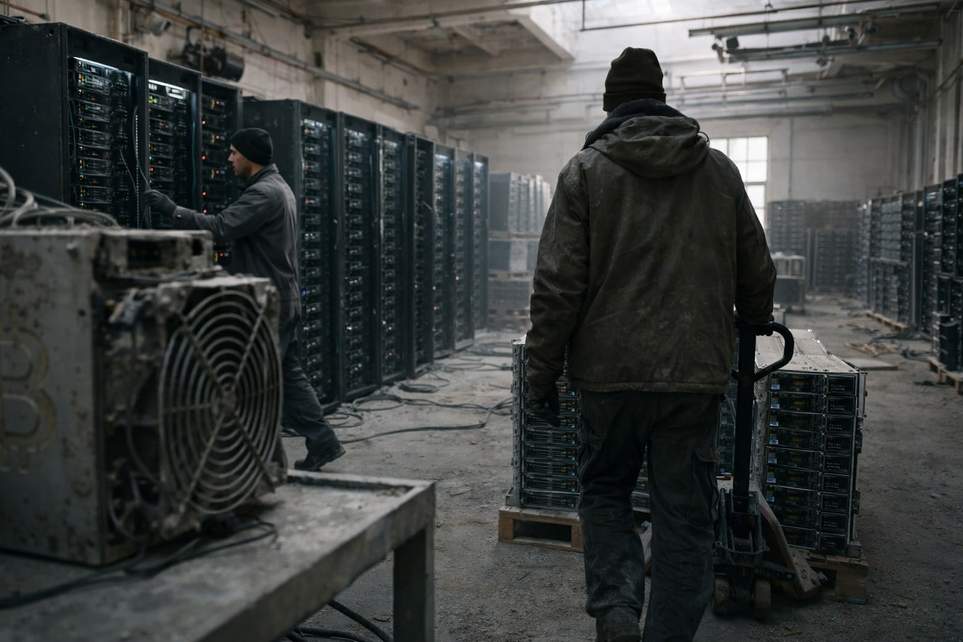
It’s not hypothetical. Large miners are already converting floor space, tearing out rigs, or signing colocation deals to host GPUs and high‑density compute. A few notable moves: some operators have decommissioned ASICs to make room for AI clusters, others have operational leases with large chip firms, and some have energized huge blocks of megawatts under cloud/AI contracts. In short, premium campuses — the places with good land, cooling, power and fiber — are suddenly in demand outside crypto.
Why this matters for Bitcoin’s security and the miner business
The core issue is simple: the network’s security depends on miners spending real money to run hash. If the most financeable, best‑connected sites get rerouted to AI customers because they pay more or sign longer contracts, mining won’t stop overnight — but it will migrate. Expect mining to drift toward cheaper, often intermittent power, and for the marginal security spend to come from operators running on thinner economics.
That creates a two‑track market. Some miners will double down on Bitcoin if coin prices (and therefore mining revenue) stay high enough. Others will pivot into power‑and‑compute businesses that lease space and power to AI and cloud tenants, treating mining as a secondary or opportunistic workload. For the latter group, Bitcoin on the balance sheet can start to look like working capital rather than a sacrosanct reserve.
Numbers help. On aggregate, the biggest public miners still make more revenue from mining than from their current AI deals — especially if Bitcoin runs much higher. But a small set of companies already has AI economics that can match or beat mining at today’s price, and that’s all it takes to change the landscape. If AI contract values expand or are doubled, the gap compresses fast. Conversely, a strong Bitcoin rally (imagine prices meaningfully above current highs) gives miners room to keep hashing and makes the pivot less urgent.
Compare the risks: quantum computing is a real technical threat to cryptography in the longer term and will demand protocol changes and upgrades if/when it arrives. AI is different — it’s an economic and operational threat right now, because it competes for the same scarce infrastructure and can outbid mining for the best sites. One is a futuristic code problem; the other is a boardroom and real‑estate problem already rewriting budgets.
What should you expect? No dramatic all‑out exodus. Instead, a slow sorting process where premium, always‑on campuses shift toward long‑term compute tenants, while Bitcoin mining concentrates where power is cheaper and interruption is tolerable. The result will be a hybrid sector: some miners remain Bitcoin‑first, others become data‑center landlords that also mine. For investors, that means listed miner shares are less pure Bitcoin proxies and more bets on power, leasing skill, and execution.
Bottom line: AI isn’t about breaking Bitcoin’s code — at least not today — it’s about winning a bidding war for megawatts, land, and racks. That’s the pressure the network feels now. Keep watching prices, long‑term contracts, and who’s signing multi‑hundred‑megawatt deals; those moves will show whether mining stays king, or just pays rent in a world where GPUs are the new hot tenants.
