
Bitcoin Core v32 Approaches: Freeze, Rebases, and Wallet Quirks
Release timeline and what the freeze actually means
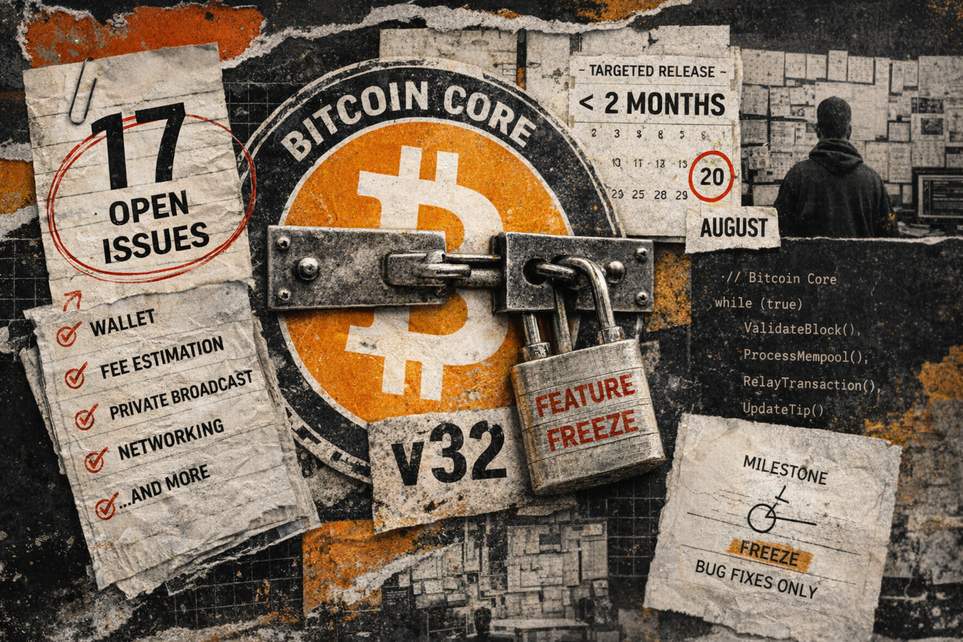
Heads up: Bitcoin Core is heading into its v32 feature freeze on Thursday, Aug. 20. That’s the moment when new toys get boxed up and the maintainers switch to polishing, fixing bugs, and preparing the release candidate. The plan is to split the 32.x branch and push v32.0rc1 around Sept. 10, and aim for a final v32.0 tag by Oct. 10.
In plain terms: if a feature patch doesn’t land before the freeze, it won’t go through the regular v32 path and will likely wait for v33. Fixes are still allowed during the run-up to rc1, so critical bugs can still sneak in. The freeze also locks down translation strings and trims what can realistically be finished in time.
What’s tripping the release up (rebases, wallets, and fees)
Not everything is smooth sailing. Two noticeable changes are flagged as needing a rebase — meaning the patches don’t cleanly apply to the current code anymore. One proposal would let node operators reject unencrypted v1 outbound clearnet connections, and another would cap simultaneous HTTP clients. Those “needs rebase” tags leave the fate of these changes a bit up in the air: they may be ready authors just need to rework them, or they might miss the deadline.
Wallet upgrades are also raising eyebrows. One proposed fix aims to preserve access to older Miniscript-based wallets when a recomputed descriptor ID doesn’t match the stored record, addressing a reported upgrade-related load failure. There was at least one documented case where an upgrade caused a wallet error when going from v29.2 to v31.1; that proves the problem can happen, but how often and how severe it is across users is still not clear.
On the fee side, there’s a proposal to tune the estimator so it only uses mempool data to lower the block-policy recommendation. The goal: help people avoid overpaying while keeping a conservative safety bound so transactions still get confirmed reliably. It’s the kind of tweak that tries to balance thriftiness with not upsetting miners and confirmation behavior.
Private-broadcast and rebroadcast handling are under scrutiny too. One change is focused on stopping rebroadcast-related state from growing out of control, and a related test for v1 retry behavior is currently failing. Those technical nits can matter a lot for node operators who run long-lived services or rely on specific retry semantics.
Bottom line: Thursday’s freeze will be the gatekeeper. Some features clear it with time to spare, some will need rebases or fixes and may slip to the next cycle, and bug fixes still have a shot during the release-candidate window. One last caveat: the documented release schedule covers packaging and testing of the software; activation of consensus rules is a separate process and isn’t governed by these v32 milestone dates.
