
BTCS Swapped ETH to Repay Aave, Ended Q2 With Just $317K in Cash
The short version (aka TL;DR for caffeine-deprived investors)
In the second quarter, BTCS converted some of its Ethereum into USDT to pay down loans on Aave. By June 30 the company was sitting on roughly $317,113 in cash and stablecoins — not exactly a war chest — while holding about $88.1 million worth of other digital-asset line items on the balance sheet.
So yes, they still have lots of crypto-y things, but most of those assets aren’t cozy, risk-free cash. They’re exposed to market swings, protocol quirks, and the occasional DeFi drama.
What the numbers actually say (without the boring legalese)
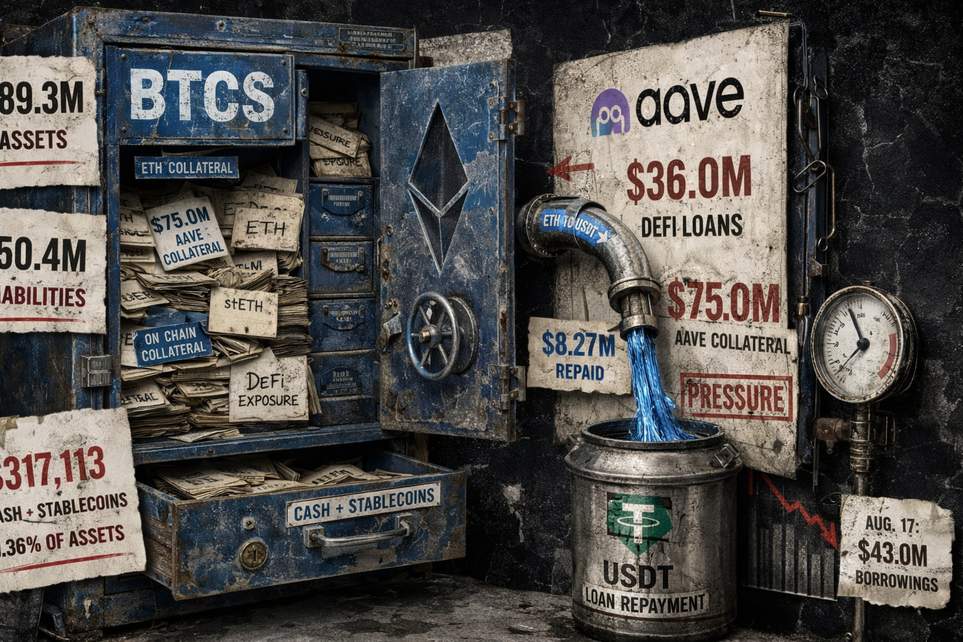
Here’s the play-by-play: BTCS reported roughly $89.3 million in total assets and about $50.4 million in liabilities at quarter-end. That liability pile included around $36.0 million in loans tied to DeFi protocols. On the cash front, the split was about $262,436 in cash plus $54,677 in stablecoins — together about 0.36% of total assets. Tiny, right?
During Q2 the company converted Ethereum into USDT to cover roughly $8.2 million of Aave principal and a little over $380,000 of interest. Those ETH swaps trimmed both the collateral on hand and the outstanding borrowing.
The collateral story is interesting: collateral reported on Aave dropped from about 49,970 aEthWETH (valued at roughly $105.1 million at one point) down to 47,775 (about $75.0 million) by June 30. DeFi borrowings slid from roughly $43.8 million to $36.0 million in the same window. By late summer the company showed around $43.0 million of borrowings backed by roughly 46,525 ETH valued near $88.7 million — which means borrowings rose a touch while collateral units ticked down, though collateral value had recovered a bit with ETH price moves.
Numbers aside: BTCS posted a net loss of $34.9 million in Q2. That included roughly $21.4 million in unrealized digital-asset markdowns and about $4.9 million of realized transaction losses, so not all of that hit the cash register. Cash used in operating activities was modest — about $1.3 million for the first half — while many DeFi-related changes were recorded as non-cash adjustments.
There was at least one bright spot: Q2 gross profit came in around $1.5 million with a hefty margin near 61%, and DeFi-related revenue also totaled about $1.5 million. Strong margins help, but they don’t erase the fact that managing collateral can force crypto sales when market prices slip.
Bottom line: BTCS isn’t out of assets, but a big slice is wrapped up in volatile crypto positions and DeFi deployments. That means the company’s real liquidity cushion is thin, and future market dips could prompt more swaps or sales unless the debt picture improves or fresh capital arrives.
What to watch next: updated snapshots of debt, collateral levels, and the company’s health factor on its lending positions. Without those, a bounce in ETH prices doesn’t guarantee they won’t need to sell more if the next downturn hits.
