
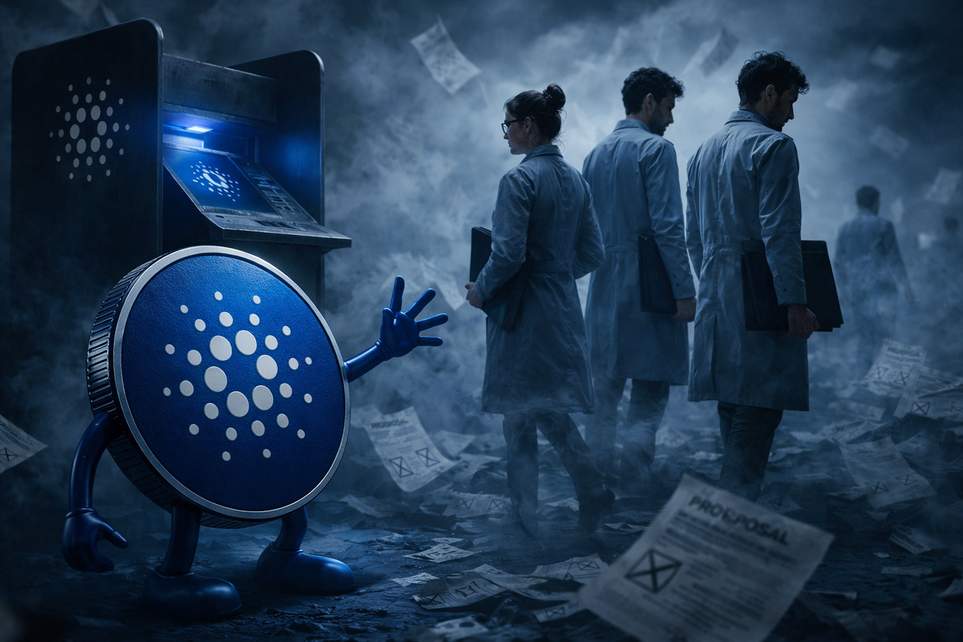
Cardano at a Crossroads: Vote Snubs Could Send Scientists Packing
Short version: what’s happening
Cardano’s core development shop, Input Output, asked the community to bankroll a bunch of research and infrastructure plans for the next cycle. The big headline: roughly 46.8 million dollars-worth of work spread across multiple proposals, and a separate nearly 33 million ADA research request that’s getting the cold shoulder.
These plans need a supermajority from delegated representatives (DReps) — about a 67% ‘yes’ — to unlock treasury funds. But voting is limp: several key asks are sitting well shy of the threshold, a lot of voting power is abstaining, and large blocks haven’t bothered to cast ballots. Translation: important upgrades and labs could be left unfunded.
Why people are sweating (and why it’s kind of dramatic)
Here are the stinkers and the survivors, paraphrased for maximum clarity and minimum boredom: the maintenance program that keeps the network up and safe is far from assured, scaling/Layer‑2 plans are barely getting traction, and experimental projects aiming to bring Bitcoin liquidity or decentralize indexing are getting low support. A few developer‑focused proposals — like automated formal verification — are closer to the finish line but still below the supermajority needed.
One proposal in particular, the long-term research package often referred to as a vision-for-2026 plan, is asking for nearly 33 million ADA to keep a research lab and a team of scientists on payroll. The founder, Charles Hoskinson, warned that if that proposal fails, the lab could shut and researchers might leave for greener pastures. In other words: lose funding, lose people, lose technical momentum.
Numbers matter here. Examples you might find useful: a maintenance initiative, a large chunk of the request, was well under the approval threshold and had a huge amount of abstentions; Layer‑2/rollup work was polling in the teens; a Bitcoin liquidity engine pitched for a few million ADA also struggled; developer tooling and Plutus improvements had mixed results — some near majority, others lagging. And one upgrade that would let users pay fees in other native assets had almost 60% support but still needs that last push to hit 67%.
So why the hesitation? Part of it is budget discipline — DReps are asking tough questions now that they control the purse strings. Part of it is voter apathy: when big chunks of voting power sleep on the job, critical spending stalls. And part of it is governance growing pains: decentralizing financial decisions is noble, but messy when turnout is low.
What happens if the votes fail? Delays in upgrades, reduced maintenance, and the very real chance that top researchers and engineers move to ecosystems that offer steadier funding and career security. For a project that sells itself as “the science coin,” losing its research backbone would be an existential slap.
Bottom line: this isn’t just a budgeting spreadsheet — it’s a test of whether a decentralized community can reliably fund long-term technical work. If you care about Cardano’s technical future, someone needs to care enough to vote.
