
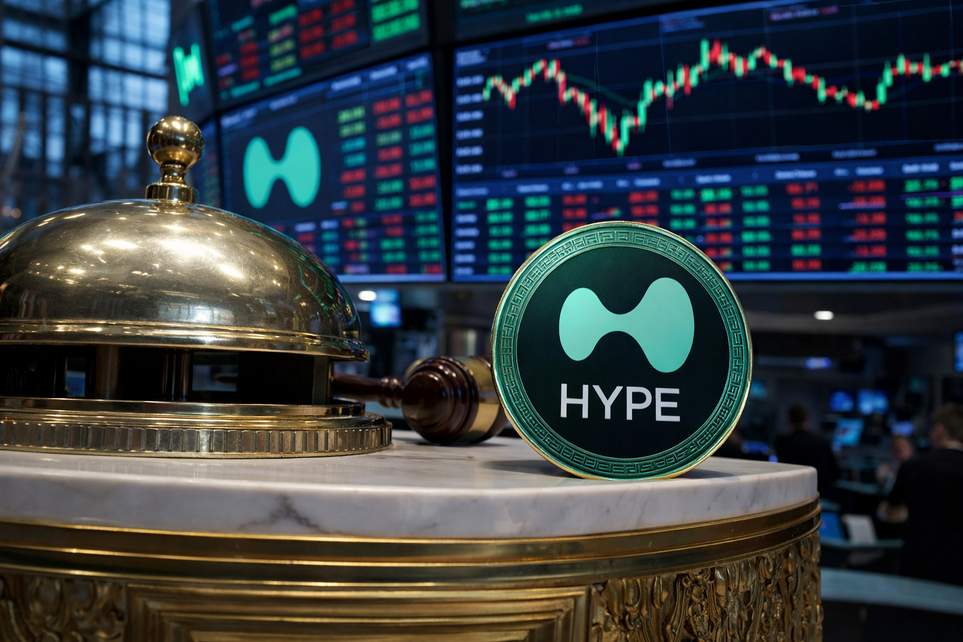
Is HYPE Heading to $100? How Hyperliquid Became Crypto’s On‑Chain Wall Street
Hyperliquid’s native token, HYPE, has been doing its best rocket impression — topping out near $62 and more than doubling year‑to‑date, pushing the token into multibillion‑dollar market cap territory. At the same time the protocol’s on‑chain metrics have swollen: total value locked popped back above several billion dollars and derivatives activity has been hitting fresh multi‑month highs. In short: the little exchange that could is suddenly behaving like a financial megastore.
How Hyperliquid turned into on‑chain Wall Street
What used to feel like a niche DeFi playground has been quietly mutating into a one‑stop shop for trading everything from crypto to commodities and even synthetic pre‑IPO exposure. Instead of the old school split between broker, exchange, and custodian, Hyperliquid is gluing those pieces together so capital can move faster and with fewer middlemen. That kind of convenience is catnip for institutional money.
Traditional finance bridges — think exchange‑listed products that let regular investors get HYPE exposure without messing with wallets — have been a big catalyst. A few asset managers launched ETF‑style wrappers for HYPE, and those products quickly accumulated meaningful assets while trading volumes for the suite jumped toward the high tens of millions, rising sharply since their launch. That kind of on‑ramp brings in buyers who typically don’t touch decentralized exchanges.
On the trading side, derivatives metrics have been noisy in a good way: funding rates swung, shorts were squeezed, and open interest climbed into the billions as new participants piled in. Analytics flagged heavy short positioning and then a rapid unwind — the classic short squeeze — which amplified the rally. Meanwhile, product innovation has broadened the venue’s appeal: perpetual contracts on commodities (gold, silver, oil), synthetic exposure to private companies, and a new upgrade that adds outcome‑style contracts—useful for betting on event outcomes rather than just price swings.
Two practical things to note: a sizable chunk of the recent price action happens during US trading hours, even though US retail is geofenced from trading on the platform directly; and the suite of new tradable products has made Hyperliquid attractive as a hedging venue when legacy markets close for geopolitical fireworks. In short: more asset types + easier access = a lot more eyeballs and capital.
Will HYPE hit $100? Rocket fuel and runway hazards
Short answer: it could, but it’s not a sure thing. Market bettors have been pricing in decent chances of new highs — some markets imply roughly a 70% likelihood of reaching highs near the low‑$60s, a similar chance for breaking $70, and a smaller but notable chance of $100 by year‑end. Those odds have expanded quickly as sentiment shifted.
For $100 to be more than wishful thinking, several things have to keep humming: ETF and institutional demand needs to keep bringing fresh cash; futures positioning must avoid getting ridiculously crowded; on‑chain volume and fees need to stay healthy; and locked capital and stablecoin balances should remain robust so the venue can handle big flows without melting down. When those parts line up, reflexive buying can push prices higher — early holders stop selling, FOMO buyers jump in, and the loop feeds itself for a while.
But the flip side is real. If ETF inflows slow, if open interest becomes a tinderbox of crowded bets, or if long‑term holders start trimming stakes, the momentum can reverse fast. That’s especially true in a market where leverage is available and headlines move sentiment at warp speed. In plain English: delicious upside, measurable downside.
If you like drama and growth, Hyperliquid is the soap opera you want to watch — fresh products, institutional interest, and a market structure that can turbocharge moves. If you prefer predictable spreadsheets and slow compound returns, this is probably not your cup of chamomile. Either way, HYPE’s run has made one thing obvious: this experiment in collapsing traditional finance lanes into a single on‑chain venue is now a major storyline in crypto markets.
