
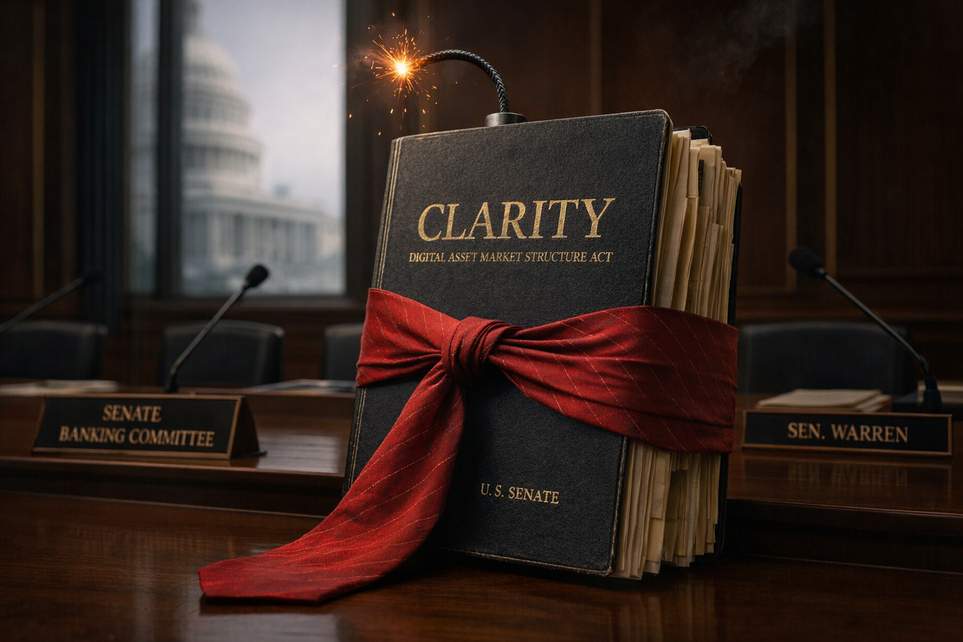
CLARITY Act Markup May Collapse Over Ethics Fight Tied to Trump-Linked Crypto
Why the markup suddenly smells like political popcorn
Lawmakers were gearing up to mark up a big crypto bill that would try to clarify which agency — the SEC or the CFTC — gets to boss around digital assets. But what started as a wonky regulatory debate has turned into a high-stakes political tug-of-war. The trigger? A push from some Democrats to bake strict ethics rules into the committee version, aimed squarely at preventing elected officials and federal staff from benefiting from crypto deals tied to the president’s family.
The result is chaos-level committee drama: negotiators are juggling technical fixes to market structure while simultaneously fending off accusations that they might greenlight a law without safeguards against obvious conflicts of interest. Republicans argue that ethics language belongs elsewhere or should be added later, while some Democrats insist the protections must appear in the committee text itself — or they’ll withhold support.
Two battles in one: ethics and banking (with a ticking clock)
There’s more than just the ethics row. Traditional banks still worry that certain stablecoin reward structures could act like hidden bank interest and pull deposit-like money out of the banking system. Lawmakers negotiated new wording meant to block rewards that look exactly like bank interest while leaving room for platform perks that reward usage or engagement. That compromise helped get the bill back in play, but the details remain a magnet for grumpy bank lobbyists.
Meanwhile, the ethics fight is fueled by high-profile reports and congressional scrutiny of crypto activity tied to the president’s family. Critics say those ties raise obvious conflict-of-interest and national security questions; defenders call the complaints politically motivated. Either way, the disagreement has transformed the markup into more than a technical exercise — it’s a proxy war over whether Congress can pass major crypto rules while these allegations hang in the air.
Supporters of the bill point to public polling that suggests many voters want clear federal rules for digital assets, and they warn that delays could push innovation offshore. Opponents — and many wary Democrats — counter that passing a big market-structure bill without ethics guardrails would be politically risky and potentially normalize a system where officials profit from policy outcomes.
So what happens next? If the committee tries to move the bill without the ethics language, expect pushback from Democrats who see that as a dealbreaker. If Republicans or others refuse to let those provisions into the committee text on jurisdictional grounds, the bill could get stalled or splintered. Add an approaching legislative calendar and election season politics, and the whole thing looks like a soap opera that also happens to govern trillions in financial incentives.
For the crypto industry, this markup is a fork-in-the-road: it could finally deliver regulatory clarity they’ve been craving since the big shakeups in the market — or it could get hung up in partisan fights that leave companies guessing about the rules for months more. For Democrats, it’s a choice between pushing through a regulatory win now or holding out for ethics protections they can defend in public and political fights.
