
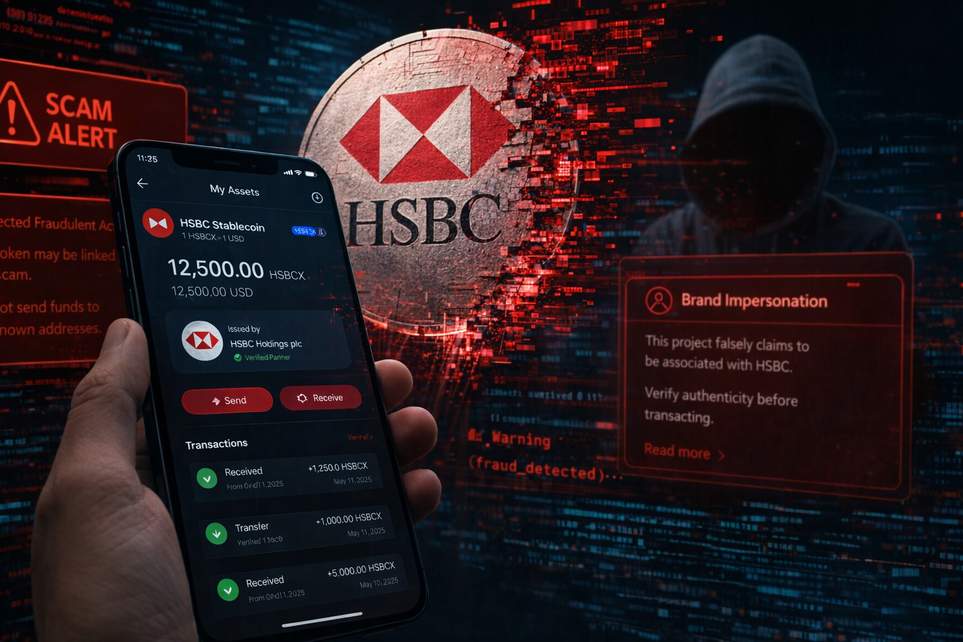
Fake ‘HSBC’ Stablecoins Are Live — Beware of the Bank-Impersonation Scam
This scam doesn’t look like a cartoon villain
Imagine a fake wearing a tuxedo: no dodgy Discord servers, no promises of moon-bound returns, just a polished ticker and a brand name grandma recognizes. That’s exactly what popped up recently — tokens carrying bank-like names showed up on the market, and the local regulator stepped in with a warning. In short: criminals slapped familiar bank branding on tokens and hoped most people wouldn’t look twice.
The regulator made it clear that tokens with the tickers using bank names weren’t issued or authorized by the licensed stablecoin issuers they appeared to copy. The real licensed projects have been approved, but neither of the regulated stablecoins had actually launched when the impostors arrived. In other words: the name looked legit, the product didn’t.
Why is this scary? Because bank brands carry built-in trust. A random token with a cute name gets ignored, but slap a century-old bank’s letters on the ticker and people pause. Scammers are counting on that pause — and on momentum from real licensing announcements — to trick people into transacting with counterfeit tokens.
Why it matters, and what you can do (besides scream into the void)
This kind of fraud is different from the usual crypto pump-and-dump. Traditional scams rely on hype and fake urgency; this one leans on borrowed credibility. Regulators have set up strict licensing rules for stablecoins: think full-reserve backing, identity-checked wallets, and regular disclosure. Those rules are meant to create real, verifiable trust. The problem is that the name-of-the-token system on blockchains is trivial to spoof.
Legal penalties exist — fines and possible prison time for unauthorized issuance or false licensed claims — but enforcement takes time, and the copycats move fast. Meanwhile the reputational damage is immediate: a fake token with a famous bank name can scare off customers before the real product ever reaches them.
So what should you actually do? A few practical (and low-effort) habits will help more than panicking:
– Don’t assume a token is real just because it uses a bank name. Wait for official product launches and communications from the bank itself.
– Check the regulator’s public list of licensed issuers before you buy. That registry is the single source of truth for who is authorized to issue regulated stablecoins.
– Look for wallet-level verification tools or official badges from the issuing institution, and be wary of listings that appear out of left field on exchanges.
– Exchanges and wallets should flag unauthorized tokens and coordinate with regulators and issuers. Consumers should pressure these platforms to prioritize name-authentication tools.
When bank-branded stablecoins go mainstream, authentication has to be treated as part of the product — not a post-launch add-on. Public registries, wallet verification, clear exchange labeling, and simple consumer education (yes, boring guides that people actually read) are the weapons we need against this tuxedoed trickster.
The moral: if you see a token with a bank’s name, do a tiny bit of homework. It takes a minute to check and could save you a lot of headache — and possibly your money.
