
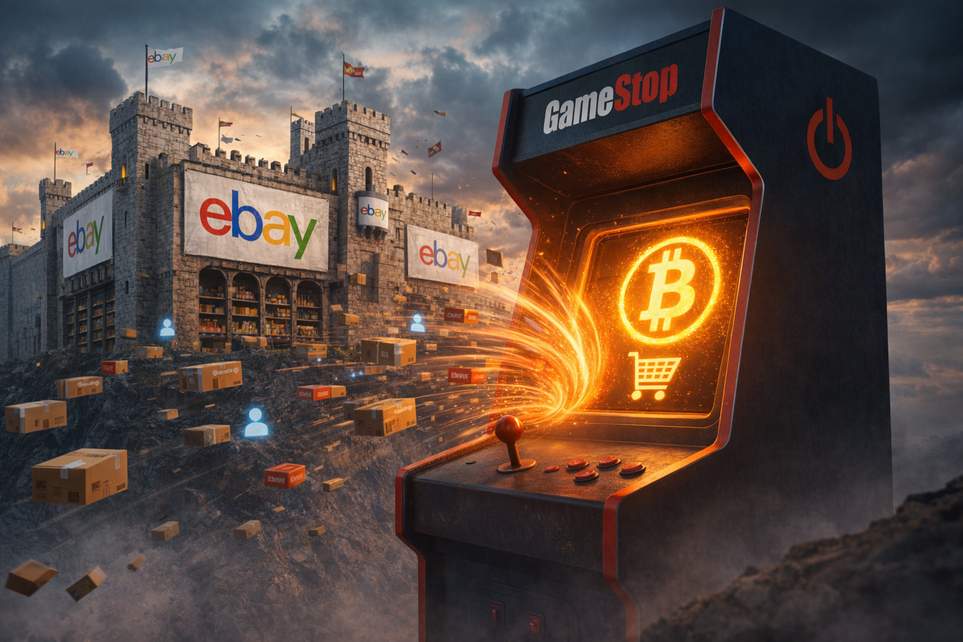
What If GameStop Bought eBay? A 135M-Buyer Bitcoin Test Drive
GameStop’s audacious proposal, in plain English
Short version: GameStop threw a giant, slightly surprising hat into the eBay ring with an all-in offer valuing the auction-style giant at about $55.5 billion. The pitch mixes cold cash and GameStop shares — roughly half and half — and the retailer says it already owns a meaningful slice of eBay through a blend of stock and derivatives.
The bid lists a hefty per-share price and leans on GameStop’s own cash pile plus outside financing promises. That combination is why some investors squinted: GameStop is trying to buy a company several times its size using a cocktail of savings, loans, and stock value that could swing. Markets reacted exactly how you’d expect — nervous. GameStop shares slipped while eBay’s popped, as traders digested the odds of this actually happening.
Behind the headlines is a clear playbook from GameStop’s boss: trim costs, fold retail know-how into an online marketplace, and double down on categories where trust and physical inspection matter (collectibles, trading cards, retro gear, luxury sneakers, you name it). If the deal goes through, the plan would also put the GameStop CEO in charge of the combined outfit.
What this could mean for Bitcoin (and why meme coins might be jealous)
Now for the spicy, speculative part: GameStop already holds a stack of Bitcoin on its balance sheet. So imagine that Bitcoin-holding company suddenly controls a marketplace used by roughly 135 million people worldwide. That’s not just headline fodder — it’s a potential sandbox for real consumer crypto experiments.
Think of a few possibilities: eBay could add Bitcoin as a payment option at checkout, use instant payment rails like Lightning for speedy cross-border payouts, or offer merchants the choice to keep proceeds in crypto. For high-value goods — trading cards, rare sneakers, luxury items — blockchain-based certificates (the digital cousin of a notarized receipt) could become a thing, helping with provenance and fraud-proofing.
On the identity front, verified wallets could serve as a reputation layer, and top sellers might be invited into yield or options-style programs that mirror GameStop’s own finance moves. None of this is official road map material yet, but even partial adoption in niche categories could amount to the biggest real-world test of whether Bitcoin can move from institutional balance sheets into everyday commerce.
The reality check: hurdles, skeptics, and timing
Hold your crypto confetti, though. This offer is non-binding and depends on a lot: shareholder votes, the actual availability and terms of financing, and whether GameStop’s cost-cutting ideas won’t hollow out the very platform eBay sellers depend on. Regulators will also be watching — any large deal that reshapes resale, collectibles, and online commerce invites scrutiny.
Plus, eBay’s board has options: it can dig into the math and argue that the standalone business is worth keeping. The merchant base, cross-border logistics, and legal hurdles are non-trivial. If the bid fizzles, GameStop stays a Bitcoin-holding retailer with an appetite for creative finance moves. If it advances, we could be watching a major experiment in whether crypto can actually power parts of global e-commerce.
So, popcorn ready? This is one of those business-movie plots where the lead character either pulls off a madcap takeover or discovers the sequel is another episode of “not today.” Either way, it’s going to be entertaining for anyone who likes finance, video games, and the occasional blockchain-shaped plot twist.
