
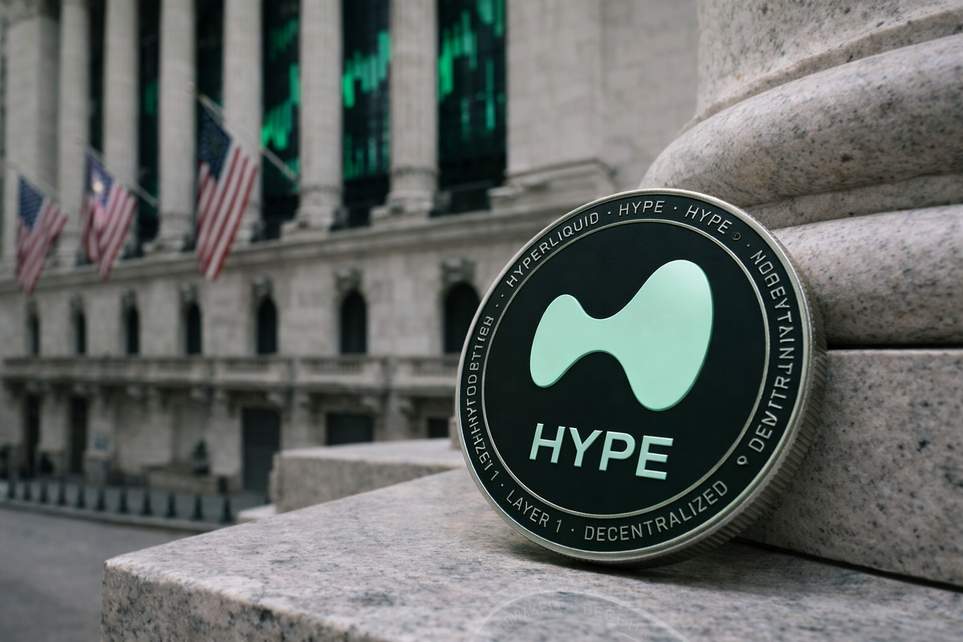
HYPE ETFs Pull in $161M in One Month as Wall Street Backs On‑Chain Exchange Bet
HYPE-themed ETFs quietly hauled in about $161 million of net inflows in the month after the Nasdaq listing of the THYP family — a tidy vote of confidence from institutional players who want exposure to an on-chain exchange without wrestling with wallets and self-custody.
What’s going on?
In short: the ETFs are doing all the heavy lifting for U.S. investors. With Hyperliquid restricting direct access for many Americans, exchange-listed funds have become the easiest way to own HYPE exposure. Nearly every trading day since launch saw money flow in; the lone blip was a single session with roughly $2.9 million redeemed from one fund.
The interesting part is the product itself. HYPE isn’t just a token — it’s a slice of an exchange-style business that publicly shows trading activity, open interest, fees and a buyback mechanism that funnels fee proceeds into token repurchases. Those on-chain metrics look impressive: monthly perpetual-futures volumes are in the hundreds of billions, open interest sits in the multi‑billion range, and fee and revenue run‑rates are approaching the high hundreds of millions annually. That creates a neat pitch for ETF issuers: more volume → more fees → more buybacks → smaller float.
ETF issuers and fund pages are pointing to actual balances and staking stats: tens of millions in assets under management for some funds, over a million HYPE tokens held on behalf of investors, a material portion staked, and modest annual staking yields after fees. Some issuers have even pledged to use a slice of management fees to buy and stake HYPE on their own books, which gives the market an extra demand floor tied to assets under management.
Why traders are hyped — and why you might want a helmet
The bullish case is straightforward and a little delicious: the platform has broadened beyond just crypto markets. A permissionless framework for launching perpetuals now includes traditional assets (think equity indexes and commodities), which diversifies fee sources and could keep the exchange’s revenue engine humming even if crypto volumes wobble. If 30‑day volumes stay in the high‑hundreds of billions, annualized revenue forecasts support a very optimistic token valuation.
But the downside is just as real. If monthly volumes tumble far below current levels, the revenue math flips quickly and buyback demand could fall short of token unlock schedules. That double whammy — lower fees plus heavy unlocks — would put pressure on price, and because HYPE’s tradable supply is relatively concentrated, outflows could be amplified.
There are also execution and regulatory risks. The platform competes with deep-pocketed centralized venues that offer heavy liquidity and mature compliance. Commodity and derivatives regulators have historically been strict; any enforcement spotlight on tokenized commodities or major derivatives activity could dent the revenue base that ETFs sell to investors.
Finally, ETFs introduce their own dynamics. While inflows have been steady so far, the real test is whether that demand holds as early gains become profit-taking opportunities. If inflows slow or reverse while unlocks accelerate, the market could get choppy fast — even if fundamentals still look decent on paper.
Bottom line: the HYPE ETF story is a neat mash-up of on‑chain transparency and Wall Street-style product distribution. It’s exciting, potentially lucrative, and definitely speculative — a prime candidate for investors who like volatility served with a side of exchange economics and a pinch of regulatory suspense.
