
Robinhood’s Crypto Slump — Saved by Options and a Memecoin Circus
Robinhood just pulled off a weird juggling act: crypto revenue dived, but options trading and a memecoin-fueled frenzy on its new chain gave the company a record quarter. Translation: the crypto portion of the business shrank, but other parts got loud enough to carry the show.
The numbers — crypto shrank, options exploded
Back in the fourth quarter of 2024, crypto-generated transaction revenue was about $358 million out of $672 million — roughly half of transaction income. Fast forward to Q2 2026 and crypto took a nasty 38% year-over-year hit, landing at about $100 million and making up only about 13% of transaction-based revenue.
Meanwhile, other trading categories went beast mode: options brought in roughly $342 million, event-style contracts pulled $156 million, and equities added about $129 million. Together those three accounted for roughly 81% of transaction revenue — roughly six times what crypto contributed in that quarter. On top of that, net interest income (think loans, margin, and subscriptions) was around $389 million, with other lines adding about $143 million.
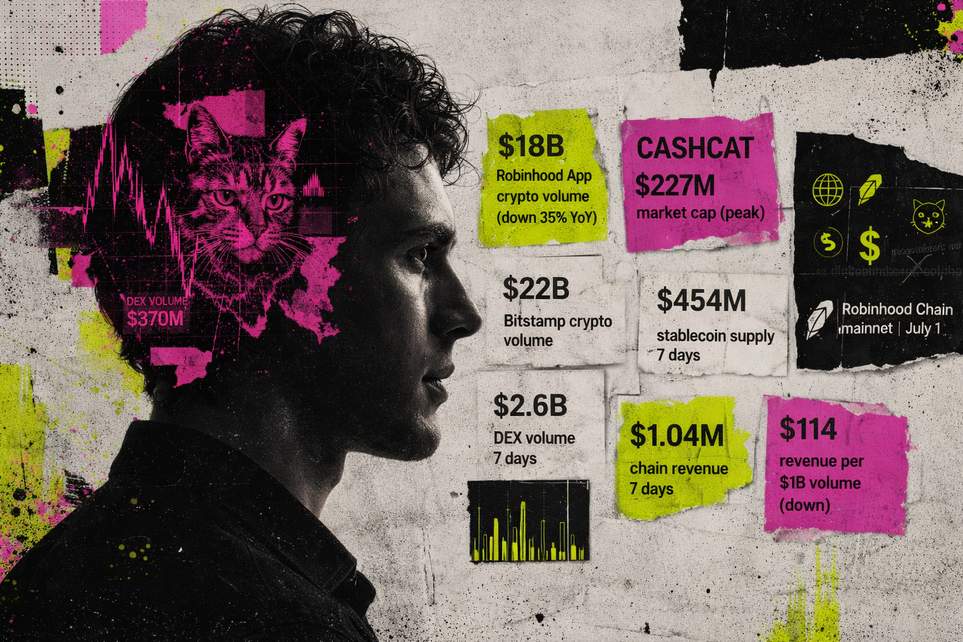
Volume tells part of the story. Total crypto notional volume for the quarter was around $40 billion. The classic Robinhood app supplied about $18 billion of that volume (down about 35% year over year), while an institutional venue supplied a larger slice at roughly $22 billion. That shift matters because institutional flow often yields lower revenue per dollar of volume: crypto revenue per $1 billion of notional fell from roughly $5 million to roughly $2.5 million over that period.
Robinhood Chain and the memecoin circus
Robinhood launched a public mainnet on July 1, a layer‑2-style network set up for tokenized stocks, real-world assets, DeFi lending, and other experimental finance ideas. The first real fireworks weren’t tokenized bonds or lending markets though — it was memecoins.
A memecoin tied to the company’s old “CashCat” story blew up, briefly topping more than $200 million in market cap before plunging and later sitting around $45 million after an approximate 80% drop from peak. That mania drove huge short-term activity: spot DEX volume on the chain spiked into the hundreds of millions on key days, token launches surged into the tens of thousands across multiple launchpads, and the network saw billions in decentralized exchange volume over a seven‑day stretch.
Some other quick datapoints from the chain rush: stablecoin supply on the network topped several hundred million during the peak week, chain revenue cracked the seven‑figure mark over seven days, and tokenized real‑world asset market caps remained much smaller than the memecoin market at that moment. In plain speak: memecoins created a traffic jam that boosted metrics fast, but the underlying tokenized finance ecosystem is still small by comparison.
What happens next is obvious and not obvious: if memecoin interest holds and tokenized products (stock tokens, stablecoins, RWA lending, perpetuals) find regular users, the chain could become a durable revenue layer and justify higher valuation. If that craze collapses, the spike will be remembered as a one‑week spectacle and chain revenue will likely cool off quickly.
Either way, the quarter underscores how Robinhood’s business is becoming more diverse: crypto is no longer the dominant drumbeat it once was, and a mix of options, event contracts, equities, subscription income, and new chain activity now drives the noise. Translation: everyone’s watching the memecoin party, but the company’s financial story now has more performers on stage.
