
Special Forces Soldier, $400K Bet, and a ‘Casino’ World: Prediction Markets on Trial
Guess what’s more dramatic than a spy novel? An active-duty Special Forces soldier allegedly turning classified military plans into a sweet prediction-market payday. The Department of Justice says the soldier used inside knowledge about a U.S. operation to place bets on an online event market and walked away with roughly $400,000. The whole thing has people on edge — from regulators to former presidents — and has reignited the question: are prediction markets public forecasting tools or backstage betting rings?
The arrest and the alleged play-by-play
Here’s the short version of the charge sheet. Prosecutors say the soldier had access to nonpublic details of a covert operation aimed at removing a foreign leader. He allegedly signed nondisclosure agreements, then opened a prediction-market account at the end of December, used a VPN, and made a string of buys tied to that operation.
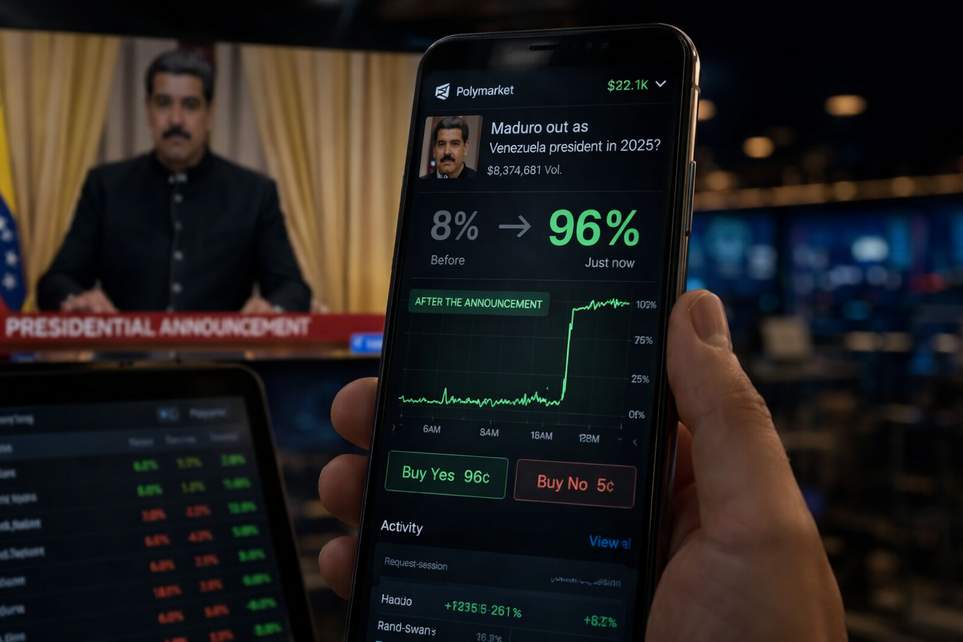
Officials allege he spent roughly thirty-something thousand dollars buying “Yes” positions across several related contracts and amassed hundreds of thousands of shares at a very low average price. When the public announcement came, that contract’s price rocketed and the complaint says the trader realized more than $400,000 in profit. The legal papers list counts such as unlawful use of confidential government information, theft of nonpublic information, commodities fraud, wire fraud, and an unlawful monetary transaction — but remember, these are allegations until a court says otherwise.
The platform where the bets were placed reportedly flagged suspicious activity and referred the matter to law enforcement, and investigators say they cooperated. Still, the timeline is the tricky part: the question isn’t just whether someone was caught, it’s whether a small group of insiders can routinely turn secret knowledge into guaranteed market wins before the rest of us know what’s going on.
Why this matters (and why people are grumpy)
Prediction markets promise a neat little miracle: they turn collective expectations into public odds. But that magic evaporates fast if a participant has secret access to the event they’re betting on. That’s the credibility problem. If insiders can repeatedly trade on private government timing, market prices stop being a useful public signal and start looking like a private scoreboard for people in the know.
Regulators are already leaning in. Rulemakers have warned market operators that event contracts can fall under anti-fraud rules when confidential information is misappropriated, and agencies are testing how far existing laws reach. The criminal case alleges the advance-information edge; market authorities focus on whether the trading was manipulative or otherwise abusive. Both angles are important, but they address slightly different problems.
For prediction-market operators the checklist just got longer: better identity and restricted-person screening, sharper real-time surveillance to spot suspicious order patterns, clearer rules about who can trade what, and faster escalation paths when red flags pop up. Detecting wrongdoing after a payday is useful for enforcement, but it doesn’t stop the damage to market trust.
Meanwhile, public figures have weighed in with colorful imagery. One comment called the modern world ‘‘somewhat of a casino,’’ which, honestly, sums up why people are upset — if markets feel like games for insiders, casual users and journalists stop treating the odds as meaningful.
Bottom line: this case is a narrow legal test about one alleged insider, but it’s a broad credibility test for the whole prediction-market model. Platforms will need to prove they can keep the house edge from turning into an insider’s snack. Until then, these markets will look less like useful forecasting tools and more like high-stakes entertainment — fun to watch, risky to trust.
