
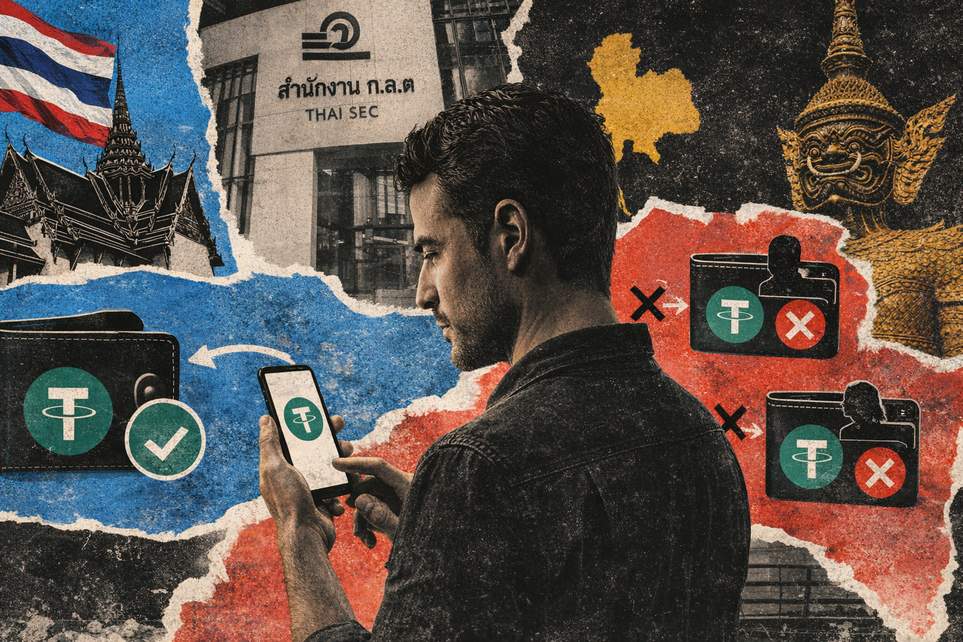
Thailand’s proposed stablecoin rule would block transfers to other people’s wallets
What’s being proposed
The Thai Securities and Exchange Commission has floated a new idea: if a stablecoin (think USDT or other dollar-pegged tokens) lands in an account at a licensed crypto operator, it must come from a wallet or account that’s been verified as belonging to that same customer. Withdrawals would work the same way — coins can only leave to a verified wallet owned by the account holder.
Put bluntly: under the draft rule, you couldn’t use a supervised exchange in Thailand to receive stablecoins sent from someone else’s wallet, or to send stablecoins to another person’s wallet. This restriction only applies to transfers that pass through SEC-supervised platforms — peer-to-peer moves that happen entirely off those platforms wouldn’t be directly covered.
The nuts and bolts — limits, reasons and timeline
The proposal also layers on some limits: inbound and outbound stablecoin transfers would be capped at 5 million baht per day, per person, per operator. There are carve-outs listed for certain business transfers, Bank of Thailand–authorized operators, and market makers, and the cap wouldn’t apply to transfers between customer accounts if both firms follow the Travel Rule. However, the draft doesn’t make crystal clear whether those cap exemptions would also relax the same-owner requirement — that detail could change during consultation.
Regulators say they came up with this after seeing rapid growth in stablecoin volumes (USDT gets a specific mention) and patterns they associate with money-laundering risks, cybercrime and ways of skirting cross-border transfer rules. The new owner-match test would sit alongside Thailand’s Travel Rule, which requires operators to gather counterparty info and verify ownership or control of some self-hosted wallets; the Travel Rule is set to take effect on Feb. 27, 2027.
The measure is a proposal, not a done deal. The SEC opened public consultation on Sept. 11, with comments due by Sept. 25, 2026. No effective date has been announced, so for now it’s a draft — interesting and potentially disruptive, but not yet binding.
Bottom line: if this becomes law, licensed Thai crypto platforms would act a lot more like tightly controlled bank tellers for stablecoins — if it’s not your verified wallet, they’ll probably refuse the transfer.
