
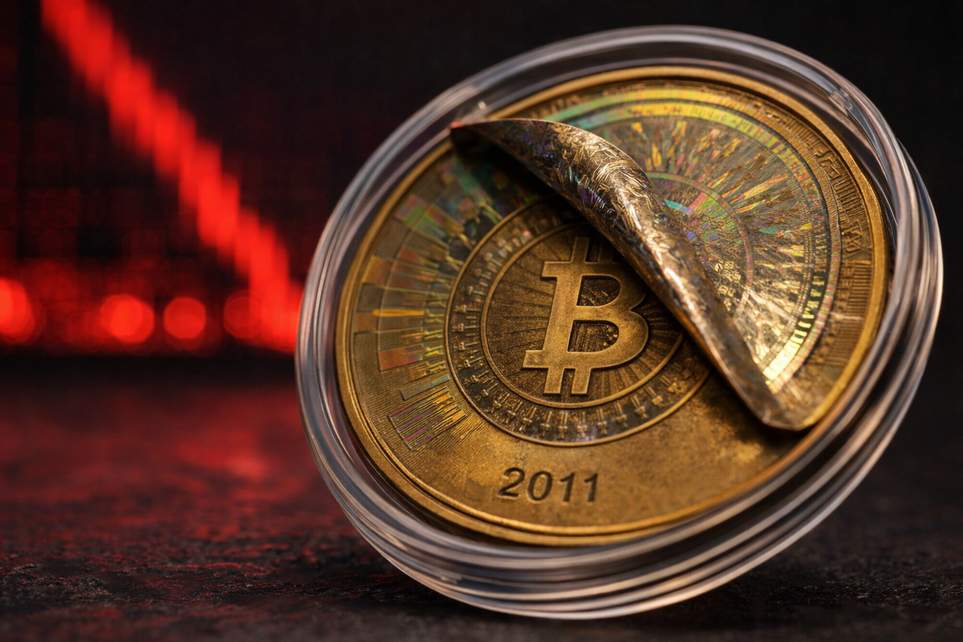
Vintage Casascius Coin From 2011 Redeemed — 25 BTC Wakes Up During a $62K Selloff
The short version: a dusty physical Bitcoin got unlocked
Someone apparently redeemed a vintage Casascius physical Bitcoin that had sat tied to a 25 BTC output since 2011. The old coin’s private key was used this week during a broader market wobble, turning a novelty metal object back into ordinary on-chain bitcoin.
The on-chain trail is refreshingly clear: the address in question received its 25 BTC output back on Dec. 7, 2011 (block 156,413) and then showed activity this June. On June 3 (block 952,159) the address spent 25.00002187 BTC, returning roughly 24.98998 BTC to itself after dealing with fees and dust. A follow-up transaction on June 4 (block 952,267) sent 24.98996629 BTC to a SegWit address and left the original address with a zero balance. The second move paid a fee of about 1,371 satoshis.
Why collectors and traders both raised an eyebrow
There are two ways to read this: culturally and economically. Culturally, Casascius coins are one of Bitcoin’s sticky myths — a physical coin with a private key sealed under a tamper-evident hologram. Keep the hologram intact and you’ve got a collectible; peel it and you’ve got spendable BTC. So whoever used that key likely converted a collectible into liquid bitcoin — a small, theatrical unwrapping that changes the object’s identity.
Economically, moving an old address doesn’t necessarily mean someone sold into the market. The chain proves the key was used and custody changed, but it doesn’t show a wallet-to-exchange deposit or an outright sale. The next signal to watch is where the recipient address routes: if it heads to an exchange, custodian, mixer, or known liquidity venue, that’s when this becomes a concrete supply event. If it stays parked, it’s simply a neat example of an old key waking up.
For context, 25 BTC in early June traded in the neighborhood of roughly $1.6 million (prices move fast, so that’s a ballpark). The distinctive thing about a Casascius redemption is the physical-choice angle — someone had to decide between keeping a rare collectible and turning it into fungible BTC — and that makes the movement feel different from a sleepy wallet that awakes after a decade.
Bottom line: a 2011 Casascius-linked address became active and nearly all of its balance moved to a new on-chain address. That’s an interesting custody change and a neat piece of Bitcoin history in motion. Whether it turns into market supply depends entirely on where those coins go next.
