
How $10,000 Became Nearly $870,000 — The Wild Decade That Left Stock Pickers Scratching Their Heads
A wild ten-year ride: Bitcoin vs. stock pickers
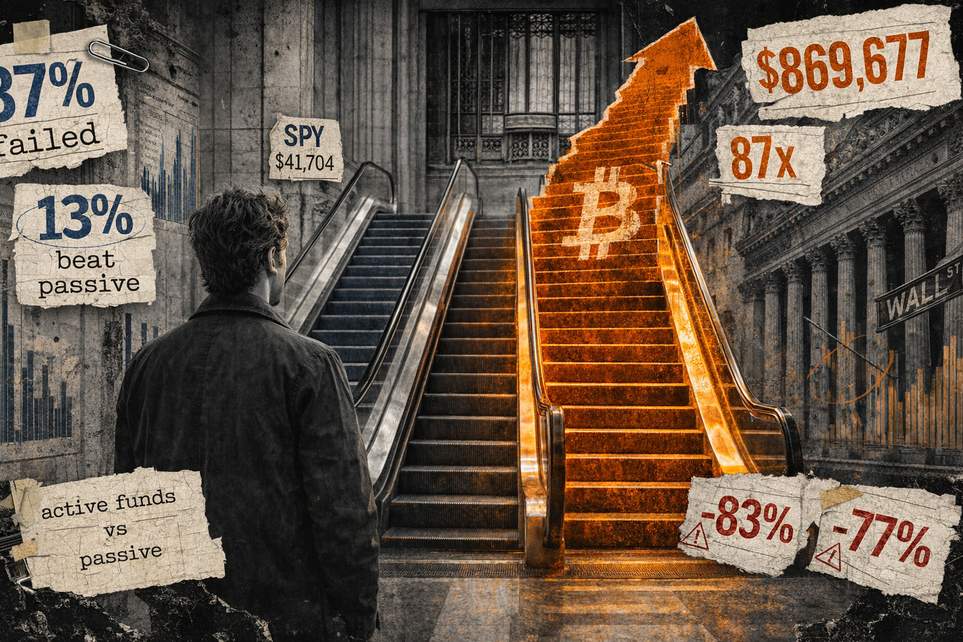
Here’s the headline in plain English: if you’d tossed $10,000 into Bitcoin on June 30, 2016, and stubbornly held on, that stake would have swelled to roughly $869,677 by June 30, 2026. That’s about an 87x gain, roughly an 8,597% total return, and a jaw-dropping compound rate near 56% per year. Wild, messy, and undeniably dramatic.
Over the same decade, the story for active large-cap stock managers was… less cinematic. Only around 13% of actively managed U.S. large-cap funds beat comparable passive benchmarks over the ten years through June 30. That shortfall eased a bit in the last 12 months, where about 27% outperformed, but the long-term math favors passive for most investors.
To put a still-crazier comparison on the table: the S&P-tracking ETF returned about 15.35% annualized for the decade. A $10,000 stake at that pace would end up near $41,700 — which means Bitcoin’s decade-long finish left it with roughly twenty times the ending value of that plain-vanilla index bet. That gap comes down to one simple (and painful) idea: asset allocation matters.
Concentration, volatility, and why surviving the ride mattered more than skill
Two big forces explain why the decade played out this way. First, concentration: the top 10 names in the S&P made up more than 40% of the index — the heaviest concentration we’ve seen since the 1960s. Market-cap weighting automatically rewards the biggest winners, so if a few mega-cap companies run the show, an index can steam ahead even while most active managers tinker around the edges.
Second, volatility. Bitcoin’s price history reads like rollercoaster fan fiction: it plunged roughly 83% from its 2017 high and dropped around 77% from the 2021 peak. To earn that 87x decade return, an investor had to eat both of those gut punches and keep holding. That’s psychologically brutal and practically expensive — custodian issues, taxes, liquidity quirks and portfolio rules make living through those drawdowns very different from owning a diversified stock ETF.
Put together, extreme index concentration makes it easy for passive funds to grow as winners get bigger, while active managers are punished for deviating. A portfolio manager can pick a bunch of decent winners and still lag if they missed just a couple of mega-cap rockets. On the flip side, a single asset-allocation call (say, adding Bitcoin) could dwarf the incremental gains from the best stock pickers.
Investor behavior also steered the outcome. Fund flows over recent years show where people put their dollars: indexed mutual funds and ETFs have grabbed a massive slice of assets, while many active products have seen outflows. That’s the market voting with its wallet — not a perfect endorsement of passive as doctrine, but a clear sign investors preferred lower-fee, simple exposure.
So what’s the takeaway? Big, concentrated winners and one heck of a volatile newcomer produced a decade that favored either cold-blooded endurance or lucky timing. If you like calm, diversified portfolios, this era is a reminder that spectacular returns often come with stomach-churning setbacks. If you like adrenaline and can tolerate wipeouts, the payoff can be enormous — but don’t pretend it’s easy or safe.
In short: heroic returns are possible, but they usually require either surviving the worst or being extremely lucky about when you jumped in. Keep that in mind the next time someone promises easy outperformance — it’s a lot less glamorous when the rollercoaster hits the bottom loop.
