
Metaplanet’s options pool blew up after a Bitcoin binge — and shareholders aren’t amused
Metaplanet went on a full-throttle Bitcoin shopping spree and something awkward popped up in the backseat: an executive options plan that quietly ballooned into a massive windfall. What started as a modest allocation morphed into hundreds of millions of potential shares as the company raised equity to pay for its growing Bitcoin hoard.
The runaway options pool — what actually happened
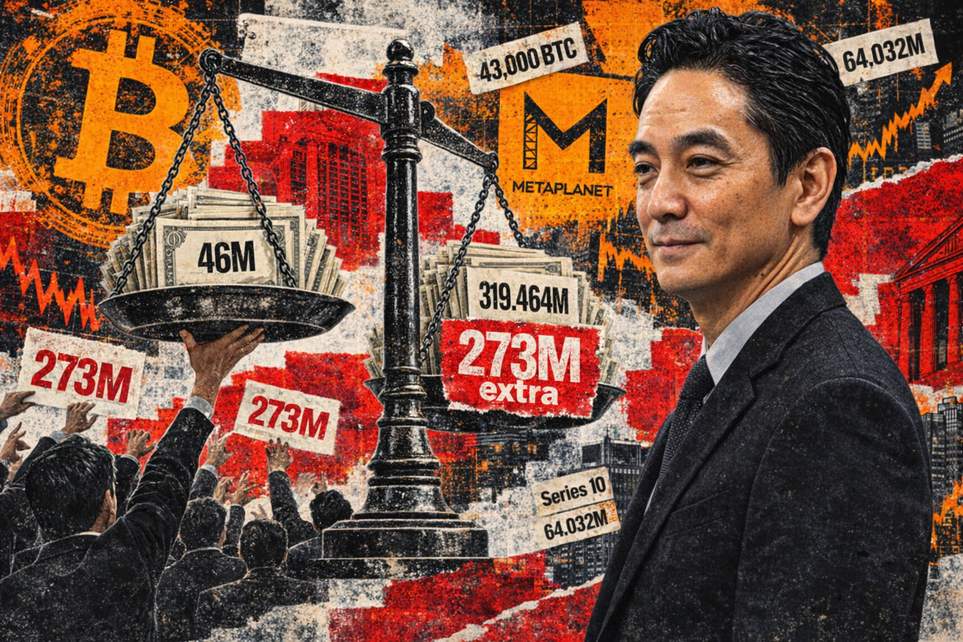
In early 2023 Metaplanet approved a Series 10 stock-rights plan covering about 46 million shares. That plan included an automatic adjustment rule intended to keep the grant roughly proportional to the company’s fully diluted share count. Fast-forward to the CEO’s April 2024 decision to pivot the company into a Bitcoin-treasury model, and Metaplanet began repeatedly issuing new shares to fund BTC purchases. The result: issued shares jumped from roughly 153.9 million before the pivot to about 1.28 billion by the end of June 2026.
Because the Series 10 formula tracked the expanding capital base, the executive options pool swelled too — from 46 million originally to about 319.464 million potential shares. That means roughly 273 million extra potential shares accumulated before the company removed the automatic adjustment clause on August 18, capping future growth of the pool.
Rather than rolling the pool back to its original size, Metaplanet froze it at the enlarged level. Then the CEO exercised part of his award: on August 28 he exercised 92,000 Series 10 rights and received 64.032 million newly issued shares, paying the legacy price of ¥10 per share (about ¥640.3 million). At a share price of ¥244 those shares had a market value near ¥15.6 billion, creating a roughly ¥15 billion paper gain. The newly issued shares are subject to a five-year lockup that generally prevents sale or transfer until August 2031, but the dilution had already occurred when the shares were issued.
Why investors are grumpy and what might change
Shareholders are upset because the surge in potential executive shares directly dilutes key metrics that investors care about, like Bitcoin per fully diluted share. As of June 30, Metaplanet held about 43,000 BTC against roughly 1.63 billion fully diluted shares — roughly 2,635 satoshis per share. If the roughly 273 million excess potential shares were removed from the denominator, that figure would jump to about 3,166 satoshis per share, roughly a 20% increase.
Some investors, led by vocal holders, want the company to undo the extra shares and replace them with a new incentive plan that is retroactive and tied to performance — not just an automatic formula that blew up when the company raised capital. The criticisms include that the expansion created body blows to existing shareholders’ ownership without adding new performance targets for executives, even though the company later put a five-year lock on sale of shares obtained under the plan.
There’s also a governance sidecar: questions have been raised about MMXX Ventures, a repeat shareholder and former lender, and what economic links or voting relationships exist between it, Metaplanet management and the CEO. The CEO has said he is a significant but non-majority shareholder of MMXX’s parent and that he does not take part in MMXX’s investment or trading decisions.
As a possible compromise, Metaplanet has floated converting up to 90,000 remaining Series 10 rights (about 62.64 million potential shares) into a new long-term incentive vehicle with service and performance conditions, without expanding the overall ceiling of authorized shares. Management has also said it will not let the pool keep growing with future equity raises, but it hasn’t agreed to surrender the roughly 273 million potential shares that were generated before the adjustment mechanism was scrapped.
So the story is part math, part optics, and part corporate soap opera: equity raises to buy Bitcoin inflated a formula-driven bonus pool, executives gained a big paper windfall, and investors are asking for a rollback or a performance-linked replacement. Expect more heated shareholder letters, proposals and negotiation as both sides haggle over how to square incentives with shareholder dilution.
