
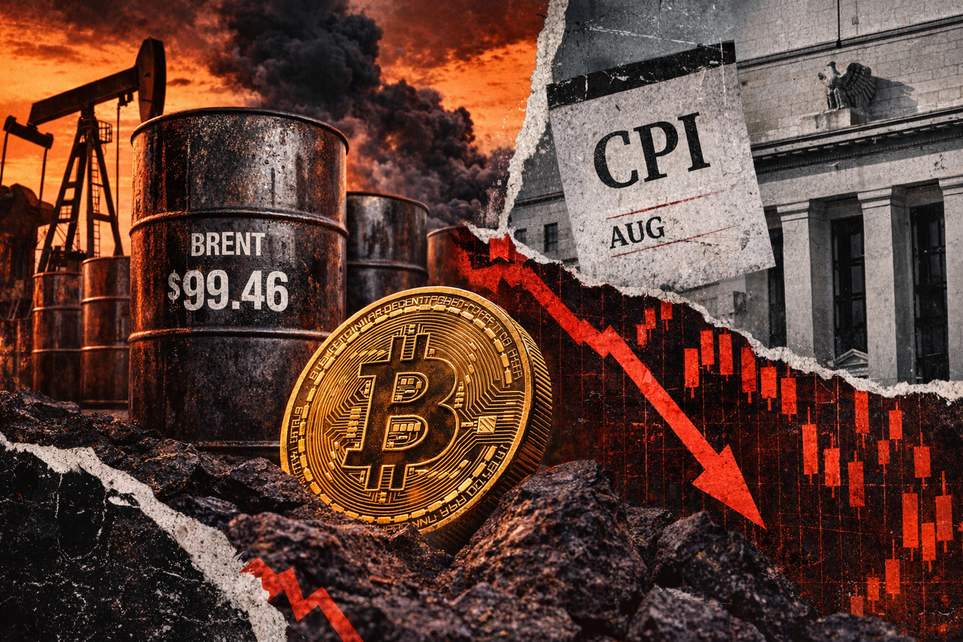
Oil Shock Sends Bitcoin Below $80K as CPI Timing Leaves Fed in a Pickle
The oil shock and the market right now
Bitcoin slipped beneath the $80,000 mark after a sudden disruption to Saudi energy facilities sent oil prices sprinting toward the $100-a-barrel line. That kind of headline is the market equivalent of someone dropping a bucket of cold water on the party — prices wobble, traders get twitchy, and headlines get louder.
At the time of writing, Bitcoin was trading in the high $70,000s, down roughly one to two percent on the day but still comfortably higher than it was a month ago. Meanwhile Brent crude flirted with the $100 level — even poking just over it intraday — after reports that operations at some Saudi facilities were interrupted following attacks by Yemen’s Houthi movement. Energy shocks like this can quickly inject uncertainty into inflation expectations, and markets tend to respond before economists can re-run their models.
Why the CPI calendar and Fed meeting make this messier
The annoying wrinkle here is timing. The U.S. consumer-price report for August is due before the Federal Reserve meets in mid-September, but it only measures price moves that happened in August. Since the energy disruption occurred in early September, the upcoming CPI print won’t capture that shock — any oil-driven inflation would show up in the October report instead.
That creates a gap: the Fed will be deciding policy on Sept. 15–16 with the latest official inflation numbers that don’t include the new oil spike. In other words, policymakers might be reacting to yesterday’s inflation picture while markets are fretting about today’s headlines.
The backdrop is already a mixed bag. July’s CPI climbed about 0.1% for the month and roughly 3.4% year-over-year; core measures (which strip out food and energy) were a touch firmer but still showing gradual disinflation. On the jobs front, payrolls added around 160,000 positions in August and unemployment sat a little over 4% — enough to keep the labor market in the “not-broken-but-not-great” lane. Fed officials have signaled that continued cooling would argue for holding rates, but hotter data or renewed energy-driven price pressure could tip the balance back toward a hike.
So what does that mean for Bitcoin? In the short term, the crypto’s path depends on two things: whether the August CPI comes in cool and whether oil calms down. A soft inflation print plus retreating crude would ease the argument for higher rates and could take pressure off risk assets. Persistent or rising oil prices, however, would add an inflationary tailwind that complicates the Fed’s job and could leave Bitcoin muted or volatile heading into the policy decision.
Bottom line: markets are trying to juggle yesterday’s data and today’s headlines — not an easy trick. Expect choppy trading until the inflation picture and oil prices stop throwing curveballs.
