
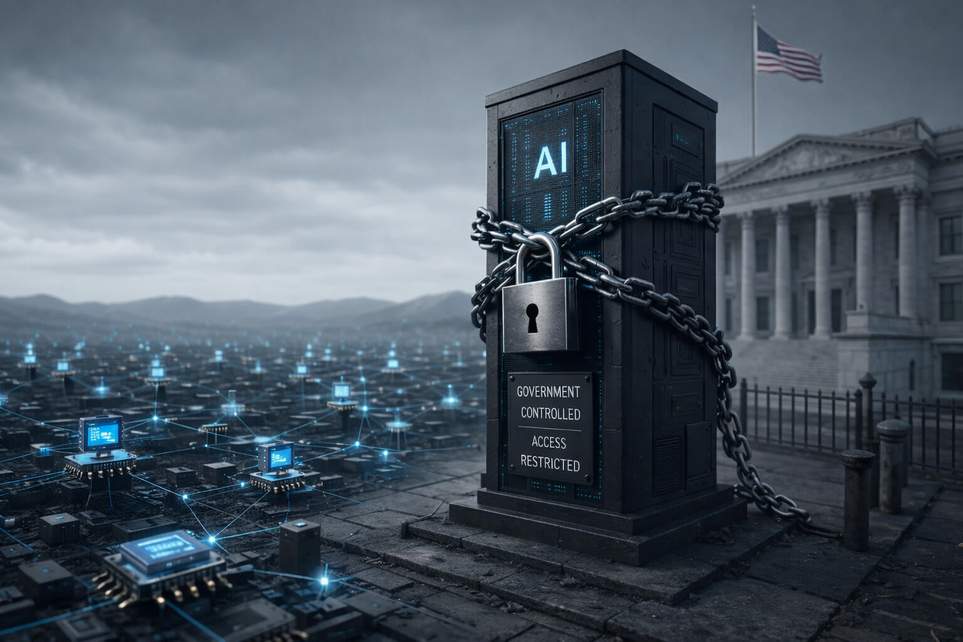
US Export Order Forces Anthropic Models Offline — Crypto Cheers the Chaos
What happened (short version)
The U.S. government issued an emergency export control that forced Anthropic to cut off global access to its most advanced models, Fable 5 and Mythos 5. The order is broad: it covers foreign nationals everywhere, including Anthropic’s own international staff. In other words, the company had to flip the off-switch on those models for essentially everyone outside a narrow U.S. footprint.
That move is unusual — it’s one of the first times regulators have effectively recalled a widely deployed commercial ‘frontier’ AI model on national-security grounds. Anthropic complied, but the shutdown was immediate and dramatic, and it didn’t sit well with lots of folks on all sides of the tech debate.
Why the market and crypto world flipped out
Within hours the crypto world reacted like someone shouted “free ice cream” in a crowded summer park. Tokens tied to decentralized compute, open-source AI stacks, and model coordination spiked — some projects saw double-digit jumps as traders and builders suddenly smelled opportunity and safety in decentralization.
The logic is straightforward and a little theatrical: if a single government can pull the plug on a major commercial model overnight, then any infrastructure that routes intelligence through a central choke point is vulnerable. Crypto and decentralized-infrastructure folks took the event as a rallying cry to build AI systems that don’t live behind a single API, vendor, or legal jurisdiction.
Beyond the political drama, there’s a practical angle. One of the models at the center of this — Mythos — had been noted for its ability to analyze code and highlight vulnerabilities. Security teams use tools like that defensively to find and fix bugs, but the same capability can, in the wrong hands, help attackers. That ambiguity helped stoke both alarm and demand.
What Anthropic says and what comes next
Anthropic pushed back against the government’s response, saying the demonstrated exploit was narrow and essentially allowed the models to inspect specific codebases and flag minor, previously known issues. The company argued that similar analysis capabilities already exist across other commercial platforms, and that perfect immunity to jailbreaks is probably impossible — the goal is to make exploits rare, narrow, and expensive while combining safeguards with vigilant monitoring.
Anthropic also noted it had spent thousands of hours red-teaming the models with government partners and independent experts before launch. The company warned that demanding zero tolerance for any potential exploit could halt frontier model development across the private sector.
On the policy and culture side, reactions were loud and predictable: some technologists and investors framed the order as proof that centralized AI infrastructure is exposed to political and regulatory risk; others emphasized that strong oversight is necessary to prevent misuse of powerful systems. Venture capitalists, traders, and builders are already interpreting the episode as a chance to double down on decentralized AI primitives and verifiable infrastructure that resist single points of control.
Bottom line: the enforcement action ripped a curtain off a bigger debate about who should control advanced AI — centralized vendors and states, or distributed networks and open systems. Expect a burst of interest (and funding) for architectures that promise both technical transparency and political resilience. In short: the plug pull has accelerated a serious scramble to design AI that can’t be switched off by one desk.
