
Bit Digital Pledged Most of Its Staked ETH for a $50M Loan — Here’s the Catch
What actually went down
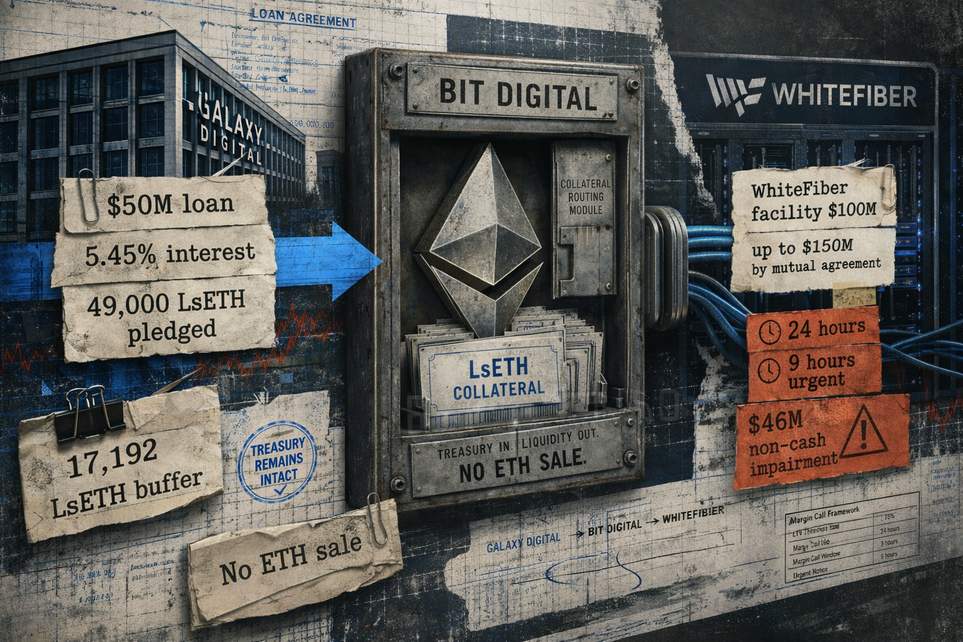
Bit Digital converted most of its staked Ethereum into a liquid-staking token and then used the bulk of that token as collateral to borrow cash — without selling any ETH or issuing new shares. Specifically, the company swapped about 73,235 ETH and got roughly 66,192 LsETH in return. Out of that pile, 49,000 LsETH were pledged as collateral for a $50 million loan from Galaxy Digital. The remaining 17,192 LsETH was left on the books as a cushion against margin calls.
The $50 million was drawn on May 20 at an interest rate of about 5.45%. Separately, Bit Digital is tied up with a delayed-draw financing connected to its majority-owned AI-infrastructure venture, which started with a $100 million commitment and can be expanded to $150 million if both sides agree in writing.
Why this matters (and the juicy bits)
This setup preserved Bit Digital’s ETH holdings and avoided immediate dilution for shareholders — nice moves if you like keeping your crypto and your cap table intact. But it also attached a large chunk of the company’s crypto treasury to external financing, which introduces a new dependency: if collateral requirements change, the company could get an angry margin call.
The loan paperwork gives Bit Digital about 24 hours after a routine margin notice to add collateral; there’s even a faster nine-hour escalation if things get urgent. That doesn’t mean a liquidation is imminent, but it’s a reminder that loan-backed crypto positions come with timers and pressure.
On the accounting side, Bit Digital recorded a non-cash impairment of about $46 million on those liquid-staked tokens. That’s different from selling at a loss — the impairment is an accounting adjustment, not cash leaving the company — but it did contribute to a rough quarter: staking revenue dropped to about $900,000 from $2.3 million the previous quarter, and the net loss attributable to shareholders reached roughly $107.2 million. The company says it didn’t sell any ETH during the period.
So, the trade-off is obvious: the financing route preserved ownership and avoided issuing new shares, but it also made part of the company’s treasury value tied up in funding for the AI business. That shifts risk around rather than eliminating it.
Management is already juggling capital-allocation options — the CEO has said the board is considering share buybacks, subject to approvals — so expect more moves as they try to balance growth, liquidity, and shareholder optics.
