
Bitcoin and Ethereum ETFs Rally: $1B+ Inflows, BlackRock Steals the Show
Big week for crypto ETFs — more than $1 billion pours in
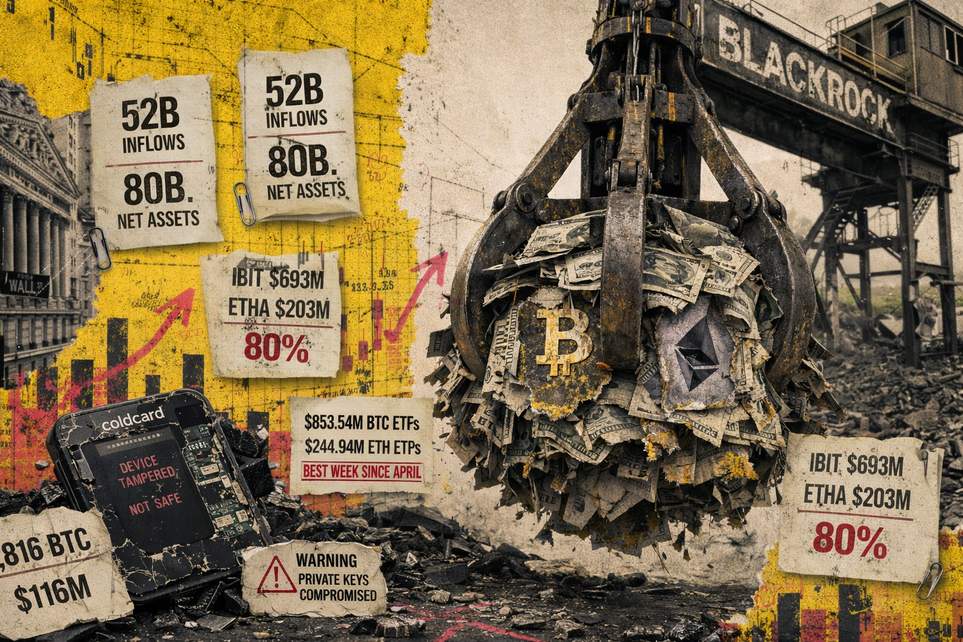
So, surprise: regulated crypto funds had a mini money-magnet moment. US-listed spot Bitcoin and Ethereum ETFs pulled in just over $1 billion in new cash during the week ending Aug. 7 — their best week since April. Bitcoin-focused funds led the charge, while Ethereum vehicles staged a solid comeback of their own.
Bitcoin ETFs took in roughly $853.5 million that week, with steady daily buying (including big days mid-week). One fund — BlackRock’s iShares Bitcoin Trust (IBIT) — accounted for the lion’s share, hauling in about $693 million. To put that in perspective, that’s well over three-quarters of the new money flowing into Bitcoin products. Since their U.S. launch, these spot Bitcoin funds have pulled in tens of billions in cumulative inflows and now manage a very sizable chunk of crypto assets.
Why this matters (and the weird timing)
Ethereum-focused ETFs also had a banner week, collecting around $245 million and extending a streak of weekly inflows. They actually started the week with a small outflow but flipped into strong net buying across the following days. Again, BlackRock’s iShares Ethereum Trust grabbed the majority of the category’s new cash — roughly 80% of that week’s Ethereum ETF flows.
What really spices up the plot is timing. The renewed demand showed up just after news of a major hardware-wallet exploit: researchers traced hundreds of lost or stolen Bitcoin—about 1,800 BTC by one estimate, worth roughly $116 million—to attacks starting at the end of July. Other tallies put the damage closer to $130 million. That kind of headline tends to make people rethink the whole “my keys, my coins” confidence-in-a-pocket mentality.
Some market pros noted the coincidence, suggesting the hardware-wallet breach could nudge investors — especially those seeking long-term exposure — toward institutional custody and regulated funds. That doesn’t prove anyone directly moved funds from a personal wallet into an ETF, but it does put the classic trade-off back under the microscope: do you want absolute control at the risk of device hacks, or do you prefer handing custody to big institutions with vaults, audits, and insurance (and yes, fees)?
Two other points to watch: first, the flows are heavily concentrated in a couple of big products, which makes the story more of a BlackRock show than a broad-based retail stampede. Second, the rebound in ETF demand signals that at least some investors are re-establishing exposure to crypto via regulated Wall Street pipes rather than self-custody or exotic on-chain moves — an important shift for market structure and liquidity.
