
BlackRock’s Two Tokenized Money Market Funds — Wall Street Meets Wallets
The two new funds: the short version
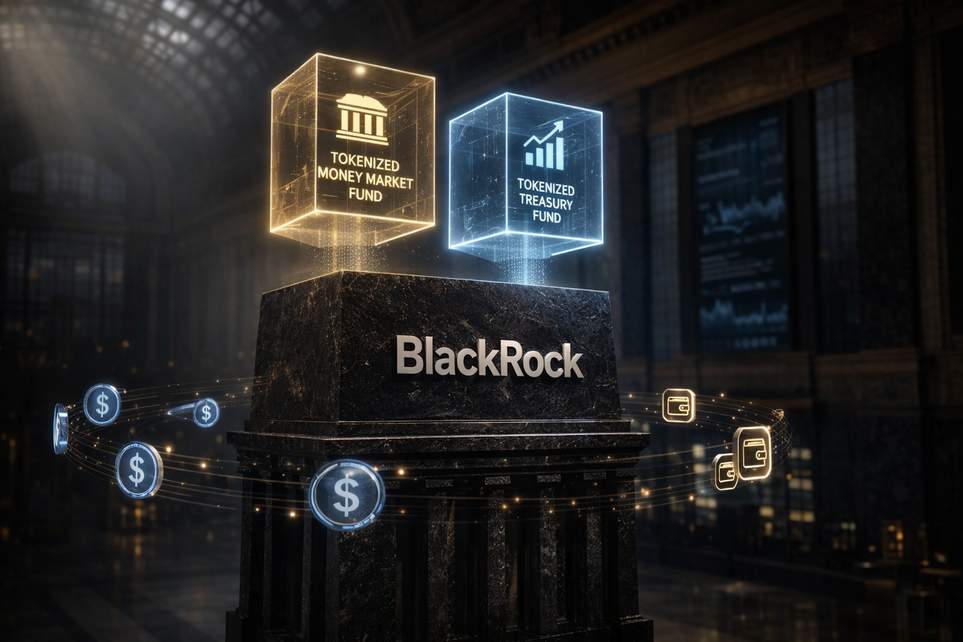
BlackRock just filed for a pair of tokenized money-market offerings that are basically Wall Street trying to learn how to be your phone’s piggy bank. One is a tokenized share class of an existing treasury fund (the Select Treasury-Based Liquidity fund, about $6.1 billion in size). That digital share class is planned to live on Ethereum and will stick to a super-conservative playbook: cash, U.S. Treasury bills, and overnight government repos, with a dollar-weighted average maturity kept at 60 days or less.
The other is a ground-up product called the BlackRock Daily Reinvestment Stablecoin Reserve Vehicle (BRSRV). Unlike the Ethereum-only share class, BRSRV is being built to operate across multiple chains. It’s also a treasury-backed money market fund focused on very short-term U.S. government obligations (maturities under 93 days) and is clearly aimed at serving as institutional-grade plumbing for crypto players—think yield-bearing reserve accounts for stablecoin issuers rather than flashy DeFi yields.
Why anyone should care (and why BlackRock is grinning)
Two things make these filings more than just corporate window-dressing. First, BlackRock is positioning these products to fit upcoming regulatory designs, including provisions that could govern how stablecoin issuers maintain reserves. The firm has already pushed regulators for a principles-based safe harbor with specific liquidity and concentration rules (roughly 10% daily and 30% weekly liquidity floors, a 40% concentration cap, and a 20-day weighted-average maturity limit). It also asked regulators to let same-day-settling government money-market funds count toward those liquidity tests—something that would be a clear win for money-market-style reserve vehicles.
Second, this is a strategic bet on demand. The tokenized real-world-asset market has swelled into the tens of billions (recent trackers put it north of $30 billion, with rapid growth this year), and BlackRock already manages a big chunk of on-chain-style reserve assets—roughly $65 billion in stablecoin reserves under management by their group. Their existing tokenized fund lineup (for example, a product called BUIDL) is already among the larger players, so this move is less about product novelty and more about expanding an infrastructure play.
In plain English: BlackRock is creating a compliant, boring-sounding toolbox for other institutions to park funds in token form. It’s not crypto theater—no moonshots or rug pulls—just old-school liquidity and safety rules dressed up in chain-friendly packaging. The CEO has long talked about using digital ledgers to make investing simpler and more accessible, and these filings read like that vision getting practical scaffolding.
Whether this actually flips the script on how everyday investors hold assets remains to be seen. For now, expect more big firms to file similar products, a steady regulatory tug-of-war, and a slow-but-determined march toward making “institutional-grade” on-chain cash a normal part of the crypto plumbing.
