
When Banks, Cards and XRP Team Up: A Tokenized Treasury Pilot
The weirdly fast handshake: what happened
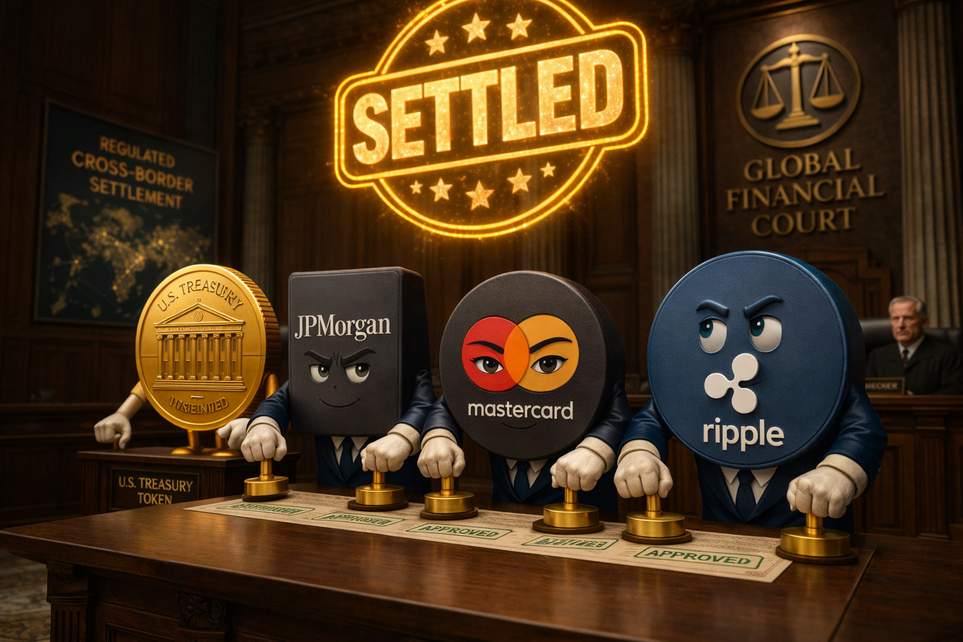
Okay, here’s the quick-and-dirty version: a pilot tied together a public blockchain and bank payment rails so a tokenized U.S. Treasury fund could be redeemed on-chain and produce an actual USD payout into a bank account in Singapore. The parties involved included a token issuer, a major bank’s tokenization arm, a payments giant, and a blockchain network — and yes, it involved XRP Ledger doing the speedy on-chain part.
In plain terms: a token called OUSG (a tokenized short-term U.S. Treasury product from a fund provider) was redeemed on the XRP Ledger. That on-chain redemption was processed in seconds on the ledger side, then routed through a payments network and a bank’s correspondent rails until USD landed in a Singapore bank account. The chain handled the asset record; the banks and card network handled the cash.
How the plumbing flowed: the redemption was submitted on-chain, the fund provider processed the request, the instruction was routed via a multi-token payments network, a bank-side settlement service debited the issuer’s settlement account, and the correspondent banking network delivered the dollars to the beneficiary’s Singapore account. The story’s headline is less about magic and more about choreography — public ledger speed linked to traditional bank settlement.
Why this is interesting (and what’s still fuzzy)
Why care? Because this pilot shows a practical way to connect tokenized assets on a public ledger with bank-to-bank payouts without forcing the whole payout to happen on-chain. In other words, the ledger acts as the fast, shared record while established banking rails still move the fiat — which is a sensible compromise for institutions that don’t want to toss the banking system out the window.
Important caveats: the pilot left out a bunch of juicy details. The exact redemption amount, the timestamp, the receiving bank’s identity, and whether this will be open to anyone beyond the pilot partners weren’t disclosed. So treat this as infrastructure validation rather than proof that tokenized Treasuries have quietly conquered global finance.
Some context nuggets: the token product in question is a qualified-access vehicle aimed at eligible investors rather than retail punters, so initial users are likely to be funds, treasury teams, market makers, and other institutional wallets that need cross-border cash management. That makes sense — big-ticket, low-friction moves make better first use cases than a consumer app buying a tokenized bond with pocket change.
On the activity front, public-facing summaries of the product show meaningful scale: hundreds of millions in total assets, a multi-million token presence on the XRP Ledger, and notable monthly transfer volume there compared with other networks. Still, those numbers describe the broader product, not the single redemption in the pilot.
The broader takeaway is practical: if more banks, payment networks, and blockchains can replicate this coordination, tokenized funds could stop being just blockchain-wrapped versions of familiar assets and start acting as real tools for cross-border liquidity and settlement. If the model stays locked to bespoke partner chains and pilot-friendly banks, it’ll be neat but niche. If it scales, it could change how institutions move cash and collateral across time zones.
Final, slightly nerdy point: the split in responsibilities is the clever bit — superfast, public ledger confirmations for the asset-side event, and trusted bank rails for the fiat-side completion. That hybrid arrangement may be the realistic bridge between the “blockchain speed” headline and the “bank account sees dollars” reality.
