
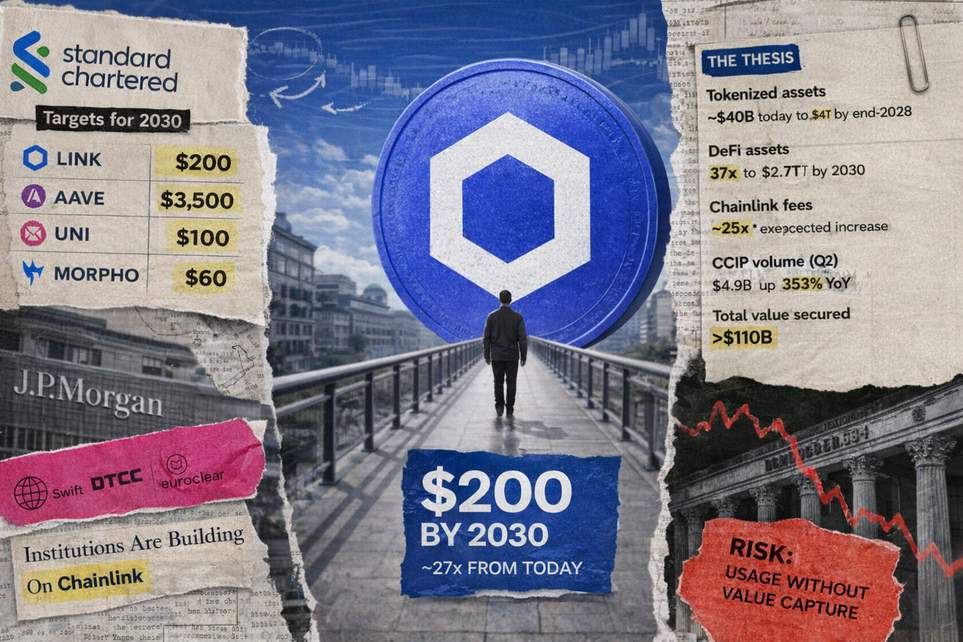
Is Chainlink Really a $200 Token by 2030? Standard Chartered Thinks So — Here’s the Tea
Bankers’ bold map: how LINK could (maybe) climb
In a move that made crypto Twitter tilt its head, a major bank published a multi-year forecast for Chainlink that ends with a $200 target by 2030. The roadmap lists stepping stones along the way — low double digits in the near term, then progressively higher milestones each year — which, if taken at face value, would mean many-fold gains from the token’s current single-digit price.
The thesis is simple-ish: tokenized assets and on-chain financial activity balloon over the next few years, creating a tidal wave of demand for oracle services. As more real-world assets, bonds, and funds get tokenized, clients will pay for price feeds, attestation services and interest-rate data. That fee flow, the bank argues, should push Chainlink’s network fees and reserve accumulation much higher, and those mechanics are what would theoretically lift LINK’s market price.
The report also points to real-world traction: big financial plumbing and firms are already experimenting with or using oracle services, and Cross-Chain Interoperability Protocol (CCIP) activity has surged after several bridge incidents pushed value onto more guarded rails. In plain English: more stuff is moving through Chainlink’s pipes, and some institutional use cases look like they could turn into steady revenue.
The fun part: why this could happen — and why it might not
Bull case (bring the confetti): tokenization actually goes gangbusters. The world digitizes more securities, funds and collateral, on-chain settlement becomes more common, and enterprises buy oracle services that generate real fees. Reserve mechanisms soak up LINK, traders start treating LINK like a tokenization proxy, and price action follows utility. Big quarterly jumps in CCIP volume and periodic token rotations (think UNI/MORPHO-style pumps) could turn a slow burn into a headline-grabbing rally.
Bear case (bring the cold shower): adoption stays as ‘usage’ without meaningful fee capture. Corporates and banks may rely on Chainlink tech, but pay via bespoke contracts or off-chain arrangements that don’t translate into big on-chain fee accrual. Competitors nibble away at market share, enterprise clients keep using services without converting that spending into LINK demand, and the token drifts sideways while the network itself quietly grows.
Middle ground: some institutions and DeFi projects will boost CCIP and oracle traffic, but markets only partially price in the value-accrual story. LINK could slowly re-rate into a higher band without instantly vaulting to the bank’s headline number. Price moves sometimes lag adoption — investors notice the utility months or quarters later and then rotate into the token.
So, should you panic, celebrate, or nap? None of the paper targets are guaranteed — they’re a blend of optimistic macro assumptions, adoption curves, and faith that network economics funnel value to token holders. It’s an interesting thesis, a plausible path, and a big ask all at once. If you like dramatic financial math and the smell of tokenomics, enjoy the fireworks. If you prefer steady evidence, keep watching on-chain fees, reserve flows, and CCIP volumes before updating your long-term view.
