
DeFi lost $13B this month as the KelpDAO rescue shows both the best and worst of DeFi
The chaos: how the exploit unfolded and what it cost
Imagine a bridge that acts like a front door but turns out to use a single rusty lock. That’s basically what happened with KelpDAO’s rsETH bridge: one verifier, one point of failure, and one very busy attacker. The exploit let bad actors unlock about 116,500 rsETH from the Ethereum-side escrow and then use those tokens as collateral across several big DeFi platforms to borrow roughly $236 million in WETH and wstETH. Within two days the panic was real — total value locked in DeFi plunged by roughly $13 billion as users raced to pull funds and lenders scrambled to cover positions.
Some of the messy math: Aave estimated the rsETH shortfall at around 163,000 ETH before recoveries. Between on-chain recoveries, protocol freezes, and liquidations (including tens of thousands of ETH frozen by an emergency security council and recoveries from the exploited protocol itself), the raw gap fell dramatically. But the headline numbers hid a key problem: many of the biggest recoveries and contributions were still conditional — pending governance votes or undisclosed negotiations — so the rescue looked a lot healthier on paper than it did in the moment.
LayerZero — the infrastructure provider behind the verifier setup — described the incident as RPC poisoning that targeted its validator network infrastructure and didn’t point to a direct protocol bug. Still, the bridge’s 1-of-1 verifier configuration concentrated trust in one place, and that single point of trust turned into the hinge that swung this whole mess open.
The rescue: DeFi’s jury-rigged lender of last resort (and the awkward politics)
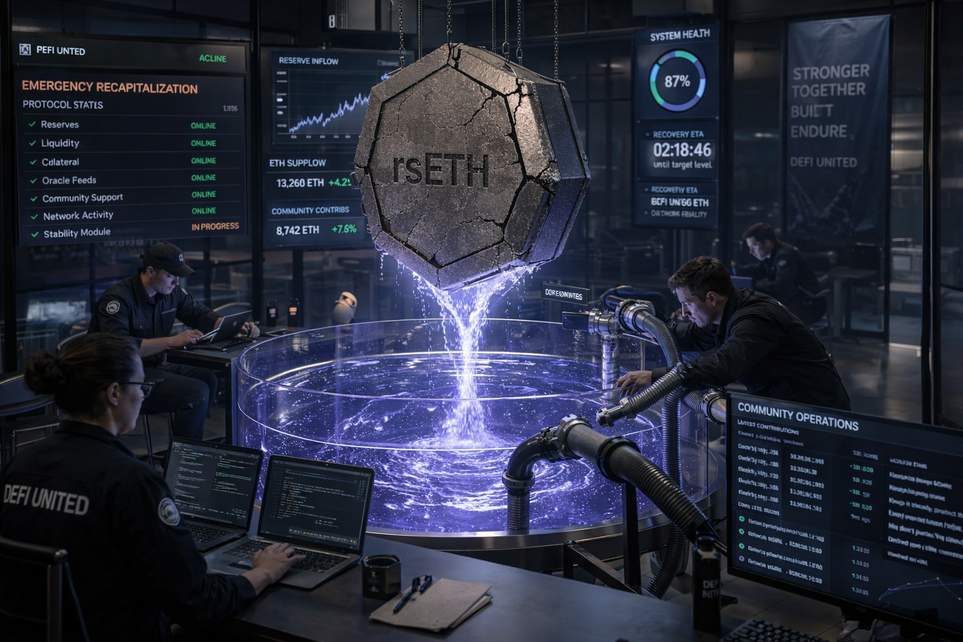
When the dust started to settle, the industry did something surprising: it cobbled together a makeshift bailout. A fund often referred to as DeFi United popped up, collecting pledges from a mix of protocols, DAOs, teams, and individuals. The effort raised tens of thousands of ETH from hundreds of wallets — enough to cover most of the immediate shortfall if everything voted and moved as promised.
Major named pledges included multi-thousand ETH commitments from protocol treasuries and notable actors, plus some contributions structured as credit facilities that expect later repayment. Important pieces — like a potential contribution from the bridge operator and the release of frozen funds held by a security council — remained unresolved and needed votes or legal steps. That uncertainty is what turned a rescue into a high-stakes game of chicken.
Aave framed its participation in a nearly paternal tone: “No Ghost Left Behind” — basically, we’ll try to keep users from getting wiped out even if the soup of composability created the mess. The Aave proposal authorized a grab-bag of actions (loans, settlements, indemnities, under-collateralized lending, token sales, etc.) so the DAO could move fast if needed. Mantle’s help was set up as a credit line so the protocol could get liquidity immediately while preserving the option to repay later.
Not everyone cheered. Governance forums filled with the exact kind of spicy takes you’d expect: folks demanding new collateral-risk rules, others complaining that parties responsible for risky configurations weren’t pitching in proportionately, and some delegates fretting about precedent — if you pay for this, does every future cross-protocol mess get socialized? Lido’s internal debate captured that tension: contributing a few thousand stETH could plug a hole now, but it might expose their vault to significant risk later, so people asked whether the payment is a donation, a loan, or a quietly terrible trendsetter.
There are two big scenarios from here. In the optimistic version, the outstanding votes pass, frozen funds get released, the bridge and withdrawal mechanics are reopened in an orderly way, and the remaining pledges land. The rescue then becomes a textbook (if rough around the edges) case of decentralized crisis coordination — a quasi-lender-of-last-resort assembled without a regulator, moving fast enough to stop systemic contagion.
In the pessimistic version, one or more big votes stall, the frozen ETH remains locked because of political beef, or promised contributions fail to materialize. That would leave big protocols like Aave holding more of the bag for longer, harden governance backlash, and cement the narrative that DeFi runs on credible neutrality until things get huge — then it runs on whoever has the keys.
Either way, this episode is a pretty good mirror. It shows both the best parts of the space — rapid, public, cross-protocol coordination — and the worst parts: concentrated trust, messy politics, and the reality that “decentralized” doesn’t always mean “immune to centralization of power” when the stakes are nine figures high. Buckle up: lessons will be learned, rules will be argued over in forums, and yes, some people will still make risky bridge setups in spite of everything.
