
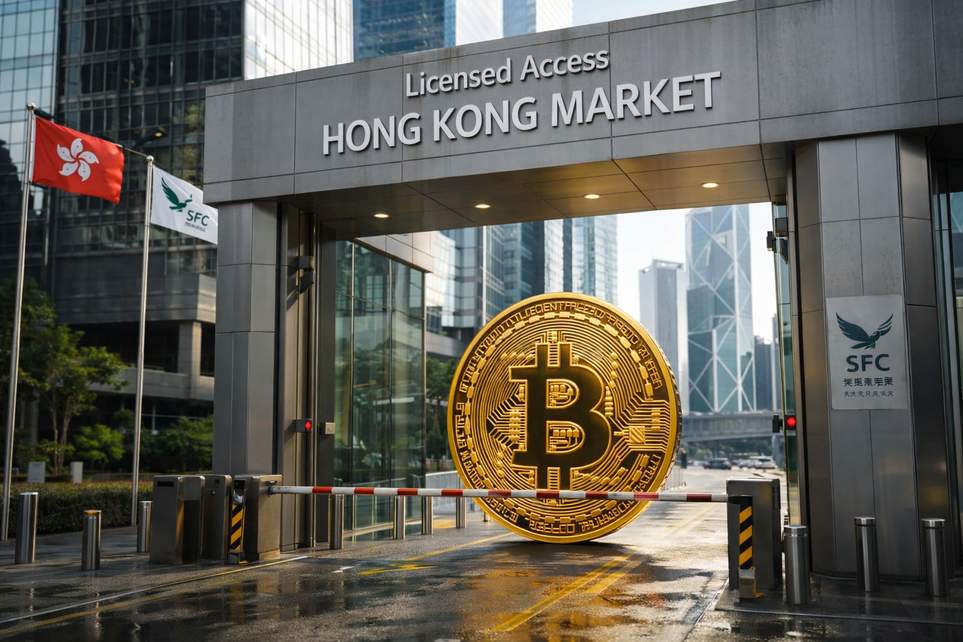
Hong Kong Eyes a 10,000 BTC Regulated Capital Pool
Big idea, short headline: a Hong Kong-listed firm is shooting for a regulated Bitcoin capital pool of more than 10,000 BTC — roughly three-quarters of a billion dollars at today’s prices. It’s not just the number that’s eyebrow-raising; it’s the plan to put a large chunk of Bitcoin exposure inside a formal, local financial wrapper so big investors don’t have to keep routing everything through U.S. ETFs or offshore platforms.
The plan, in plain English
Here’s how the pitch works: a team and trading system are being moved into a listed vehicle to create a Hong Kong-regulated product (they’re calling it Alpha BTC). The product would give investors Bitcoin exposure using regulated custody, familiar reporting, and derivatives or ETF-linked instruments rather than asking a family office or corporation to hold raw crypto directly.
Why would big money prefer that? Because institutions want paperwork, oversight, and people to blame when things go sideways. They crave audited accounts, regulated custodians, legal clarity, and bank-friendly structures. In practice, that means many Asian investors today grab Bitcoin exposure through U.S. ETF wrappers or offshore venues — handy, but distant. The new strategy is basically saying: “Keep the exposure, but package it inside Hong Kong rules and local infrastructure.”
Why it matters — and what could go wrong
If it works, Hong Kong could become the go-to place in Asia for regulated Bitcoin allocations. The city has spent the past couple of years opening up licensing for virtual-asset platforms, carving out rules for stablecoins, and loosening some technical barriers so local exchanges can connect to global liquidity. Put a licensed stablecoin system, a listed manager, and a regulated exchange together and you start to get a functioning local market — not just a backdoor to Wall Street.
But don’t pop the champagne yet. This is a big fish in a very big ocean. A $760 million target is meaningful but still tiny next to the U.S. ETF ecosystem. The planned product apparently leans on derivatives and ETF-linked strategies, and those come with basis risk, timing risk, and complexity that can bite if volatility spikes. On top of that, politics matters: mainland restrictions and Beijing’s sensitivity to offshore financial experiments mean regulators and banks will be watching closely.
Still, the broader point is practical and slightly boring — which is why it’s important. Bitcoin itself is global and borderless, but the ways institutions access it are local and bureaucratic. The wrapper you use (U.S. ETF, Hong Kong regulated vehicle, offshore exchange) shapes who can participate, how fast money moves, and what happens when markets hiccup. If Hong Kong builds a compelling local option, some Asian capital may prefer it, shifting flows and nudging how liquidity and price signals behave regionally.
So expect a bit of geographic rivalry: Wall Street’s ETFs, Singapore and Dubai’s plays, and Hong Kong’s regulated approach will all be competing for the same institutional attention. The winner won’t be the cheapest or the flashiest product — it’ll be the one that convinces cautious, big-money folks their exposure lives behind a door with a lock, an auditor, and a phone number they can actually call.
Bottom line: this isn’t just another product launch. It’s an attempt to repackage a global asset into a local financial language. Whether that becomes the new normal or a niche lane depends on market appetite, regulatory patience, and whether derivatives behave themselves when the music stops.
