
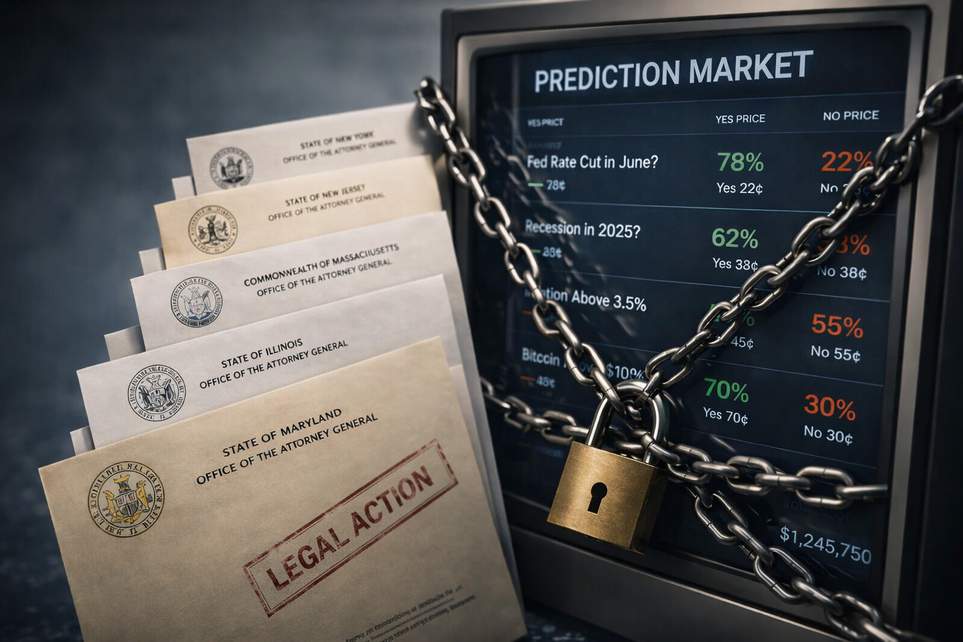
How a disputed $1 billion claim became a powerful weapon against prediction markets
Someone flipped a counter and announced: prediction markets cost states and tribes a cool billion dollars. That number started showing up on the American Gaming Association’s site and suddenly the debate stopped being legalese and started sounding like a schoolyard accusation — loud, blunt, and impossible to ignore.
The $1 billion tally and why it punches above its weight
The AGA’s running total turned a complicated jurisdiction fight into a headline you can explain in one breath: gambling is losing tax money. For land-based casinos and state-regulated sportsbooks, that’s a tidy framing. It points at education budgets, pensions, and addiction programs and says, “This is where the money should be.”
Prediction-market platforms such as Kalshi and Polymarket let people trade yes-or-no contracts on real-world events. Because they’re overseen by a federal regulator, they’ve been able to operate in every state — including places where traditional sports betting is tightly controlled or banned. That federal-versus-state tug-of-war has been raging in courts and agencies, but a single dollar figure does a lot of heavy lifting in public opinion.
Not everyone buys the math. The trading platforms call the billion-dollar estimate exaggerated, and industry coalitions have questioned the AGA’s sources. Still, timing matters: the casino industry just reported record revenues and record taxes, so their “we’re getting robbed” message lands with a weird kind of self-righteousness.
Lawmakers, regulators, and the messy politics of who controls gambling
Once the number left the spreadsheet and hit the news cycle, politicians smelled a story. Federal lawmakers introduced a bill aiming to ban any federally regulated venue from listing contracts that resemble sports bets, while dozens of state attorneys general pushed the federal agency to back off. Some states moved faster — Minnesota passed a ban and is already facing a federal lawsuit to stop it.
The legal record is messy: courts have split, and so far the federal regulator has tended to side with the platforms. That means the fight keeps bouncing between statehouses, appellate courtrooms, and federal agencies. Meanwhile, the industry itself is fracturing. Big names that once sat on the same team have walked away from the casino lobby because they want the national reach that federally regulated contracts provide.
The political drama even has celebrity cameos: public endorsements and private ties have made the issue more than abstract policy. Add investments, advisories, and loud posts on social platforms, and you’ve got a messy cocktail of money, influence, and headline-chasing.
Why you should care — and what’s next
At its core this isn’t just a legal tussle; it’s a fight over a fast-growing slice of betting activity. Monthly trading on prediction markets exploded in recent months, jumping from tiny figures to multibillion-dollar volumes. That growth attracted major investors and gave platforms real financial heft — and made states extra nervous about missed tax dollars.
So what happens next? Expect more state laws, more court cases, and continued political theater. The incumbents will keep arguing for state control, new entrants will push the federal-exchange angle, and regulators will be dragged in both directions. For the rest of us, it means the gambling landscape could look very different in a few years — or at least feel different when you scroll the news.
In short: a flashy number turned a wonky jurisdiction fight into a simple story with loud consequences. Whether that billion is accurate or not, it’s already doing its job: shaping how voters, lawmakers, and courts think about prediction markets. Grab your popcorn — this one’s far from over.
