
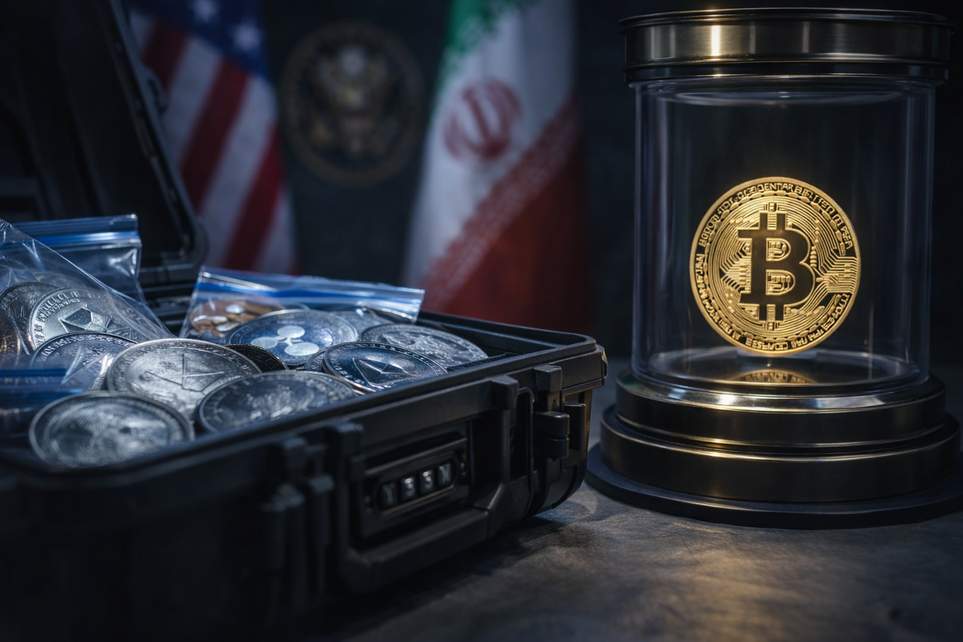
Did the US Really Snatch $1 Billion in Iranian Crypto — and Could It Join Trump’s Bitcoin Reserve?
Short version: the US Treasury says it “grabbed” roughly $1 billion in crypto tied to Iran, but the devil is in the details — and the details are hiding under a rug. Treasury officials boasted about seizing wallets, but they didn’t say which coins or which wallets. Without that paper trail, it’s impossible to know whether any of that money could end up in the new government Bitcoin stash.
What did they actually seize (and what does “seized” even mean)?
There are a few different legal and technical states crypto can live in after an enforcement action. A sanctions freeze from OFAC means addresses are blocked — frozen in place — but that doesn’t automatically transfer ownership to the US government. An issuer of a stablecoin can also lock tokens at specific addresses after coordinating with authorities, which looks like a freeze more than a textbook criminal seizure.
Law-enforcement seizures assert custody, but title usually waits on court proceedings. Final forfeiture is the real gatekeeper: only once courts finish the forfeiture process does the government truly own the assets and get to decide what to do with them. And even after forfeiture, assets can be diverted for victim restitution, law-enforcement operations, sharing with state and local agencies, or released under other legal rules.
The only publicly itemized chunk so far is a stablecoin freeze of roughly $344 million in USDT that was locked at two addresses after government coordination. That leaves about $656 million that hasn’t been publicly broken down wallet-by-wallet or token-by-token. So yes, a big number was announced — but the composition and the legal status are still murky.
Could any of it end up in the Strategic Bitcoin Reserve?
Short answer: maybe, but only under a very specific set of conditions. The 2025 executive order that created the Strategic Bitcoin Reserve makes two key distinctions. Bitcoin that has gone through final forfeiture and isn’t earmarked for victims or other uses can be deposited into the Reserve — and the order says government BTC placed there should not be sold. Non-Bitcoin tokens, by contrast, go into a separate Digital Asset Stockpile.
So if the seized pile is mostly stablecoins or alt tokens, expect it to wind up in the Stockpile (or stay frozen). If a meaningful portion is actually Bitcoin and those coins clear final forfeiture without legal claims getting in the way, they could be folded into the Reserve. At today’s ballpark BTC price of roughly $73,000, a $1 billion Bitcoin haul would be about 13,600 BTC — a nice round chunk but still only a fraction of the government’s estimated existing hoard of roughly 200,000 BTC.
How plausible is a $1 billion figure? Iran’s crypto activity in recent years has been large enough that a billion-dollar enforcement story isn’t outlandish. Chainalysis and TRM Labs estimates put Iran’s on-chain activity in the billions in 2025, and Iran’s domestic exchange ecosystem processed sizable volumes. That makes the headline number believable in scale, even if the asset mix and legal realities are not yet public.
Bottom line: the announcement is headline-grabbing theater, but the outcome depends on paperwork, court rulings, and whether the assets are BTC or something else. Until the Treasury publishes a full wallet-by-wallet and token-by-token accounting — or courts issue final forfeiture orders — this $1 billion will mostly be a rumor with receipts to be confirmed. Stay tuned for the sequel.
