
Ethereum’s Jaredfromsubway MEV bot drained after approving its own $7.5M theft
What happened
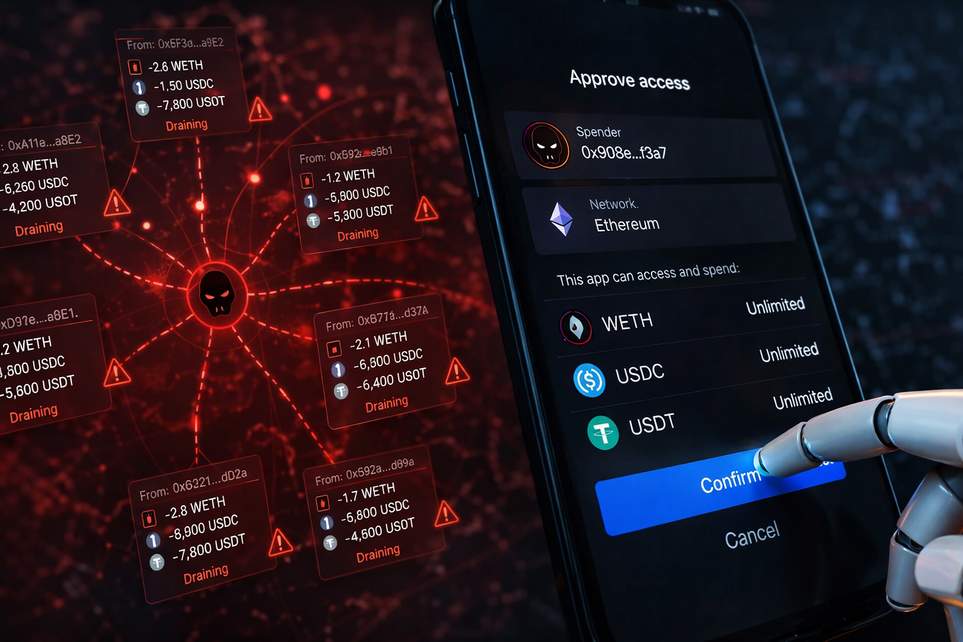
In a plot twist that sounds like a heist movie written by a lazy smart contract, the Jaredfromsubway MEV bot accidentally gave thieves permission to empty parts of its vault. The bot — famous for front-running and sandwich attacks — signed off on helper contracts that it thought were part of profitable trades. Those permissions stuck around, and the attacker used them to pull out wrapped ether and large stablecoin amounts in an allowance drain that totaled more than $7.5 million.
On-chain records show repeated withdrawals of about 92 WETH, roughly $143,000 in USDC, and about $149,000 in USDT from contracts tied to the bot. A coordinating contract called a withdrawal function across many child contracts, checked balances and remaining approvals, and then used ERC‑20 transferFrom calls to move the tokens to an address controlled by the attacker. Some of the proceeds were then routed through a mixer to make tracing harder.
How they tricked the bot (spoiler: no private keys were stolen)
This wasn’t a dramatic key compromise or a vulnerability in a major DeFi protocol — it was social engineering for bots. The attacker spent weeks setting up fake tokens, liquidity pools, and helper contracts that looked like legitimate trading opportunities. The bot’s fast decision rules saw those fake routes as profitable and granted the usual spending approvals to the helper contracts.
Early transactions behaved like normal, using those approvals for genuine-looking trades and training the bot to trust the pattern. Later, the attacker simply didn’t use those approvals for swaps; instead they left allowances unspent until they’d collected enough permission to sweep real assets using transferFrom. In short: the bot approved its own downfall by trusting the wrong markets.
Why it matters — and what bots (and humans) should learn
Automated trading systems need to sniff the market, green‑light helpers, and execute trades in seconds. That speed is powerful but brittle: if your rules trust fake signals, your approvals can be weaponized against you. The Jaredfromsubway bot was one of the most active sandwich attackers, reportedly linked to around 70% of such attacks and contributing to an estimated tens of millions in yearly costs to traders. That notoriety made the incident especially ironic — the bot that profited by sandwiching others ended up being sandwiched itself.
If you operate bots or helper contracts, consider stricter guardrails: limit approval amounts, auto-revoke stale allowances, whitelist only audited helper contracts, add sanity checks on novel liquidity pools, and monitor unusual approval patterns on-chain. For regular users, it’s a reminder to review token approvals periodically and revoke anything suspicious.
In short: fast money is fun until your automation trusts a convincingly fake lemonade stand that turns out to be a pickpocket. Bots are brilliant, but they still need better paranoia.
