
Russia rolls out the digital ruble to millions as banks and retailers flip the switch
What’s changing (starting Sept. 1)
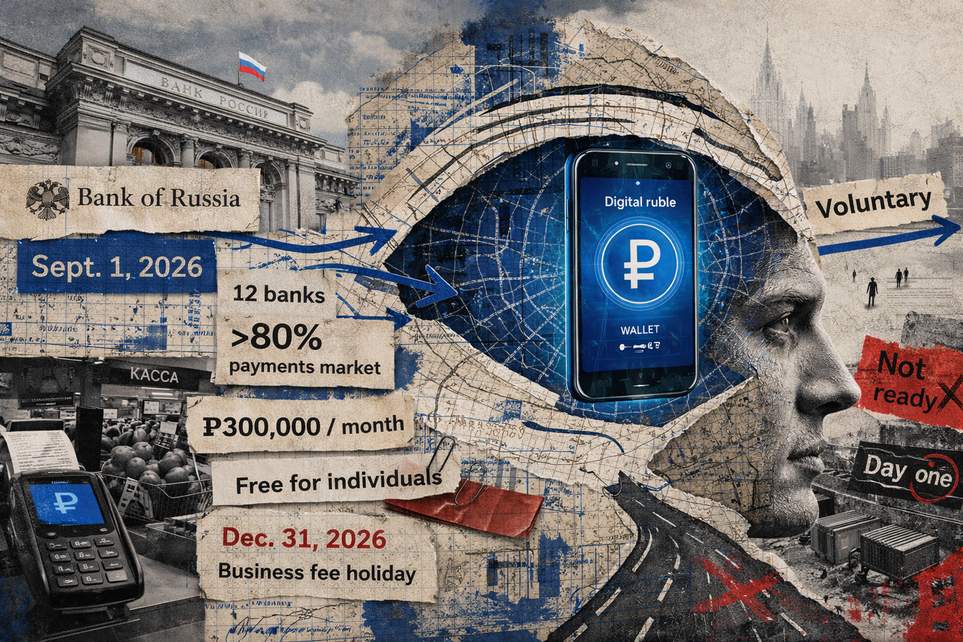
Big news: as of Sept. 1, people who bank with institutions that have finished the connection can create a digital-ruble wallet right in their bank’s mobile app. The wallet itself lives on the central bank’s platform, but your bank is the doorway — so check that your bank is hooked up before trying to sign up.
Important twist: nobody can be enrolled automatically. Your bank, boss, or some overeager relative can’t open a wallet for you — you must choose to do it yourself. At the same time, the law makes certain banks and retailers install the plumbing so the option exists. In plain English: access is being forced into the system, adoption is still your choice.
Who’s covered, rules, limits and fees
Twelve of the country’s biggest, systemically important banks are ready to offer digital-ruble accounts and payments from day one; together they account for the vast majority of payment flows. A few other banks that were recently tagged as significant may need extra time and could finish hooking up toward the end of 2026, so availability won’t be perfectly uniform on day one.
Retailers that have customer-facing operations and reported more than ₽120 million in revenue last year — and that had a payments agreement in place as of Jan. 1, 2026 — must accept digital rubles. That doesn’t force shoppers to use them; it only forces sellers to give you the option if they meet the criteria.
Practical limits: individuals can top up a wallet from bank accounts or electronic money up to ₽300,000 per calendar month. That cap applies to incoming top-ups only — spending or moving money that’s already sitting in your wallet isn’t counted toward the cap. Businesses don’t face that top-up limit.
On the money side, payments and transfers between individuals are free. Businesses get a fee holiday through Dec. 31, 2026; a published tariff schedule takes effect in 2027, although some operations may still carry zero fees. Bottom line: what changes immediately is access — not a forced migration of people into digital wallets.
So, if you’re curious but lazy (we feel you), you can wait and watch how smoothly the first wave of banks and shops handle it. If you’re excited, download your bank app, confirm the connection, and give the digital ruble a spin — gently, and with a sense of humor.
