
Schwab + Cboe Could Make Prediction Markets Feel Like Just Another Trade
The headline in plain English
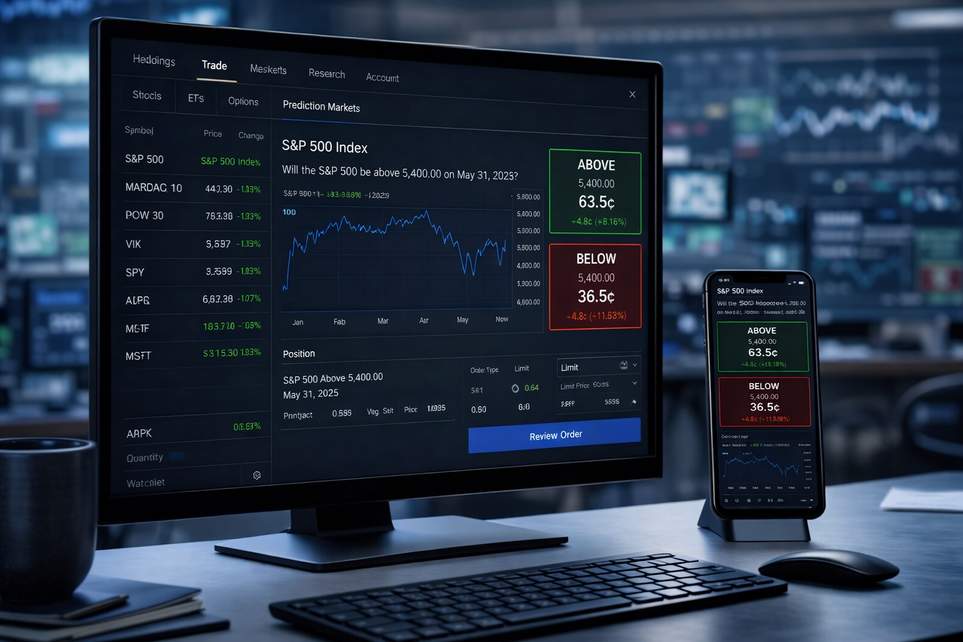
So here’s the thing: Charles Schwab is reportedly teaming up with Cboe to put simple yes-or-no market bets — think “Will the S&P 500 close above X?” — right inside a normal brokerage screen. Instead of opening a crypto app, fiddling with wallets, or juggling stablecoin balances, you might one day click a button in your regular account and buy a contract that either pays a fixed amount or doesn’t. Neat, huh?
Cboe has already sketched out how a binary-style product could live inside the listed-options world (Mini-SPX and similar constructs). The idea keeps the dumb-easy user experience of classic prediction markets — price implies probability, outcome pays a fixed amount — while swapping out the crypto plumbing for regulated exchange and clearing mechanics.
Why traders (and crypto people) should care
Putting these contracts where people already keep cash, stocks, ETFs, and options removes a bunch of friction. No wallets, no private keys, no stablecoin balancing, no bridge anxiety. For a retail investor, an S&P outcome contract could look and feel like choosing another listed derivative on a familiar broker page.
That changes the distribution game. Crypto-native platforms made prediction markets accessible and cultural — elections, sports, weird internet events — but brokers bring mass trust, big customer bases, and the convenience of one-stop trading. If Schwab and Cboe roll this out smoothly, the simplest prediction-market product (financial outcomes tied to major indices or short-dated moves) becomes a mainstream retail feature.
Still, this won’t replicate everything crypto platforms do. Wallet-based, tokenized markets can cover a much broader set of events, experiment faster, and connect users across borders in ways regulated brokers cannot easily match. So the contest is specific: brokers could capture the tidy, financial-outcome slice while leaving sports, culture, and long-tail events to other venues.
Which way it goes depends on practical signals: will Schwab confirm customer access and product details? Will the exchange filings show reasonable fees and enough liquidity? And how will regulators draw the line between listed financial contracts and wider event markets? Those answers will shape whether this becomes a mainstream trading tool or a niche broker feature.
Bottom line: the core trick of prediction markets — a simple, probability-priced yes/no trade — is portable. Brokers can make it feel safe and familiar. Crypto-native sites still own breadth and speed. Expect a friendly turf war: one side offers comfort and convenience, the other offers variety and experimentation. Meanwhile, you can enjoy watching finance and internet culture collide — popcorn recommended.
