
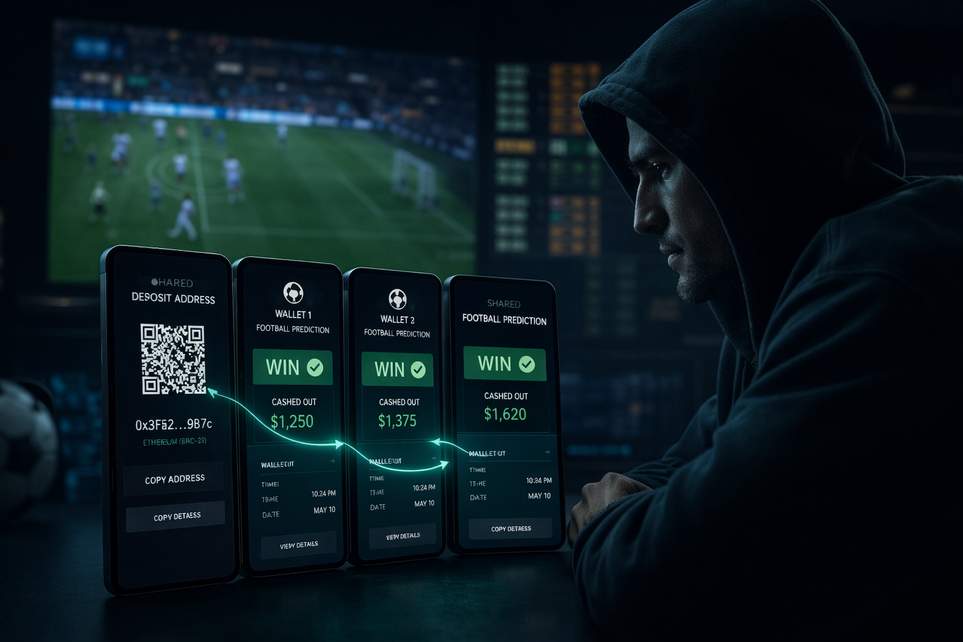
Three Crypto Wallets Cashed Out $24M From World Cup Bets — All Roads Led to One Binance Deposit
In a headline that sounds like a high-stakes video game, three cryptocurrency wallets turned World Cup predictions into a combined $24.25 million payday — then quietly funneled the cash to the same Binance deposit address. The wallets, known on-chain as mintblade, GRIMDRIP, and EndlessFate, racked up 13 winning positions out of 16 settled bets before stopping activity and pulling their remaining funds.
The big wins, the same exit door, and why people are staring
Here’s the nitty-gritty: mintblade walked away with about $9.24 million after five winning bets without a recorded loss. GRIMDRIP logged roughly $7.6 million from two successful trades, and EndlessFate pocketed $7.41 million after nailing six out of nine outcomes. After the dust settled, all three wallets sent proceeds to a single Binance deposit address (0xB08B…317D).
That shared deposit route is what set off the rumor mill. Exchanges usually hand out unique deposit addresses to each customer, so when multiple wallets converge on the same address it can hint — but does not prove — a single person or group was behind them. Blockchain records show the flows, but they don’t hand over a name or a motive.
Observers also noted the timing: the wallets largely stopped betting after the wins and withdrew funds. Some on-chain sleuths pointed to similar betting patterns elsewhere during the tournament, but concrete links are scarce. So while it looks eyebrow-raising, the on-chain trail by itself isn’t smoking-gun evidence of foul play.
Prediction markets, big money, and the gray area between skill and insider info
The World Cup’s expanded 48-team format turned prediction markets into a frenzy — lots of contracts, lots of liquidity, and lots of eyeballs. Early in the tournament, billions of dollars changed hands on major prediction platforms, and some single contracts drew outsized volume. When liquidity is available, savvy or reckless participants can take massive positions that produce massive payouts if an upset or unexpected draw happens.
That’s the important nuance: huge wins don’t automatically mean cheating. Bettors can earn big returns by placing giant wagers on longshots or by capitalizing on market mispricing. But without public IDs attached to those wallets, it’s hard to tell whether the winners were genius risk-takers, very lucky, or armed with information others didn’t have.
Because of worries about insider activity, prediction market platforms have tightened rules this year. Many now bar trading on markets where a user has confidential knowledge or the ability to influence outcomes; some platforms restrict participants who are directly connected to listed events. Regulators and lawmakers have also been poking around with proposals aimed at certain types of contracts, though none of those measures has become law in a sweeping way yet.
Bottom line: mysterious million-dollar wins make for great Internet sleuthing, but on-chain patterns and a common exchange address are clues, not convictions. Whether these wallets were brilliant bettors, extremely risky players, or participants with an unfair edge — that story remains unwritten. Popcorn optional, curiosity mandatory.
