
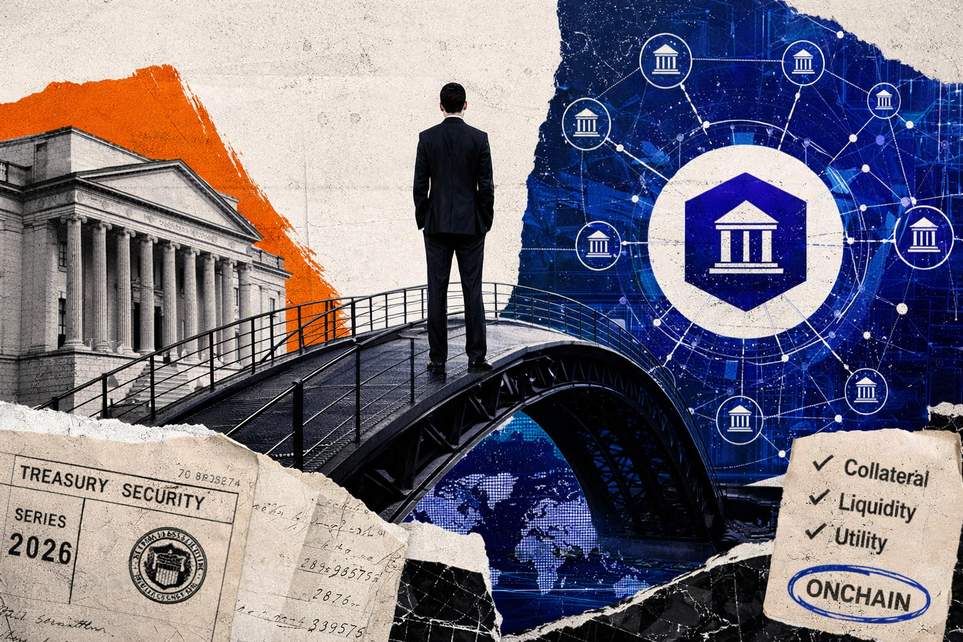
Tokenization’s Next Move: From Shelfware to Financial Muscle
Why tokenization needs to start pulling its weight
Tokenized funds are no longer the shiny prototype in the corner — they’ve gone mainstream. Big players have put real dollars onchain, and creating those tokens is largely a solved engineering problem. That said, most of these digital securities end up doing what collectibles do on a shelf: sitting pretty and not much else.
The real prize isn’t just being able to hand someone a token faster than snail-mail paperwork; it’s making that token useful inside other financial systems. Instead of cashing out a position to get liquidity, imagine lending against the token, using it as collateral, or plugging it into a structured trade so the economic exposure stays put while liquidity is unlocked. That’s when a token stops being a label and starts behaving like financial infrastructure.
Why DeFi and traditional credit sometimes fight over lunch
Not every token plays nicely with every protocol. Crypto-native assets like ETH live on markets that trade 24/7 and whose depth you can see onchain. Traditional credit instruments are a different animal: prices can be updated only occasionally, primary markets operate during set hours, NAVs might be calculated once a day or less, and redemptions can take several business days.
That mismatch matters. A lending smart contract expecting instant price discovery and minute‑level liquidations will misfire if collateral takes days to settle. Wrapping a legacy fund in a token doesn’t magically erase those timing and liquidity gaps. To make tokenization genuinely useful, you have to design the token plus the rules and plumbing around it — stress-tested LTVs, realistic liquidation windows, and multiple liquidity paths — rather than assume it will behave like an onchain-native asset.
A practical blueprint: building tokens that can be used, not just held
There are already examples that show the playbook. One token was created from the ground up with utility in mind: it was issued natively onchain, managed by an institutional manager, and custodied by a traditional trustee. The portfolio targets investment‑grade CLOs and other asset-backed credit and offers a yield that’s attractive relative to cash alternatives.
Crucially, this token can be minted and redeemed on a near-daily cadence and taps several liquidity sources so it doesn’t rely on a single secondary market to stay liquid. A market was then curated where that token backs loans denominated in a stablecoin, and risk parameters were set not by guesswork but by examining historical NAV behavior, prior stress events, settlement mechanics, and real-world liquidity. The loan-to-value ratios are sized so that, even in a forced sale, there’s a reasonable chance the collateral will cover the debt.
That combination — native issuance plus thoughtful rules around collateralization and liquidation — is what transforms a token into a safe, programmable building block. If tokenization is going to be more than a vanity metric, the industry should stop measuring success by how many assets are sitting onchain and start counting how much of that value is actually securing loans, generating stablecoin liquidity, moving between venues without forced sales, and settling inside shared infrastructure.
Short version: tokens that do real work will be worth a lot more than tokens that just look nice on a balance sheet. The next few years will be about turning those idle assets into money that moves, borrows, and leverages — all without making people wait for paper to clear. And honestly, that’s way more exciting than another flashy launch.
