
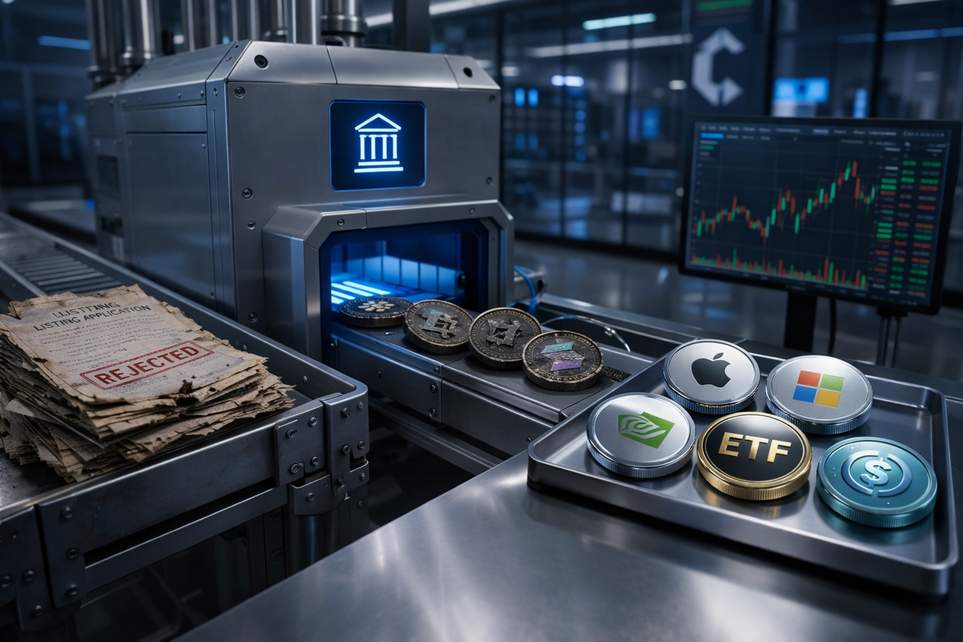
Crypto’s killer app may be selling stocks after its own tokens failed retail
From dud tokens to tokenized shares: what happened
Remember when every exchange seemed determined to pump out shiny new tokens like it was a limited-time cereal giveaway? That experiment mostly blew up in retail faces. A wide analysis of hundreds of centralized exchange listings since 2025 shows tiny win rates, massive losses for more than half of new tokens, and a brutal median return. In plain English: many retail buyers got burned, and trust in fresh token listings took a major hit.
Faced with that reality, exchanges started pivoting. Instead of hyping the next token ticker, they began offering tokenized versions of real-world stocks and ETFs — things people actually know and (sometimes) trust. These products let crypto account holders buy slice-sized exposure to big companies with low minimums and trading hours that look a lot like regular markets. It’s a pragmatic pivot: less moon-scam glamour, more access to recognizable names.
Why stock tokens could be the exchange’s new cash cow — and also the plot twist
Tokenized stocks create demand for the bits of infrastructure crypto firms already control: stablecoins for settlement, custody services, tokenization platforms, and trading rails. Someone buying a tokenized share of Nvidia with a stablecoin produces real revenue — whether it’s trading fees, custody charges, or settlement flows. That’s attractive to exchanges that saw their earlier native token play lose credibility.
There are macro reasons this product makes sense. Equity ownership rates vary wildly around the world, with many regions having very low retail access to stock markets. Fractional, low-minimum stock tokens can put single-share exposure within reach for people who otherwise couldn’t afford it. Analysts have even suggested that routing more equity flows through crypto infrastructure could unlock huge pools of capital and add millions of new retail participants.
But here’s the rub: tokenized stocks often look like exposure to a company without actually conferring traditional shareholder rights. Many offerings are synthetic or derivative-like, which means buyers may not own the underlying shares and could face counterparty, currency, or issuer risks. During routine times that’s fine for some users — in stress events it can matter a lot.
What this means for native crypto tokens — and for you
If exchanges succeed in making tokenized equities the go-to product, native token listings could shrink to a niche. Retail users who once chased fresh token drops might instead park stablecoins and buy stock-like exposure inside the same accounts. Institutions shifting allocations (for example, from Bitcoin ETFs into AI-related equities) only tightens the squeeze on demand for speculative alt lists.
That doesn’t mean blockchain layers don’t benefit. Settlement and collateral flows tied to tokenized shares could still drive demand for certain protocols — but only if products are designed to route that activity through native networks and assets. Exchanges haven’t universally chosen that path; many prefer the simpler business model of capturing fees and custody revenue without creating on-chain demand for new tokens.
Bottom line: tokenized stocks are an infrastructure win for exchanges and stablecoin issuers. They expand access and make crypto platforms look more like mainstream brokers — but they also expose the limits of native token economics. For traders and casual users, it’s increasingly a choice between shiny-but-risky new tokens and familiar-company exposure wrapped in quirky crypto packaging. Choose your adventure accordingly (and maybe keep an emergency snack and a dose of skepticism nearby).
