
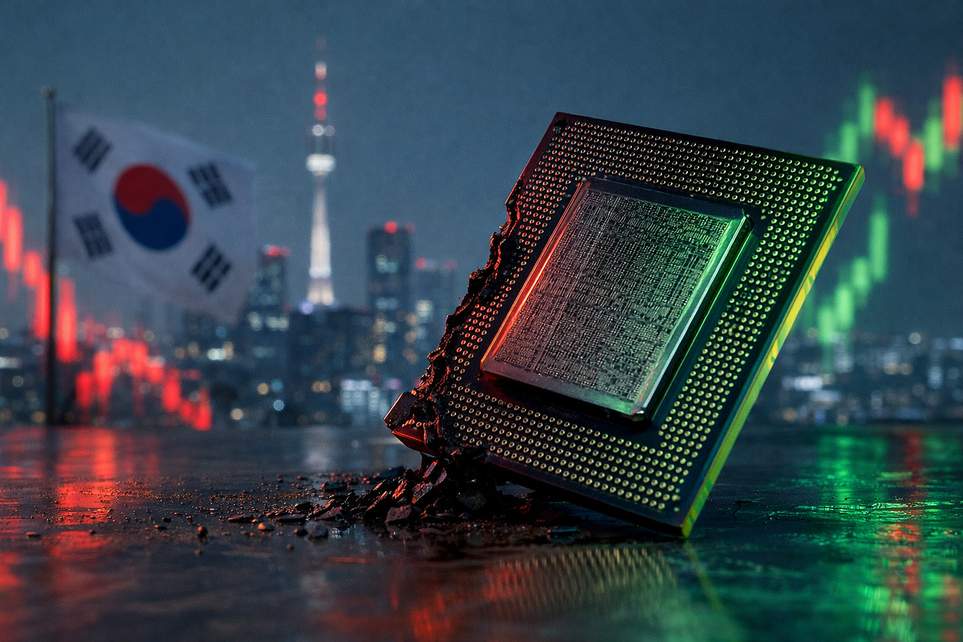
KOSPI’s 48‑Hour Rollercoaster: A Market That Fell 8% and Said “Just Kidding”
The 48‑hour rollercoaster
One minute Seoul was the belle of the AI ball, the next it had been politely asked to leave and then invited back to the afterparty. In early June the KOSPI — South Korea’s main stock index that tracks roughly 950 listed companies — plunged about 8.3% in a single session, tripped a market halt, then rebounded roughly 8.2% the very next day. All told, the index swung nearly 17% across two trading days. Wild.
That dramatic hopscotch wasn’t random: the Korean market has become heavily concentrated in a handful of chipmakers. A blockbuster run earlier in the year sent the index soaring—almost doubling in places—because investors poured cash into companies supplying AI data‑center hardware. When a market’s gains live in two or three stocks, a change in mood can yank the whole thing around like a loose string on a sweater.
Why everyone — from chips to crypto — felt it
The catalyst was simple: a shift in expectations about interest rates. A surprisingly strong U.S. jobs print made traders rethink how soon the Federal Reserve might ease off the gas. Higher‑for‑longer rate bets are poison for pricey, fast‑growing tech names because their future profits get discounted harder.
That news collided with weaker guidance from some big chip suppliers, and a house of leverage made the fall steeper. South Korea’s retail traders had built up record margin positions, and when prices slid, margin calls forced frantic selling that accelerated the drop. That kind of forced liquidation is what turns a bad day into a market‑halting freefall.
And it didn’t stop at semiconductors. Risky assets everywhere felt the chill: major U.S. tech indexes dipped, and the biggest speculative assets—Bitcoin included—took hits as traders rotated to safer sectors. The common thread is liquidity: when cheap money starts to look less guaranteed, bets on rapid future growth get repriced across the board.
So what now?
Part of the rebound was just sentiment catching up: calming headlines, a few bullish comments from industry leaders, and overnight bounces in U.S. chips helped the Korean market claw back most of what it lost. But the core questions remain. Is this a one‑off freakout, or a sign the AI‑led rally has reached a point of fragility?
The bull case is that AI spending is still real and demand for hardware remains strong. The bear case is that gains are concentrated, valuations look lofty, and leverage can turn small shocks into big moves. Upcoming policy signals — notably the next Fed meeting and inflation data — will probably tell us whether investors shrug this off or start trimming positions more permanently.
Bottom line: if you thought markets only did dramatic swings in crypto, welcome to the new normal. When the same cocktail of hype, leverage, and interest‑rate angst powers multiple asset classes, they tend to fall and rally together. Buckle up, keep an eye on liquidity and talk to an actual financial advisor before trying to time the next 48‑hour Houdini act.
