
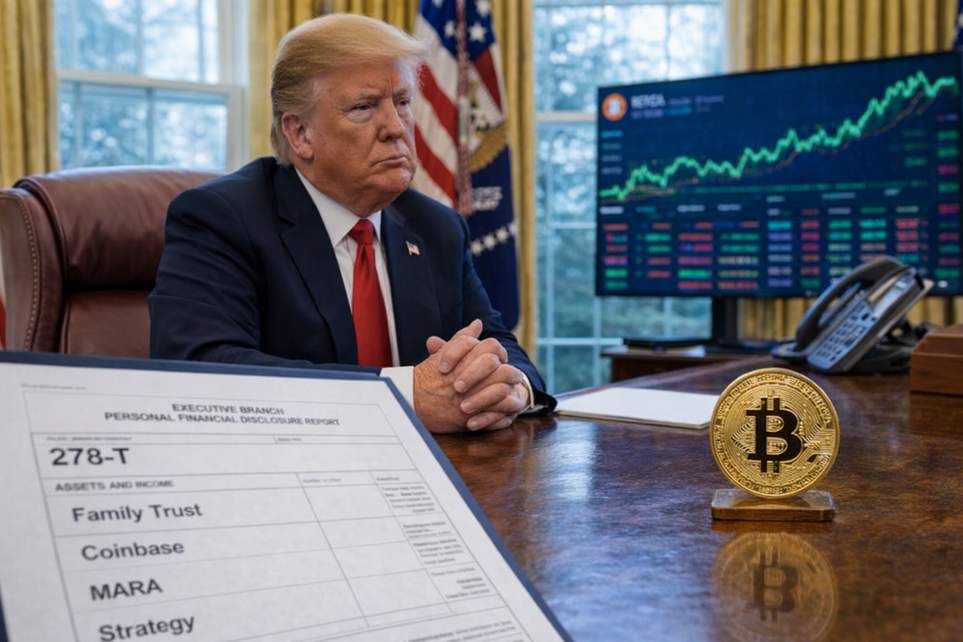
Trump family trust bought Coinbase and other crypto stocks in Q1, ethics filing shows
What the filings reveal
In the first quarter of 2026 the Trump family trust reported a flurry of trades — more than 3,600 transactions, according to a required 278-T disclosure released on May 14. The total activity is reported in a broad range, roughly $220 million to $750 million, spread across municipal bonds, index funds and individual equities.
Most of the movement was in regular blue-chip fare: big tech, defense contractors, banks and municipal bonds. The filings show activity in names like Nvidia, Apple, Microsoft, Boeing and Costco. But tucked into that avalanche of normal-market trades were smaller, attention-grabbing buys tied to the crypto and fintech worlds.
Notable crypto-related entries include nine purchases of Coinbase shares (the largest Coinbase-related buy was reported in the $100,001–$250,000 band). The trust also bought into bitcoin miners and fintech firms — including Marathon Digital, CleanSpark, Robinhood, SoFi, and Block — and made several trades in Strategy (the MicroStrategy ticker often used as a public proxy for Bitcoin exposure). The disclosures list eight Strategy Class A share transactions, including a February purchase reported as high as $100,000 and a January sale reported as high as $50,000.
The filings don’t say whether the president personally signed off on each trade, which accounts were used, or whether every line item was common stock versus another security type. The assets are held in a family trust and many trades appear to have been handled by brokers, so the level of direct involvement remains unclear.
Why this matters — politics, policy and conflict-of-interest jitters
Beyond the dollar signs, the timing and nature of the investments have political gravity. The president went from publicly skeptical about bitcoin to loudly embracing crypto during and after the 2024 campaign, accepting industry support and pushing for policy that’s friendlier to digital assets. Since returning to office the administration has moved quickly: staffing changes, executive actions, and legislative priorities all tilt toward a lighter regulatory touch.
Regulators have shifted as well. The Securities and Exchange Commission under new leadership has dialed back some high-profile cases, opened a crypto task force and signaled interest in fresh rulemaking instead of heavy-handed enforcement. The Justice Department disbanded a national crypto enforcement team, and the Commodity Futures Trading Commission has advanced measures aimed at making the industry more business-friendly. The White House also directed the formation of a government digital-asset stockpile and a so-called Bitcoin Reserve to hold certain forfeited crypto rather than instantly liquidating it.
Legislation and policy moves matter here: a federal stablecoin framework was signed into law last year, and Congress is considering a broader market-structure bill that would shift significant oversight toward the CFTC. Industry groups cheer these changes as clarity and growth enablers; consumer advocates and many Democrats warn they could weaken investor protections.
All of this has amplified scrutiny on Capitol Hill. Critics point out the overlap between the administration’s crypto agenda and the family trust’s crypto-adjacent holdings, raising classic conflict-of-interest alarms. Last year Democrats alleged the president’s crypto-related assets could be worth as much as $11.6 billion and claimed roughly $800 million in income from digital-asset sales in the first half of 2025 — figures that drove additional oversight and political heat.
That scrutiny intensified after a senator requested an SEC probe into a token-related transaction that involved a Trump family company. The complaint described a $75 million borrowing and said about $440 million in the token was used as collateral on a lending protocol to obtain stablecoins, while outside holders faced restrictions — a move alleged to have drained liquidity and stranded some depositors. Regulators have not announced enforcement tied to that inquiry; it remains a request for investigation rather than proof of wrongdoing.
So, yes: there are a lot of mundane trades here, but the presence of crypto and fintech positions amid swift, industry-friendly policy shifts makes the whole thing look less like boring portfolio housekeeping and more like a storyline that only Washington could love — equal parts finance, tech, law and political theater.
